

Reviewed · FOREST & NATURE RESERVE WALKS
Discover Kiruna: A Walk Through History and Nature
Kiruna is small, but the story is huge. This 2-hour walk strings together LKAB’s Visitor Centre, the Monument of Ancient Iron Miners, the Stone Circle, and Kiruna Church, so you get a clear sense of how this far-north town thinks, works, and worships. I especially liked the hands-on mining exhibits at LKAB, and the way Kiruna Church’s wooden Gothic Revival style makes you slow down and look up.
The only real catch is time. Two hours is enough to give you strong context, but it is not enough for long museum-style hangs or deep, stop-by-stop wandering.
In This Review
- Key highlights you’ll actually feel
- Kiruna in two hours: a smart intro to the far north
- Stop 1: LKAB’s Visitor Centre and why it sets the tone
- Stop 2: the Monument of Ancient Iron Miners
- Stop 3: the Stone Circle and the feeling of older time
- Stop 4: Kiruna Church, Gothic Revival in wood, and a big claim
- How the route works: timing, meeting points, and practical prep
- Price and value: what $290.89 buys you
- Who this tour suits best, and what to watch for
- Final take: should you book Discover Kiruna?
- FAQ
- How long is the Discover Kiruna tour?
- Where do I meet the group, and where does the tour end?
- Are tickets required for the stops?
- Is this a private tour?
- What ticket method do I use?
- What happens if I cancel?
Key highlights you’ll actually feel
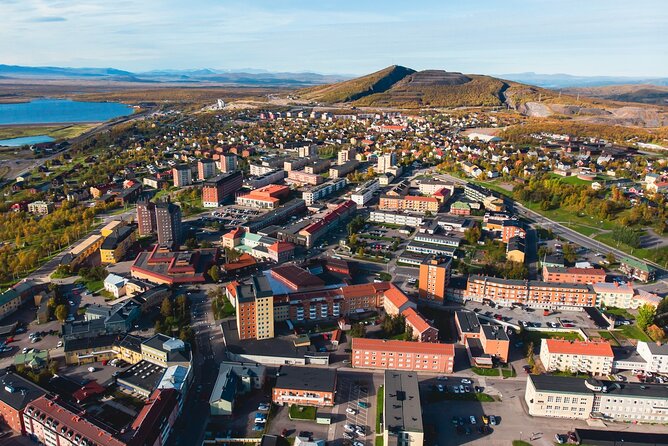
- Interactive LKAB Visitor Centre that explains how mining shaped Kiruna’s growth
- Free admission at every stop, so you pay mainly for the guide and the route
- Monument of Ancient Iron Miners for a grounded, respectful start to town history
- Stone Circle that adds older local legend and atmosphere beyond mining
- Private group tour so it stays focused on your crew, not a giant crowd
Kiruna in two hours: a smart intro to the far north

This tour is built for first-time Kiruna visitors who want orientation fast. You start at LKAB’s Visitor Centre, which gives you the town’s big idea right away: mining is not a side chapter in Kiruna, it is the engine. From there, the stops widen your lens, moving from iron and labor to older stone legends, then closing with a church that shows how the town’s spiritual life took a distinctive local form.
What I like about this pacing is that it does not treat Kiruna like one straight line of “see this, then leave.” It gives you contrast. You get industry first, then memory, then mystery, then architecture. By the end, you are not just checking boxes, you are starting to connect the dots.
You also get an easy trip length. At about 2 hours, it fits well into a travel day without messing up your plans for other northern activities. And because admissions are listed as free at the stops, you can spend your time on the story instead of hunting for ticket counters.
More forest and reserve walks near Kiruna:


Stop 1: LKAB’s Visitor Centre and why it sets the tone
LKAB’s Visitor Centre is where Kiruna’s identity becomes understandable. The exhibits are interactive, and the focus is clear: mining technology and the commitment behind it helped drive Northern Sweden’s industrial life and Kiruna’s development. Even if you are not a mining person, this stop works because it is practical. It explains the “why” behind the town, not just dates on a wall.
This is also the best place to get your bearings. When you walk from LKAB into the rest of Kiruna’s landmarks, you will notice details more. You will feel less like you are touring random buildings, and more like you are reading a single story from different angles.
A tip that helps: spend a little extra time watching and reading at the parts you normally skip. Since this is the first stop, you will carry that context into the monument and the church.
Stop 2: the Monument of Ancient Iron Miners
After LKAB gives you the industrial background, the Monument of Ancient Iron Miners brings the human side forward. This sculpture is a tribute to the mining community, honoring generations who worked underground and left an indelible mark on the region. It is the kind of stop that makes you straighten your posture and look longer, because it is not asking you to admire a machine. It is asking you to remember people.
The value here is that the monument is not tacked on as decoration. It functions like a checkpoint. You pause, reflect, and then you move on with a better sense of what all this history actually meant for real lives.
Time-wise, this stop is scheduled at around 40 minutes, which is generous enough to take in the sculpture and listen for the guide’s context, without turning it into a long sit-down. Admission is listed as free, so you can treat it as a high-impact piece of your Kiruna introduction.
Stop 3: the Stone Circle and the feeling of older time
Then the tour steps sideways into mystery. The Stone Circle invites you to step back and think about an ancient site tied to legend and lore. You stand among the stones and get a sense of how people may have connected ritual and landscape in the past.
Even if you do not know the specific stories beforehand, this stop helps you understand why Kiruna is not only an industrial town. It has older layers in its identity too. The contrast with the iron-mining stops is part of the point: industry explains Kiruna’s recent shaping, while the stone circle hints at older meanings that still linger in the place.
This stop is listed at about 30 minutes, which is perfect for lingering just long enough without freezing your plans. If you are taking photos, keep it respectful and slow. Stone sites reward attention, not speed.
Stop 4: Kiruna Church, Gothic Revival in wood, and a big claim
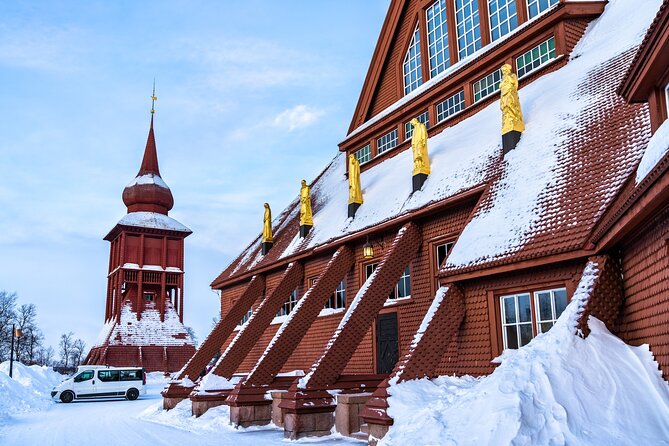
Kiruna Church is one of those places where architecture quietly tells you a lot. It is a wooden church known for distinctive Gothic Revival architecture, and it feels calmer than you might expect from such an outwardly “far north” setting. The altar work and the overall interior details give you something to look at while you settle into the town’s day-to-day spirit.
One neat detail you may hear on the tour is that the church is described as the largest wooden building in Sweden. That kind of fact changes how you see it. Instead of treating it as a local church stop, you realize you are looking at a national-scale structure made of wood.
This final stop is scheduled at around 30 minutes, and that timing is smart. By the time you reach the church, your brain has shifted from industry and monument context into reflective mode. You get a gentle landing after the heavier themes.
More History Tours in Kiruna:
- Stockholm: Ghost Walk and Historical Tour
★ 4.7 · 2,685 reviews - The Original Stockholm Ghost Walk and Historical Tour – Gamla Stan
★ 4.5 · 1,165 reviews - Stockholm: Guided Historic Old Town Walking Tour with Local
★ 4.8 · 618 reviews
How the route works: timing, meeting points, and practical prep
This is designed as a compact walk, about 2 hours total. You hit four stops with breaks built in through the scheduled time at each site: roughly 20 minutes at LKAB, then 40 minutes at the monument, 30 minutes at the stone circle, and 30 minutes at Kiruna Church.
Meeting points are straightforward:
- Start: LKAB’s Visitor Centre, Malmvägen 9B, 981 30 Kiruna
- End: Kiruna Church, Finngatan 1, 981 31 Kiruna
The tour description also says it is near public transportation. That matters because Kiruna is not a place where you always want to depend on long transfers just to do one quick cultural loop.
You will use a mobile ticket, and you should get confirmation at booking. This also matters for day-of peace of mind: you can keep it simple and show the ticket on your phone when you meet.
Walking and weather note: Kiruna’s far-north setting can mean serious cold or slick surfaces, depending on the season. If you are visiting in winter, plan for winter footing and bring real layers, not just a light jacket.
Price and value: what $290.89 buys you
At about $290.89 per person, this is not a budget sightseeing stroll. But it is also not a “museum ticket and goodbye” situation. You are paying for a guided route that connects multiple key sights in a short time, plus the comfort of a private setup where only your group participates.
Here is why the value can work out well:
- Free admission at all the stops means you are not paying extra once you arrive.
- The route is short enough to be efficient, which is underrated value in travel planning.
- You get group discounts, which can reduce the per-person cost if you are traveling with friends or family.
- The pacing helps you build an accurate mental map of Kiruna quickly, so you get more out of anything you do later that day.
If you are traveling solo or as a couple, the price can feel steep compared with self-guided walking tours. In that case, ask yourself whether you want context and story connections, or whether you are happy reading signs and moving on. If you enjoy having a guide connect the mining work, local memorial meaning, and the church architecture into one coherent understanding, this price starts to look more reasonable.
Who this tour suits best, and what to watch for

This tour fits best if you want a high-context introduction to Kiruna and you like seeing how different parts of a town connect. It is also a strong match for people who prefer not to plan a multi-stop day from scratch. The timing is compact, and most travelers can participate, so it is not built as an extreme activity.
One thing to keep in mind is that cultural expectations can vary. In particular, the tour theme you get from the stops is heavy on mining heritage and the church, with a stone legend stop added for older atmosphere. If you are hoping for a deep, extended focus on Sami culture, you might find this route does not fully meet that expectation, depending on how the guide frames the conversation on your day.
Final take: should you book Discover Kiruna?
Book it if you want a tight, high-value orientation to Kiruna that links mining, memory, legend, and church architecture into one clean story. It is especially worth it when you have limited time and you want to leave knowing what matters in town and why.
Skip it if your main goal is long museum time, lots of free wandering, or a tour that strongly emphasizes a specific cultural topic beyond what is built into the listed stops. In other words, this is a focused introduction, not an all-day deep dive.
If you are in Kiruna for only a short window, this is a smart way to make that time count.
FAQ
How long is the Discover Kiruna tour?
It runs for about 2 hours.
Where do I meet the group, and where does the tour end?
You start at LKAB’s Visitor Centre, Malmvägen 9B, 981 30 Kiruna. The tour ends at Kiruna Church, Finngatan 1, 981 31 Kiruna.
Are tickets required for the stops?
The tour information lists admission tickets as free at the stops.
Is this a private tour?
Yes. It is a private tour or activity, and only your group will participate.
What ticket method do I use?
You’ll use a mobile ticket.
What happens if I cancel?
The experience is non-refundable and cannot be changed for any reason. If you cancel or ask for an amendment, the amount you paid will not be refunded.
More Guided Walks in Kiruna
- Kiruna: Arctic Snowshoe Walk, Fire, Cocoa & Marshmallows
★ 5.0 · 2 reviews - Kiruna Walking Tour with Kin Museum
★ 5.0 · 1 review - Stockholm Gamla Stan: Old Town Walking Tour with Local Guide
★ 4.7 · 1,714 reviews - Walking Tour of Stockholm Old Town
★ 5.0 · 1,175 reviews
New on the Kiruna pages
- Kiruna’s Romantic Trail: A Journey Through Love and Legacy★ 5.0 · 1 review
- Kiruna: Northern Lights Horseback Ride with Dinner★ 5.0 · 1 review
- Kiruna: Aurora Husky Overnight Adventure★ 5.0 · 1 review
- Kiruna Guided Daytime Snowshoe Hike★ 5.0 · 1 review
- Kiruna Private Transfer from Kiruna (KNR) airport to central Kiruna★ 5.0 · 1 review
- Kiruna Walking Tour with Kin Museum★ 5.0 · 1 review
- One-Night Aurora Photo Adventure, Borealis Lights Lapland★ 5.0 · 1 review
Forest & Nature Reserve Walks, compared.
Nature Reserve Hiking Tour with Campfire Lunch
Read our review →
Sunset Hike in Tyresta National Park with Meal
Read our review →
Browse the lists this tour appears in