

Reviewed · KIRUNA EXPERIENCES
Kiruna’s Romantic Trail: A Journey Through Love and Legacy
Love stories are written in wood and iron.
That is exactly what makes this private Kiruna tour so compelling: you move through mining legacy to a preserved mining town setting, then end at the wooden Kiruna Church. I love that it is truly private and exclusive, meaning it is just your group with your local guide. I also love the emotional arc, from industrial grit at LKAB sites to quiet reflection inside a standout Gothic Revival wooden church.
One thing to plan for: the tour is only about 2 hours, so you will be focused on key stops, not a slow, sprawling wandering day. And because Kiruna is actively relocating, what you can see in the older areas can shift, so a good guide’s routing matters.
Key points to know before you go
- Private local guide, your group only, so you can ask questions and move at your pace within the schedule.
- Three strong themes in one run, mining heritage, preserved mining-town life, and a memorable wooden church.
- Guided stops with free admissions, so you control your spend inside the tour.
- Kiruna relocation affects sightlines, and the guide can steer you toward as much of the older town as possible.
- Stone Circle adds a pause from industry, giving the day a more layered, human feel.
In This Review
- Why Kiruna’s mining-to-church route feels unusually romantic
- Start at LKAB’s Visitor Centre, where the past explains the present
- The Kiruna Mine stop and the Monument of Ancient Iron Miners
- Fårhage Gruvstadsparken, preserved mining-town life in a compact visit
- Stone Circle: a legend-and-lore break from steel
- Kiruna Church: wooden Gothic Revival calm to finish the loop
- The relocation reality, and why Daniel’s approach makes a difference
- Practical timing: fitting 5 stops into about 2 hours
- Price and value: what $413.11 per person buys you
- Who this tour is best for (and who might skip it)
- Should you book Kiruna’s Romantic Trail?
- FAQ
- How long is the Kiruna’s Romantic Trail tour?
- What is included in the tour?
- Is this tour private?
- Is admission included for the stops?
- Where does the tour start?
- Where does the tour end?
- How do I get the ticket?
- Is confirmation provided when I book?
- Is the tour near public transportation?
- What is the cancellation policy?
Why Kiruna’s mining-to-church route feels unusually romantic
Kiruna can be easy to misunderstand if you only see it as a remote Nordic dot on a map. This tour frames it as a place where people built their lives around extraction, then created beauty, ritual, and community right alongside it.
The romance is not only about candlelight or love poems. It is about endurance, shared work, and the way the town’s identity shows up in steel, monuments, preserved streets, and timber. In a short window, you get multiple angles on why Kiruna feels both tough and tender at the same time.
You will also notice something practical: the schedule is tight, with quick, high-impact stops. If you like seeing a lot without losing context, this works. If you want long time inside buildings or extra detours, you may want to add your own free time before or after.
Start at LKAB’s Visitor Centre, where the past explains the present
Your walk begins at LKAB’s Visitor Centre on Malmvägen 9B. This is a smart opener because it gives you the town’s backbone first, before you head into older sites.
You get about 20 minutes with free admission, and you are not just looking at static photos. The point here is interpretation. Interactive exhibits help translate mining as a lived force, not just a headline. You learn how LKAB and the mining industry shaped Kiruna’s development, and how resilience and innovation became survival skills.
What I like about starting here is that it changes how you read everything after. When you see sculptures, preserved neighborhoods, or church architecture later, you understand them as responses to a real working world, not just “things to photograph.”
Watch for: if you are short on time in Kiruna overall, this stop gives you the fastest way to get oriented and reduce confusion later.
A few more Kiruna outings to weigh up
The Kiruna Mine stop and the Monument of Ancient Iron Miners
Next you spend around 30 minutes at the Kiruna Mine area, with free admission. The headline moment is the Monument of Ancient Iron Miners, a tribute to the mining community.
This is one of those pauses that feels bigger than the minutes on the clock. The monument is a way to honor the people behind the industry, and it sets an emotional tone for the rest of the walk. Even if you are not a mining-history obsessive, the structure and symbolism are meant to make you stop and think about work, sacrifice, and community memory.
Then there is the Kiruna-specific layer: the guide can connect what you see here to what is happening now. One guide, Daniel, specifically shared that Kiruna is being relocated and that parts of the old town are being demolished. That kind of context matters, because it turns the monument from a standalone piece into part of a living story.
Potential drawback: this is a tribute stop, not a long, detailed exploration. If you want hands-on industrial experiences, you will likely want additional time elsewhere in Kiruna.
Fårhage Gruvstadsparken, preserved mining-town life in a compact visit
After the monument, you head to Fårhage Gruvstadsparken, also known as the Fårhage Mining Town Park. You have about 20 minutes and free admission again.
This stop is built for atmosphere. It preserves a former mining town feel, so you can picture everyday life in the early 20th century. It is the kind of place where the setting does a lot of the explaining. You see how miners lived, worked, and organized their days, and the park helps you understand mining history as human-scale, not just industrial production.
If you have ever wondered what “mining town” means beyond a map label, this is a clean answer. The value is in how quickly you can grasp the rhythm of life: work was central, but community and housing patterns grew around it.
Tip: keep your eyes open for small cues in the layout and preserved structures. You only get a short time, so your attention matters more than how long you stand in one spot.
Stone Circle: a legend-and-lore break from steel
You then get about 25 minutes at the Stone Circle. This is an interesting mid-tour change of pace because it shifts from mining-era identity to older, more mysterious traditions.
The Stone Circle invites you to step back in time and think about legend and lore. You are not going to treat this like a museum exhibit. It is more about presence: standing among the stones, reading the vibe, and letting it add depth to a day that began with industry.
Why I like this stop: it reminds you Kiruna is not only about recent history. People lived in and around this region long before mines defined the town’s modern narrative, and the Stone Circle gives a different lens.
Possible consideration: if you dislike “mood stops” and prefer strictly factual sites, you may find this lighter than the other stops. Still, it helps the tour feel less mechanical and more personal.
Kiruna Church: wooden Gothic Revival calm to finish the loop
Your final stop is Kiruna Church at Finngatan 1. You get about 25 minutes and free admission, and this is the emotional end point you are supposed to remember.
Kiruna Church is known for its distinctive wooden structure and Gothic Revival architecture. In a town shaped by extraction, it is a powerful contrast to end somewhere built for worship, quiet, and reflection.
This is the part of the tour that feels romantic in a simple, human way. You come from monuments, preserved mining-town textures, and open-air stones, then you step into a sanctuary that balances art and spirituality. Even if you are not religious, the combination of timber, design, and calm is genuinely memorable.
What to do with your time there: take a slower moment. If your camera is always ready, your attention may skip the details that make the church special. I suggest you give yourself a brief, quiet window so the architecture lands.
Same daylight, a different plan:
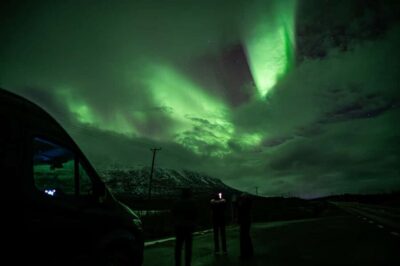
- Kiruna: Northern Lights Tour with Stejk Street Food Dinner
★ 4.9 · 231 reviews - Sit Down Husky Ride Dog Sled Tour in Kiruna
★ 5.0 · 216 reviews - Kiruna: Aurora Wayfinding with Hidden Histories
★ 4.6 · 203 reviews
The relocation reality, and why Daniel’s approach makes a difference
Kiruna relocation is not an abstract topic here. It affects what you can actually see on the ground. A guide named Daniel shared that much of the old part is being demolished, and he knew how to route the group to see as much of the older areas as possible.
That is the kind of practical local knowledge that turns a generic walking tour into a satisfying one. If you are visiting during a transition phase, you want a guide who understands trade-offs, sightlines, and what is realistically accessible at the moment.
So if you love history, but you also hate arriving too late to catch what you came for, this is where the private guide format helps. You are not stuck with a fixed script. You can adjust on the fly, within reason, to get the best view of what is still there.
Practical timing: fitting 5 stops into about 2 hours
The tour runs for roughly 2 hours. That means you will move efficiently between stops, with time built for brief context and quick viewing rather than slow exploration.
With multiple stops, your comfort matters. You will likely do short walks on streets in Kiruna between points, so dress for cold and wind if you are visiting outside the warm months. Even on a clear day, Lapland can feel sharp.
Also, pay attention to where you start and finish. You begin at LKAB’s Visitor Centre and end at Kiruna Church. That end location is handy if you want to continue on foot nearby after the tour wraps.
Because the tour is listed as near public transportation, you can stitch it into a broader day plan if you are using buses or trains.
Price and value: what $413.11 per person buys you
At $413.11 per person, this is not a budget add-on. It is priced like a premium private experience, and you should expect that you are paying for more than sightseeing.
Here is the value logic I see:
- You get a private tour with your own guide, so you are not sharing explanations with strangers.
- The plan covers multiple meaningful stops, not just one “highlight.”
- The stops you visit have free admission tickets, which helps protect your total cost once you are in town.
- The guide’s knowledge about relocation and what you can still see can genuinely change the experience quality.
If your travel style is couple or small group, or if you like history but do not want to spend hours figuring things out, it can feel worth it. If you are traveling solo on a strict budget, this may be too steep for a short, walking-focused itinerary.
A useful way to decide is to ask: would you pay for a guide to save you time and connect the dots? If yes, the price starts to make sense. If you prefer self-guided exploration, you can likely do some parts on your own, but you will lose the tailored context.
Who this tour is best for (and who might skip it)
This is a strong pick for:
- couples who want romance that is not just scenery, but story and meaning
- history-minded visitors who like connecting industry to everyday life and community
- travelers who appreciate architecture, especially a standout wooden Gothic Revival church
- people visiting while Kiruna is relocating, who want smart routing to maximize what is viewable
It may be less ideal for:
- anyone who wants long time at each site
- travelers who dislike interpretation and prefer purely factual museum formats
- visitors who expect a full indoor museum day rather than short stop-and-see moments
That “most travelers can participate” line is also reassuring. This is designed to be accessible for a wide range of people, and it stays within a manageable time frame.
Should you book Kiruna’s Romantic Trail?
I think you should book if you want a short, guided route that makes Kiruna feel personal fast. The combination of LKAB context, mining community symbolism, preserved town atmosphere at Fårhage Gruvstadsparken, a reflective pause at the Stone Circle, and a graceful end at Kiruna Church creates a strong narrative arc in about two hours.
Book it if you value privacy and local judgment, especially during Kiruna’s relocation period. Daniel’s kind of approach, focusing on what is still possible to see and how to move, is exactly what you hope for when the town is in transition.
Skip it if your heart is set on spending hours in one place, or if you want a cheaper group tour. With a premium price tag, this is best when you see the guide as part of the experience, not just a bonus.
FAQ
How long is the Kiruna’s Romantic Trail tour?
The tour is approximately 2 hours.
What is included in the tour?
You visit LKAB’s Visitor Centre, the Kiruna Mine area with the Monument of Ancient Iron Miners, Fårhage Gruvstadsparken, the Stone Circle, and Kiruna Church.
Is this tour private?
Yes. It is a private tour/activity, and only your group participates.
Is admission included for the stops?
The tour information lists free admission tickets for the stops.
Where does the tour start?
The tour starts at LKAB’s Visitor Centre, Malmvägen 9B, 981 30 Kiruna, Sweden.
Where does the tour end?
The tour ends at Kiruna Church, Finngatan 1, 981 31 Kiruna, Sweden.
How do I get the ticket?
The tour includes a mobile ticket.
Is confirmation provided when I book?
Yes, confirmation is received at the time of booking.
Is the tour near public transportation?
Yes, it is listed as near public transportation.
What is the cancellation policy?
Free cancellation is available up to 24 hours in advance for a full refund. If you cancel less than 24 hours before the start time, the amount paid is not refunded.
New on the Kiruna pages
- Kiruna: Northern Lights Horseback Ride with Dinner★ 5.0 · 1 review
- Kiruna: Aurora Husky Overnight Adventure★ 5.0 · 1 review
- Kiruna Guided Daytime Snowshoe Hike★ 5.0 · 1 review
- Kiruna Private Transfer from Kiruna (KNR) airport to central Kiruna★ 5.0 · 1 review
- Kiruna Walking Tour with Kin Museum★ 5.0 · 1 review
- One-Night Aurora Photo Adventure, Borealis Lights Lapland★ 5.0 · 1 review
- Kiruna: Snowmobile Lunch Tour★ 4.0 · 1 review
Kiruna Experiences, compared.
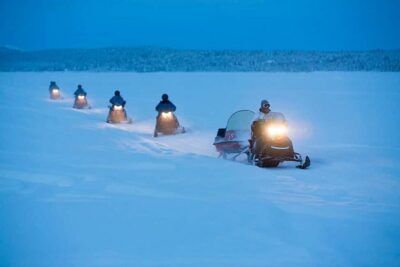
Guided Snowmobile Tour and Swedish Fika Experience
Read our review →Northern Lights Tour with Stejk Street Food Dinner
Read our review →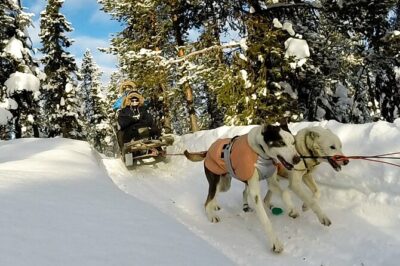
Browse the lists this tour appears in