
Reviewed · GUIDED WALKS IN STOCKHOLM
Stockholm Walking Tour | Max 10 People
Stockholm can feel like a puzzle, but this walk makes it click fast. I like the small group size (max 10) because you actually hear the details, and I like the mobile ticket because you are not fumbling with papers. One thing to consider: a few stops list admission as not included, so if you want to go inside or pay for anything on-site, you may need extra money.
This tour is in English, and the guide is Zenid, friendly and relaxed in a way that keeps the pace easy. If you like learning through stories and practical context, the way he explains facts in clear, simple English is a big plus. The only downside is that it is a walking tour with short stops, so you will be doing a lot of looking from outside rather than lingering for long.
In This Review
- Key highlights you will feel right away
- Price and Logistics: What $150 per Group Really Means
- How Zenid Brings the Walk to Life in English
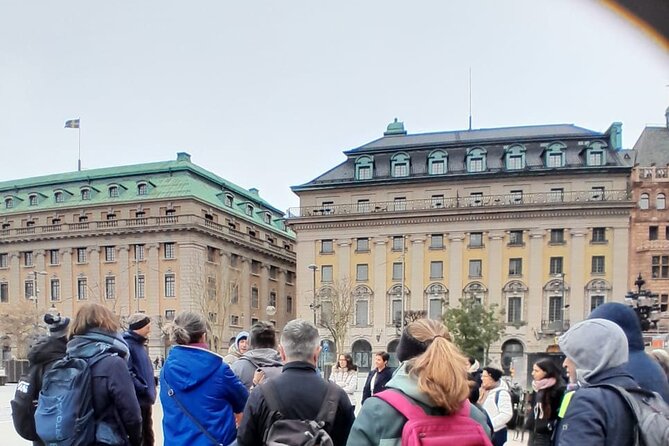
- Rosenbad: A Quick Look at Sweden’s Government Backbone
- Riksbron: The Bridge to Parliament and the Future of Islands
- Stockholm City Hall: Nobel Prizes and the Famous Banquet From the Distance
- Mynttorget Under the Royal Palace: Royal Life, Up Close Without Going Inside
- Royal Palace Exterior: The Great Fire of 1697 and Where Royals Live Now
- Slottsbacken Obelisk: Why the Royals Are Not “Swedish”
- Jarnpojken: The Tiny Statue Everyone Rubs (And You Won’t)
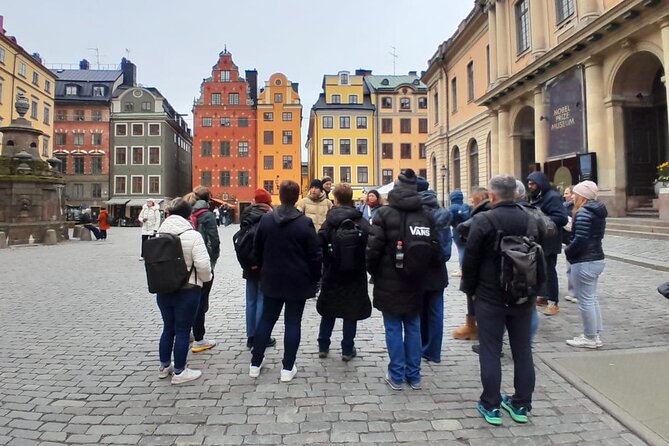
- Stortorget: The Bloodbath Story That Still Shapes the Square
- Prastgatan: Vikings and How to Read a Runestone
- Esglesia Alemanya: Why a German Church Exists in Stockholm
- Marten Trotzigs grand: The Narrowest Alley Stop That Makes You Look Twice
- Jarntorget: Evert Taube Statue and the Cost Question at Stockholm Scale
- Skeppsbrokajen Promenade: The Biggest Disaster and What It Cost
- Timing, Pace, and How to Make the Most of the 4:30 pm Start
- Who This Tour Fits Best
- Should You Book This Stockholm Walking Tour?
- FAQ
- What is the duration of the Stockholm walking tour?
- How much does the tour cost?
- Is the tour offered in English?
- What is included, and what is not included?
- Where do I meet the guide, and where does the tour end?
- Is there a mobile ticket?
- What is the cancellation policy?
Key highlights you will feel right away
- Max 10 people, so the walk does not turn into a shuffle through crowds
- Zenid’s clear English, with an upbeat, approachable style that keeps it understandable
- A tight 1 hour 30 minutes, built around 13 stops that cover the core of Stockholm’s “why it’s like this”
- Lots of “outside, quick, and memorable” moments, from Nobel lore to old town stories
- End near Slussen, handy if you want to keep moving toward Djurgården or Södermalm
Price and Logistics: What $150 per Group Really Means
The price is $150 per group, capped at 10 people. That structure is where the value comes from. If you fill close to the max, the cost per person gets quite reasonable for a guided, organized route. If your group stays small, it costs more per person, but you are still paying for an experienced guide to connect the dots across the city center in a short time.
The tour runs about 1 hour 30 minutes, starting at 4:30 pm. That evening-hour timing can work well because you are sightseeing in a calmer rhythm than peak daytime rushes. You will have a steady sequence of stops, each about 5 to 10 minutes, so think of this as a guided orientation and story sampler, not a slow museum day.
Included is a guide, and tips are not included. Tickets are also mixed: some stops are free, and others list admission as not included. The practical takeaway is simple: budget a little extra if you want to add any paid entries at the stops that mention admission not included.
Your meeting point is Drottninggatan 2, 111 51 Stockholm, and the walk ends at Zum Franziskaner, Skeppsbron 44, 111 30 Stockholm, near the Slussen ferry terminal. That ending is convenient because it makes it easy to hop onto public transport or continue your day toward islands like Djurgården or across to Södermalm.
More Guided Walks in Stockholm
How Zenid Brings the Walk to Life in English
This tour’s biggest strength is the guide. Zenid is described as experienced and fun, but what matters for you is how the information lands. The tour is offered in English, and Zenid’s communication is clear and expressive, so even if your group has mixed backgrounds, you are not stuck guessing what you just saw.
He also adds stories and original details you may not get from the standard guidebook route. The tone stays friendly and relaxed, not stiff or lecture-like. That helps at a place like Stockholm, where the buildings are beautiful but you can easily miss the “why” without a guide.
At the end, he provides practical suggestions for what to see next, where to eat, and how to explore on your own. That is not fluff. After a 90-minute walk, it is exactly what you need to turn a good first impression into a smarter second day plan.
Rosenbad: A Quick Look at Sweden’s Government Backbone
Stop 1 is Rosenbad, meeting opposite the Swedish government building. Even if you only have a few minutes here, it sets the tone. You get a feel for the city’s civic center, and you start seeing Stockholm not just as postcard views but as a place where government and daily life sit side by side.
Because it is positioned right across from an important official building, Rosenbad is one of those stops where the guide’s framing matters. He helps you connect the architecture and location to how the country thinks about public institutions.
If you like a tour that starts with context, you will appreciate this first stop. If you want long photo time, you might feel a bit rushed, since the stop is short.
Riksbron: The Bridge to Parliament and the Future of Islands
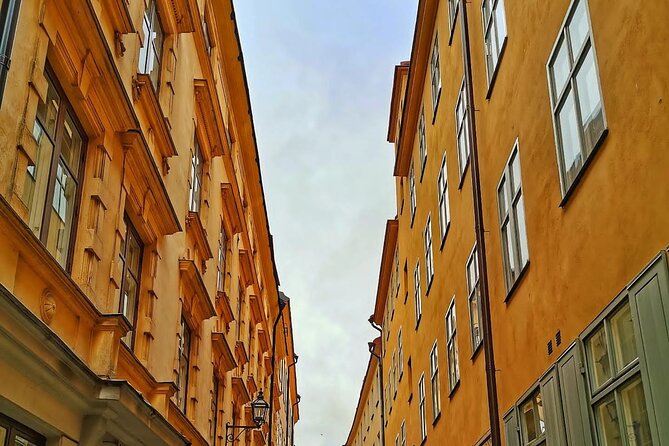
Next is Riksbron, the bridge leading to the Parliament. The story focus here is not just the view. You learn how Sweden plans for more islands in the future, which is a very Stockholm-shaped idea: water, land, and development are constantly interacting.
A bridge stop is a smart pacing choice. It gives you movement and sightlines while keeping the group together. It also works well for photos because you can see lines of the city opening up.
The possible drawback is the same as with many bridge moments. If the wind is strong or you are not into walking-and-looking, you might prefer a more stationary stop. But if you enjoy quick viewpoints with a point, this one hits the mark.
Stockholm City Hall: Nobel Prizes and the Famous Banquet From the Distance
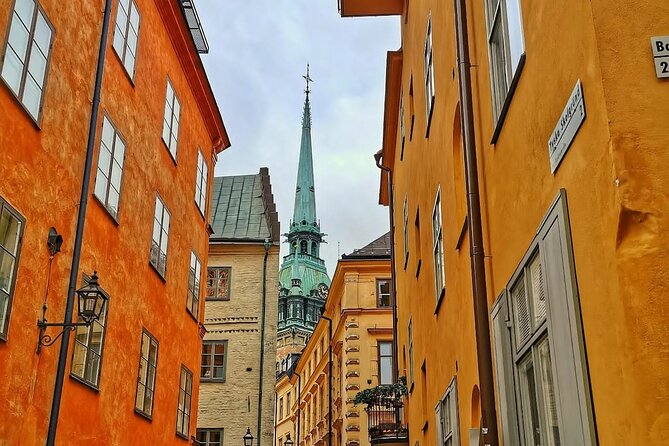
Stop 3 is Stockholm City Hall. Here you view it from a distance and learn about the Nobel Prizes and the famous banquet associated with it. Even without entering, you get a cultural hook that makes the building feel more than just a landmark.
This is a great example of how the tour keeps things efficient. City Hall is usually a “big deal” stop, but you are not spending your whole time at it. Instead, you get the key meaning in a brief window, then you move on before fatigue sets in.
Admission is listed as not included for this stop, so if you expected a guided interior visit, plan differently. Think of this stop as orientation plus lore: you connect the name to what it represents, then keep walking.
Same daylight, a different plan:
- Stockholm: ABBA The Museum Entrance Ticket
★ 4.7 · 11,280 reviews - Stockholm: City Archipelago Sightseeing Cruise with Guide
★ 4.3 · 10,798 reviews - Stockholm: Skansen Open-Air Museum Admission Ticket
★ 4.5 · 3,427 reviews
Mynttorget Under the Royal Palace: Royal Life, Up Close Without Going Inside
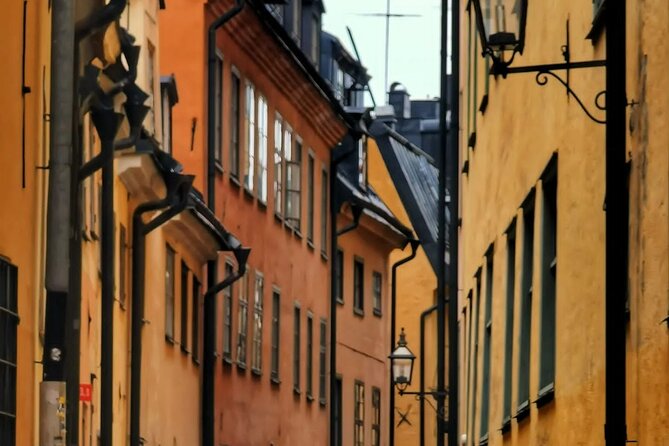
Stop 4 is Mynttorget, described as under the Royal Palace. The angle here is playful: you learn how to become a Swedish royal family member. That kind of framing is exactly why short stops work. You are not just memorizing facts, you are leaving with stories that stick.
Being under the Royal Palace also gives you a sense of Stockholm’s layering. The city is not one level. It is stacked. That makes it more interesting for visitors who like to feel the city’s depth rather than only walking above it.
The possible drawback is expectations. If you want a serious, solemn “royals only” moment, the tone here may feel more story-driven than ceremonial. But if you want your tour to keep its energy, this is one of the better spots.
Royal Palace Exterior: The Great Fire of 1697 and Where Royals Live Now
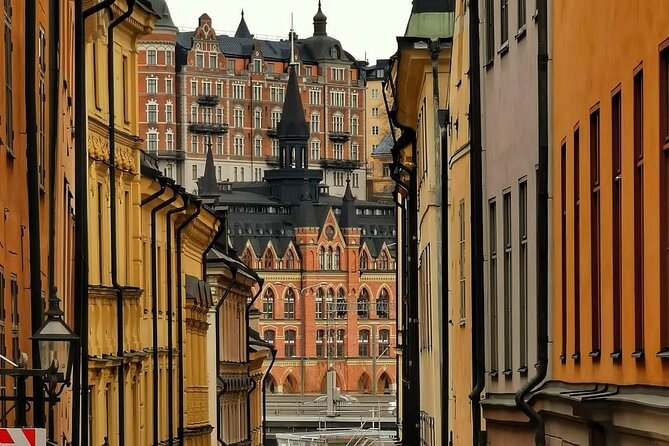
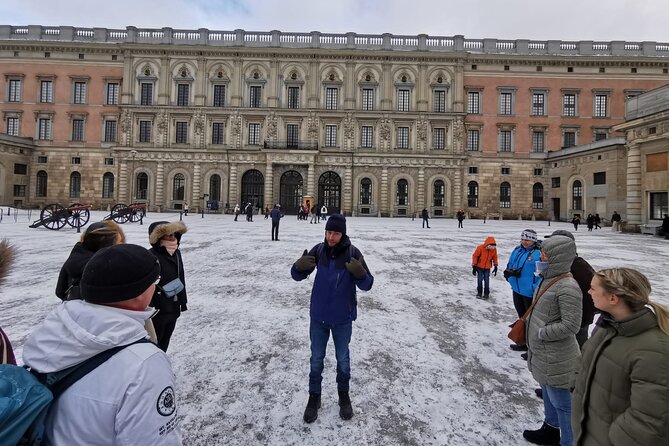
Stop 5 is the Royal Palace. You get an outside visit and you learn about the Great Fire of 1697, plus where the royals live now. That combination matters. It links a major event to the reality of the present day, so the palace becomes both history and living function.
Outside stops can be great for variety. They give you a chance to step back, see scale, and take photos without needing extra entry time. It also keeps the group moving so you get more stops in the 90 minutes.
But since admission is listed as not included, do not count on this being a full interior visit. If interior access is high on your list, you might treat this as your “must-see from outside” moment and plan any interior time separately.
Slottsbacken Obelisk: Why the Royals Are Not “Swedish”
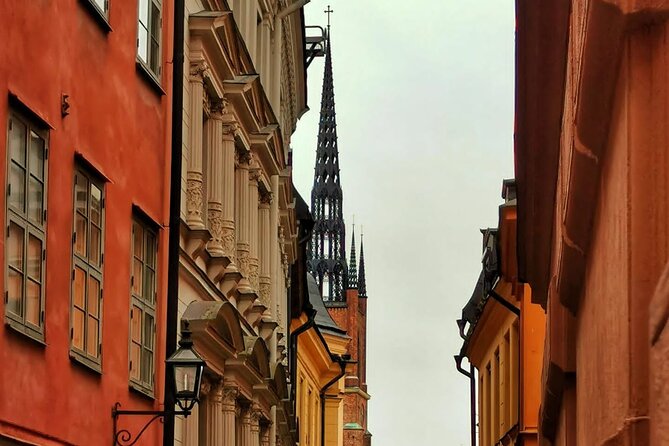
Stop 6 is the Obelisk at Slottsbacken, with a question-driven theme: why the Royal family is not Swedish. This is one of those spots where a guide can turn a confusing detail into something you actually understand.
The payoff is not just a fact. It is the way you start thinking about identity, nationality, and how families relate to countries over time. Even if you do not leave with an essay’s worth of explanation, you will have a clearer mental hook.
Admission is listed as not included for this stop, but the main value here is the story framing and the quick explanation you get while standing near the landmark. In other words, you get most of the value even if you do not enter anything.
Jarnpojken: The Tiny Statue Everyone Rubs (And You Won’t)
Stop 7 is Jarnpojken, described as the tiniest statue in the old town. The guide’s approach here is teasing and memorable: everyone rubs him, we won’t. That is the kind of humor that makes a tour feel alive instead of scripted.
This stop is short, but it gives you something visual to anchor your old town impressions. Tiny landmarks can be easy to miss on your own, so having a guide point it out helps you see Stockholm’s details.
If you are not into jokes, this may feel a little silly. But if you like lighthearted storytelling, it is exactly the right speed bump in the middle of more serious themes.
Stortorget: The Bloodbath Story That Still Shapes the Square
Stop 8 is Stortorget, where you learn about the horror of Stockholm bloodbath. Stortorget is one of those iconic squares where the “then” and “now” can feel close. You stand in a normal, everyday public space, and a guide gives you the darker layer underneath.
This stop can be intense in subject matter, even with a short time window. If you prefer purely cheerful sightseeing, you might find this a heavier moment. On the other hand, if you want the real story, this is where the tour becomes more meaningful.
Since admission is listed as not included, you are not dealing with tickets for this one. You are getting story context where it matters: in the place itself.
Prastgatan: Vikings and How to Read a Runestone
Stop 9 is Prästgatan, with a Viking-themed focus and guidance on how to read a runestone. This is a fun learning stop because it gives you an interpretive skill. Instead of only hearing about Vikings, you start thinking about how to decode the evidence you might see later.
The stop is also timed well. Ten minutes is enough for you to absorb a basic approach without turning the tour into homework.
Admission is listed as free here, so there is no extra cost tied to this stop. You are mostly paying attention, taking notes in your head, and preparing to notice details in the city later.
Esglesia Alemanya: Why a German Church Exists in Stockholm
Stop 10 is Esglesia Alemanya, outside, and you learn why there is a German church in Stockholm. This is the Stockholm surprise stop. Cities like Stockholm have always been shaped by connections, trade, and communities that brought their faith and institutions with them.
Outside visits are ideal for this kind of question, because you get the core story without requiring a longer on-site commitment.
Admission is listed as not included here, so do not assume interior access. But as a “why is that here?” moment, it does its job fast.
Marten Trotzigs grand: The Narrowest Alley Stop That Makes You Look Twice
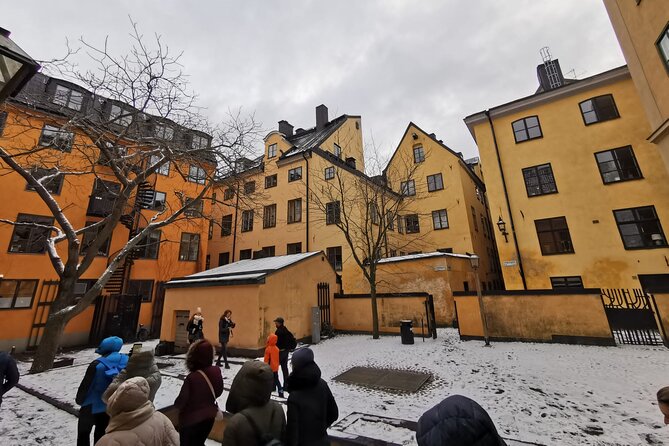
Stop 11 is Marten Trotzigs grand, described as the narrowest alley of Stockholm that is not equally narrow. The humor in that description matters because it encourages you to actually look while you walk through or alongside it.
This is a great pause for your brain. After government, royalty, and major historical themes, you get a physical, immediate payoff. You see how streets and space shape the feel of a neighborhood.
Admission is listed as free here, which keeps it frictionless. If you enjoy architectural quirks and street-level details, you will probably enjoy this stop more than you expect.
Jarntorget: Evert Taube Statue and the Cost Question at Stockholm Scale
Stop 12 is the Evert Taube statue in Jarntorget Square, with a question about why Stockholm is spending 2 billion dollars. That stop brings money and culture into the same frame. It pushes you beyond sightseeing and into the idea that cities make big financial decisions, even when you are just walking past a statue.
Statues can feel static, but a guide turns them into an anchor for modern context. It also helps you understand Stockholm as a place that invests in identity and projects, not just a museum of old buildings.
Admission is listed as free for this stop. Still, it is a short stop, so plan on a quick conversation, a few photos, and then moving on.
Skeppsbrokajen Promenade: The Biggest Disaster and What It Cost
Stop 13 is Skeppsbrokajen Promenade, with the theme of the biggest disaster and what it cost. This is one of the last stops, so it works well as a final emotional and practical punch.
A promenade stop is also an easy finish. You end near the water, and you are not stuck facing the same streets back. It gives you a natural closing point for your old town route.
Admission is free for this stop, so you should not need extra tickets to get the story. The value here is the guiding narrative, not a paid entry.
Timing, Pace, and How to Make the Most of the 4:30 pm Start
This tour runs about 1 hour 30 minutes with short stops, so you should treat it like a high-impact sampler. If you want to linger in one place, you will need to do it after the tour ends. The schedule is designed to keep momentum and prevent decision fatigue.
The 4:30 pm start also means you are likely to finish as the city shifts toward evening. That is a pleasant time to continue exploring, especially because the walk ends near Slussen ferry terminal. It is a handy launch point for heading toward Djurgården or crossing to Södermalm.
One small practical tip: wear shoes that can handle tight old town streets and uneven surfaces. The route includes alleys and short walking segments, so comfort matters more than you might think for a short tour.
Who This Tour Fits Best
This is a strong match for you if:
- You want a guided orientation of central Stockholm without spending the whole day
- You like story-based explanations that connect landmarks to meaning
- You are traveling with a small group or want the comfort of a max 10-person tour
- You plan to keep exploring after, since the guide’s end-of-tour tips help you decide what comes next
It may not be the best fit if you:
- Only want indoor visits and long ticketed stops
- Prefer a slow pace with minimal walking
- Are trying to see every major site in depth in one go
Should You Book This Stockholm Walking Tour?
I think you should book it if you want Stockholm explained in an easy, human way, with a guide who stays approachable and keeps English clear. The format is efficient: 13 stops in 90 minutes gives you both the big landmarks and the smaller, weirder details like Jarnpojken and the narrow alley question.
It is also good value if your group size gets close to 10, because the $150 per group pricing spreads the cost across more people. And ending near Slussen is a real advantage if your next plan involves ferries or heading across the water.
If you hate rushing or you are hoping for a lot of paid interior access, adjust your expectations. Treat it as an organized introduction that tells you what to notice, then use your own time to go deeper where you feel the pull.
FAQ
What is the duration of the Stockholm walking tour?
The tour lasts about 1 hour 30 minutes.
How much does the tour cost?
The price is $150.00 per group, with a maximum group size of 10 people.
Is the tour offered in English?
Yes, the tour is offered in English.
What is included, and what is not included?
The guide is included. Tips and gratuities are not included, and admission tickets are listed as not included for some stops.
Where do I meet the guide, and where does the tour end?
The start is at Drottninggatan 2, 111 51 Stockholm. The tour ends at Zum Franziskaner, Skeppsbron 44, 111 30 Stockholm, near the Slussen ferry terminal.
Is there a mobile ticket?
Yes, the tour includes a mobile ticket.
What is the cancellation policy?
You can cancel for free up to 24 hours in advance for a full refund. If you cancel less than 24 hours before the start time, the amount paid is not refunded.
New on the Stockholm pages
- Stockholm Tour + Drottningholm Palace by VIP car PRIVATE Guide★ 5.0 · 1 review
- Discover Stockholm’s Christmas Market Magic with a Local★ 5.0 · 1 review
- Deluxe Stockholm Tour with Vasa Museum from Cruise Port★ 4.0 · 1 review
- First Class Airport Limousine Transfer: Arlanda Airport to Stockholm City★ 5.0 · 1 review
- Stockholm Shore Excursion from Cruise Port★ 5.0 · 1 review
- Stockholm Old Town Walking Tour + Archipelago Cruise★ 5.0 · 1 review
- Stockholm History Walking Tour★ 5.0 · 1 review
Guided Walks in Stockholm, compared.
Stockholm Gamla Stan: Old Town Walking Tour with Local Guide
Read our review →
The Original Stockholm Ghost Walk and Historical Tour – Gamla Stan
Read our review →
Best of Stockholm Walking Tour-3 Hours, Small Group max 10 people
Read our review →
Browse the lists this tour appears in