
Reviewed · GUIDED WALKS IN STOCKHOLM
Stockholm Syndrome Private Walking Tour
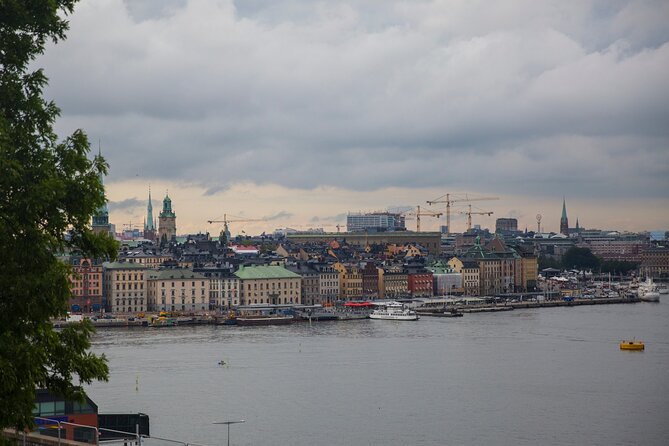
Stockholm stories start before you even move. This private 3-hour walk ties together landmark sights with the city’s famous Norrmalmstorg origin story, then finishes in lively Södermalm. You’ll also get a private guide who can adjust the route to your interests, so the walk feels built for you instead of for a checklist.
I especially like two things. First, you get insider commentary that turns big names like Parliament and Gamla Stan into clear, human stories. Second, the pace works well for first-time visitors because the route mixes top sights with smart photo moments, so you leave with a strong sense of where things are.
One thing to consider: you’re walking on real city streets, including cobblestones, and the tour ends away from where you started. If you hate backtracking, plan ahead for your transport home or for continuing the day in Södermalm.
In This Review
- Key highlights you’ll actually feel on the street
- Norrmalmstorg: where the city’s most twisted tale begins
- Royal and political Stockholm, from Kungsträdgården to Riksdagshuset
- St George at Storkyrkan, plus the royal vows behind it
- Gamla Stan on foot: Stortorget, the Iron Boy, and Mårten Trotzig
- Slussen and Södermalm: viewpoints, pedestrian streets, and real neighborhood life
- The fika break and the best way to use your guide
- Price and logistics: is $418.80 per person worth it?
- Should you book the Stockholm Syndrome Private Walking Tour?
- FAQ
- How long is the Stockholm walking tour?
- What’s included in the tour?
- Do I need to pay admission for the Royal Palace or the cathedral?
- Where do we meet, and where does the tour end?
- Can the route be customized or shortened?
- Can I cancel for a full refund?
Key highlights you’ll actually feel on the street
- Norrmalmstorg, Stockholm Syndrome origin: Start at the square tied to a 1970s robbery and hostage event.
- Royal sights without the rushing: See the Parliament area, the Royal Palace exterior, and church highlights by foot.
- Gamla Stan details you might miss alone: Stortorget, the Iron Boy statue, St George symbolism, and Mårten Trotzig’s narrow alley.
- Södermalm’s alternative side: Slussen viewpoints, pedestrian shopping streets, and quieter squares.
- A fika break built in: Coffee or tea plus a pastry, so you’re not just sightseeing on an empty tank.
Norrmalmstorg: where the city’s most twisted tale begins
You meet in the central square of Norrmalmstorg, a great start point because it’s easy to orient yourself even before you hear the first story. This stop matters for one reason: it’s the area linked to how the term Stockholm Syndrome became associated with a bank robbery and hostage situation in the early 1970s.
Your guide’s job here is to help you connect the dots. Instead of treating it like a random trivia nugget, you’ll learn how a single event can stick to a place name, and how Stockholm’s calm, ordered feel can hide dramatic chapters. That contrast is what makes this first phase so effective. You’re not just looking at a square, you’re learning how cities label memory.
A small practical win: because this is a walking tour, you start seeing the spacing between major landmarks right away. You’ll quickly understand how the royal and civic areas connect to the Old Town, and why the routes feel logical.
More Guided Walks in Stockholm
Royal and political Stockholm, from Kungsträdgården to Riksdagshuset
After Norrmalmstorg, the walk tracks toward Sweden’s government and royal symbolism, but in a way that feels human, not museum-like.
One stop you pass is the Royal Dramatic Theatre (Kungliga Dramatiska Teatern) at Nybroplan. It’s Sweden’s national stage for spoken drama, and you’ll hear how the building sits at the cultural heart of the city. If you care about theater history, this is a quick but meaningful window into modern Swedish arts.
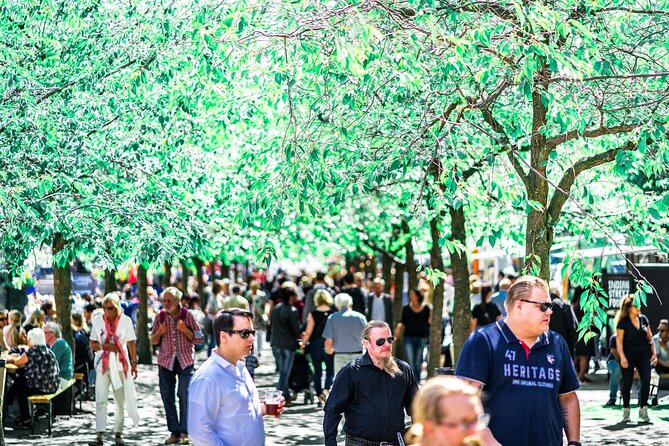
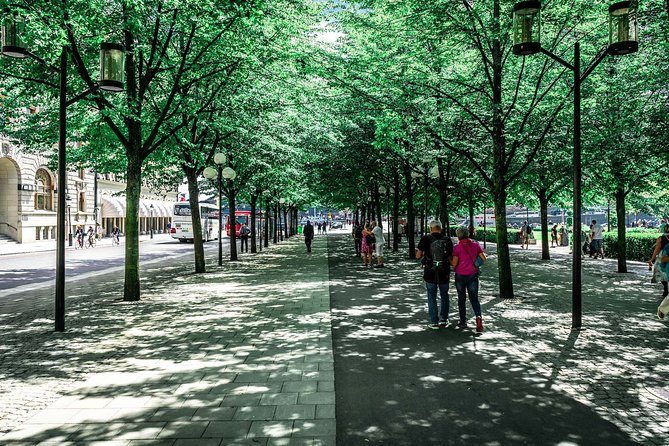
Then you reach Kungsträdgården, also nicknamed Kungsan. This is one of the city’s main meeting points, and the park history stretches back to the 1400s, when it began as a king’s kitchen garden. In the 1700s it shifted to public hands, and it stays flexible for modern life: concerts and festivals in summer, ice skating in winter, and seasonal moments like cherry blossoms in spring and leaf color changes in autumn. It’s a reminder that Stockholm’s “big sights” are not only palaces and churches. People gather in parks.
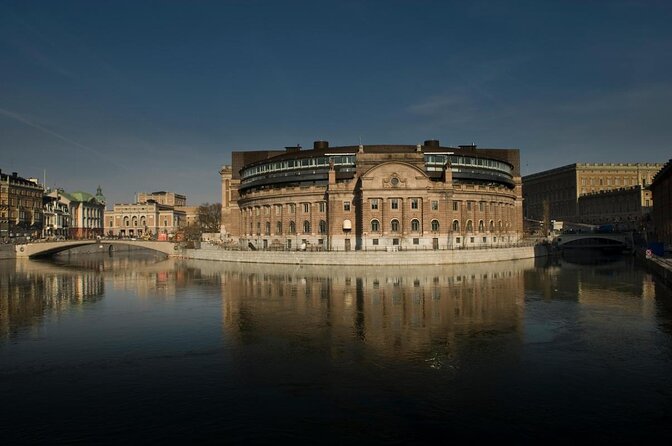
From there you get to the Parliament Building (Riksdagshuset) on Helgeandsholmen, an island of its own. The guide’s explanation makes the layout click: Sweden has a single parliamentary chamber (since 1971) with 349 members elected every four years. Even if you have no political interest, learning how a country organizes power makes the city feel less like a postcard and more like a functioning place.
Next, you see the Royal Palace from the outside. The Royal Palace is Sweden’s king’s official residence, and parts of the monarchy’s representation happen here in a way that makes it distinct among royal residences in Europe. The main drawback is also the reality: you’re usually viewing exterior and surrounding areas, not touring rooms. If you want interiors, that will require separate admission time on your own.
St George at Storkyrkan, plus the royal vows behind it
You then head toward Stockholm Cathedral, or Storkyrkan. This is where King Carl XVI Gustaf and Queen Silvia were married. The tour’s focus is practical and visual, with special attention on a standout artwork: the exterior statue of St. George and the Dragon.
If you step into the cathedral on your own, you may need to pay a small entrance fee. The tour itself notes that services are free, and there is year-round access, but plan on extra time if you want to go inside. The best approach is to follow your guide’s cue, then decide on the spot.
Inside, the wooden statue is the star. It dates back to the 1470s and was made after the first battle between Denmark and Sweden during the Kalmar Union. This is one of those moments where the guide’s context helps you read symbolism instead of just taking a photo. St George isn’t only a legend here, it’s tied to power shifts in northern Europe.
Gamla Stan on foot: Stortorget, the Iron Boy, and Mårten Trotzig
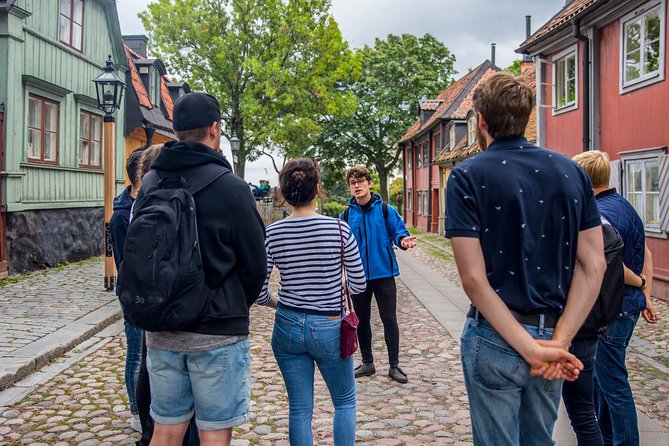
Once you move into the Old Town feel of Gamla Stan, the walk shifts from civic and royal markers into medieval patterns. Your guide ties this area to Stockholm’s older layers, including the city’s medieval past and references to Viking history.
The anchor stop is Stortorget, the main square of Gamla Stan and a strong place to begin your Old Town wandering later. It’s also the setting for major historical moments, including the Stockholm Bloodbath. Today you’ll also hear about the Nobel Museum being located here, with the note that it will move soon. Even if you never enter, the square helps you understand how the city concentrated activity over centuries.
A fun diversion follows: Iron Boy, officially Järnpojken, also known as the Boy looking at the Moon. The guide connects the statue to sculptor Liss Eriksson, with a story about a child who couldn’t sleep and would sit by the window, looking at the moon. It’s a charming reminder that Stockholm’s public art often carries personal, almost everyday origins.
Then you pass by another symbolism point tied to power and conflict: a St George statue that links Sweden (St George) and Denmark (the Dragon). The guide explanation also brings in figures like King Kristian I and Sten Sture the elder from the Kalmar Union era. If you like history, this part makes the Old Town feel themed, like the city is telling one long story in different fonts.
One of the tightest and most photogenic moments comes next: Mårten Trotzigs grand. It’s famous for being the narrowest alley in Stockholm, measuring about 90 centimeters at its tightest point. Some sources claim it’s the narrowest alley in Europe, but the tour notes that Prague has an even narrower one at about 60 centimeters. The takeaway for you: don’t stress about the exact superlative, enjoy the reality that you’re walking through a space that feels almost impossible for modern humans.
Slussen and Södermalm: viewpoints, pedestrian streets, and real neighborhood life
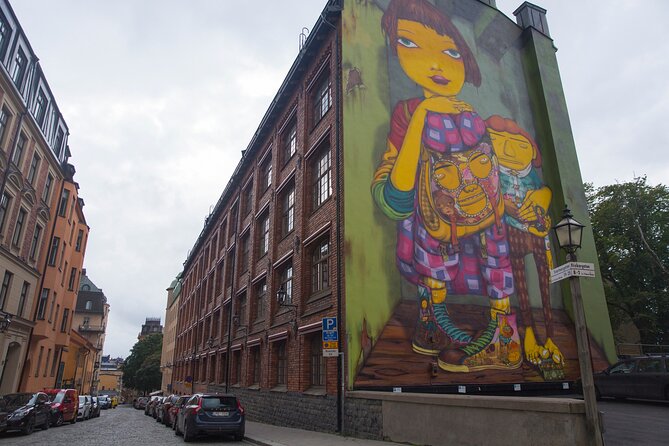
After the Old Town core, the tour bends toward Södermalm, and that shift is where Stockholm starts to feel more lived-in and less monumental.
You pass through Slussen, where the name means lock. The reason is water level differences: Lake Mälaren is about 70 centimeters higher than the Baltic Sea. Your guide’s explanation makes the geography feel concrete, not abstract. It also helps you understand why this zone is such a natural crossroads.
Then you move into pedestrian areas like Götgatsbacken, connected to Götgatan. This is where modern mainstream brands sit alongside places for vintage and thrift-style shopping. You’ll also hear about the laid-back nightlife with bars and pubs that feel more local than tourist-focused. For many first-time visitors, this is the ideal antidote to only seeing palaces and museums.
Next is the Katarinahissen area, an elevator that used to replace stairs up the cliff side. Today it’s a viewpoint and photo stop, with strong views out over Stockholm. The tour description notes it as picture-perfect, and it really is the kind of stop where you can pause, check your bearings, and then keep walking with less confusion.
A quieter square follows: Mosebacke Torg, near Södra Teatern. In summer it hosts a popular Biergarten, and the square also includes a sculpture called The Sisters. Even if you’re not there in summer, the space helps you slow down after the more famous zones.
Your route also threads through places tied to Swedish culture and literature. Fiskargatan is highlighted with a connection to Stieg Larsson and the Millennium series, including an apartment tied to Lisbeth Salander in the second book. If you’re a fan of Scandinavian noir or just like spotting how fiction borrows from real streets, this stop adds personality.
Then you reach Katarina Kyrka and its cemetery area. It’s tied to Swedish public figures, including Anna Lindh, the assassinated foreign minister. The tour also notes other buried names like Per Anders Fogelström, author of City of My Dreams, and troubadour Cornelis Vreeswijk. This is one of those moments where the guide’s tone matters. You’re not there for a big spectacle, you’re there to feel how Stockholm remembers people.
Later, you pass Master Mikaels Gata, known for its old, colorful wooden houses. The guide explains that many are owned by AB Stadsholmen, a government-owned real estate company tasked with caring for buildings of cultural heritage. You’ll see why foot travel matters here: the tight streets and wooden structures are harder to appreciate when you’re stuck inside a car.
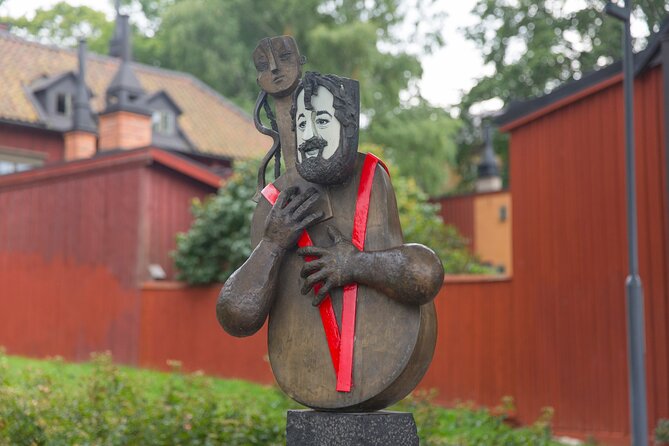
Finally, the walk ends at Cornelisparken, inaugurated in 2000 and dedicated to Cornelis Vreeswijk. The park also gives you great views, and it’s a fitting send-off because it blends culture with skyline angles.
Same daylight, a different plan:
- Stockholm: ABBA The Museum Entrance Ticket
★ 4.7 · 11,280 reviews - Stockholm: City Archipelago Sightseeing Cruise with Guide
★ 4.3 · 10,798 reviews - Stockholm: Skansen Open-Air Museum Admission Ticket
★ 4.5 · 3,427 reviews
The fika break and the best way to use your guide
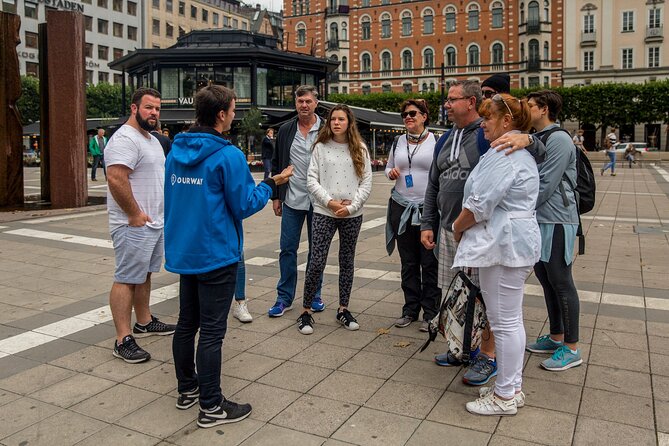
This is a private tour, so you’re not stuck with a fixed pace for a mixed crowd. Your guide can adjust the plan for interests and, depending on weather, walking stamina, and what you want to see, you can even agree on where to end.
A practical highlight: fika is included. That means you get coffee or tea plus a pastry during the walk. It sounds simple, but it’s a real value add on a 3-hour schedule. Sweden does not run on sightseeing alone, and a planned stop helps you keep energy for the later Old Town and Södermalm sections.
Your guide also gives you a built-in question window. This format works well if you’re trying to decide what to do next day. You can ask about where to spend more time, which viewpoints are worth repeating, and what areas you should skip if you’re short on energy.
In terms of guide quality, one guide named Katrin gets singled out for fascinating storytelling and helpful recommendations that make the trip feel organized rather than random.
Price and logistics: is $418.80 per person worth it?
Let’s talk value in plain terms. At $418.80 per person for a 3-hour private walking tour, you’re paying for time, guide attention, and the ability to customize. This isn’t a cheap bus tour, so the question is: will you get enough out of a guide-led walk to justify the cost?
Here’s how I’d judge it for you:
- You’re a good fit if you want a first-time orientation plus story-based context across multiple neighborhoods in a short window.
- You’re paying for private pacing, meaning you can ask questions, get clarifications, and adjust how long you linger at places like Stortorget, the narrow alley, or Katarinahissen.
- You get one included refreshment stop with fika, which keeps the day comfortable and helps you stay out longer.
Two logistics points that can affect value. The tour ends in Södermalm, so you might need extra transport planning if you want to return to your lodging fast. And because some of the walk includes cobblestones, the tour suits moderate fitness levels, especially if you’re wearing decent shoes.
One more practical detail: the tour is offered in English, and it runs in all weather conditions, so dress for rain or chill and expect the city streets to be part of the experience.
Should you book the Stockholm Syndrome Private Walking Tour?
Book it if you want a guided Stockholm “map in your head,” not just a list of famous buildings. This tour works well when you’re first in town, short on time, and you like the mix of royal, medieval, and neighborhood flavor, with the added bonus of fika and a guide who can tailor what you see.
Skip it if you hate walking or you need everything to end near where you started. Also, if your main goal is paid interior access, note that the Royal Palace and parts like the cathedral involve admission not included, so you may want a different day plan for museums and interiors.
FAQ
How long is the Stockholm walking tour?
It runs for about 3 hours. The exact pacing can change depending on weather, walking preferences, and what you want to focus on.
What’s included in the tour?
You get a professional guide and an included fika stop (coffee or tea plus a pastry). A mobile ticket is provided as well.
Do I need to pay admission for the Royal Palace or the cathedral?
Admission for the Royal Palace and Storkyrkan is listed as not included. If you want to enter Storkyrkan, the tour notes there is a small entrance fee.
Where do we meet, and where does the tour end?
You meet at Norrmalmstorg in Stockholm, Sweden. The tour ends at Cornelis park in Södermalm (Cornelis park 116 20 Stockholm).
Can the route be customized or shortened?
Yes. You can tell your guide what interests you, and depending on weather and how far you feel like walking, you can agree on where to end the tour.
Can I cancel for a full refund?
Yes. Free cancellation is available up to 24 hours before the experience starts for a full refund.
New on the Stockholm pages
- Stockholm Tour + Drottningholm Palace by VIP car PRIVATE Guide★ 5.0 · 1 review
- Discover Stockholm’s Christmas Market Magic with a Local★ 5.0 · 1 review
- First Class Airport Limousine Transfer: Arlanda Airport to Stockholm City★ 5.0 · 1 review
- Deluxe Stockholm Tour with Vasa Museum from Cruise Port★ 4.0 · 1 review
- Stockholm Shore Excursion from Cruise Port★ 5.0 · 1 review
- Stockholm Old Town Walking Tour + Archipelago Cruise★ 5.0 · 1 review
- Stockholm History Walking Tour★ 5.0 · 1 review
Guided Walks in Stockholm, compared.
Stockholm Gamla Stan: Old Town Walking Tour with Local Guide
Read our review →
The Original Stockholm Ghost Walk and Historical Tour – Gamla Stan
Read our review →
Best of Stockholm Walking Tour-3 Hours, Small Group max 10 people
Read our review →
Browse the lists this tour appears in