
Reviewed · OLD TOWN WALKING TRAILS
Stockholm: Old Town by Locals + Exclusive Souvenir Poster
Gamla Stan gets personal on this walk. I like the way it kicks off at Gustav III’s Obelisk by the Royal Palace, then strings together real streets with stories you cannot skim online. I also love the tiny stop details, like finding the 15 cm Iron Boy, not just the big-ticket sights. A possible drawback is the pace, 1 hour 45 minutes means lots of standing and short stops, not a slow coffee crawl.
This tour is built for getting your bearings fast, with a local guide guiding you street by street through Old Town’s key corners. You get it in English, with a mobile ticket and a group capped at 24, so it feels relaxed rather than crowded and chaotic. The big plus is that each stop is listed as admission ticket free, so you are paying for the stories and route, not entrance fees.
You also finish with an exclusive art poster, which is a very Stockholm souvenir choice, and it makes the walk feel like something you did on purpose. The route includes both famous monuments and darker medieval moments, like the Stockholm Bloodbath, so if you prefer light-only history, keep that in mind.
In This Review
- Key things worth knowing
- Why this Old Town walk costs $21.65 and feels like a local lesson
- Meeting at Slottsbacken and pacing through 12 stops
- Gustav III’s Obelisk to Storkyrkan: the Royal Palace area and Stockholm’s oldest church
- Finska kyrkan and Tessin’s baroque connections, then the 15 cm Iron Boy
- Trädgårdsgatan’s alleys and Rosenporten’s legends about taxes and queens
- Saint George statues, Ahlström’s Jungfrubur, and a stop by the Jewish Museum building
- Marten Trotzigs alley at 90 cm and the Carl Larsson birthplace story
- Evert Taube statue, the old monastery site, and why iron shaped Järntorget
- Kornhamnstorg bay window, the Great Fire of 1625, and old harbor clues
- Prästgatan and the German Church spire: 96 meters of merchant power
- Stortorget finale: cannonball proof, the Bloodbath story, Nobel sights, and your poster
- Should you book this Old Town by Locals tour?
- FAQ
- How long is the Stockholm Old Town walk?
- What language is the tour offered in?
- What is the meeting point for the tour?
- Where does the tour end?
- Is there an admission fee for the stops?
- Do I get a ticket on my phone?
- How big is the group?
- Are service animals allowed?
- Will I receive a souvenir poster?
- FAQ
- Is there free cancellation?
Key things worth knowing
- Start by the Royal Palace area, at Gustav III’s Obelisk, with context for how Stockholm formed in the 1200s
- Churches, alleys, and micro-sculptures in one loop, including the tiny Iron Boy (15 cm)
- Old Town trade and power themes, from the first electricity plant idea to bank buildings and iron commerce
- Legends with specific details, like political symbolism at Storkyrkan and the Rosenporten story
- Finish at Stortorget with major sights like the cannonball in the wall and the Nobel Prize building
- Take home a souvenir poster, an art memory of your route
Why this Old Town walk costs $21.65 and feels like a local lesson
At $21.65 per person for about 1 hour 45 minutes, you are not buying a museum ticket. You are buying route design, local explanations, and a guided walk that helps you connect the dots between landmarks and street-level details.
That value matters in Stockholm because Old Town can look like one pretty postcard after another. This tour aims to give you the “why it is here” behind what you see, from royal ceremonies and citizen guards to merchant neighborhoods and stories hidden in plain sight.
You also get an English guide and a small maximum group size of 24, which usually makes it easier to hear and ask questions at stops, even if everyone is gathering in the same tight spots.
More of Gamla Stan on foot:
Meeting at Slottsbacken and pacing through 12 stops
You meet at Slottsbacken 2, 111 30 Stockholm, and the walk ends at Stortorget, 111 29 Stockholm. The tour runs about 1 hour 45 minutes, with a steady cadence of short, focused stops rather than long museum-style time.
The biggest practical tip: plan for uneven ground and a lot of quick visual scanning. Old Town streets are narrow and you often pause in spots where the view is framed by buildings, not by open plazas, so good walking shoes help your enjoyment.
Because admission is listed as free for the stops on the route, you can keep moving and keep your budget stable. You can also expect a classic “walk and listen” rhythm, which is ideal if you want stories without switching into transit mode every few blocks.
Gustav III’s Obelisk to Storkyrkan: the Royal Palace area and Stockholm’s oldest church
You begin near Gustav III’s Obelisk, beside the Royal Palace. This square is a smart start point because your guide can set the big picture early, including how Stockholm traces back to Birger Jarl in the 1200s, and how the waterfront and island environment looked different in earlier times.
From there you head to Storkyrkan, described as Stockholm’s oldest church. You will see the dramatic Saint George and the Dragon statue and hear the legend as Stockholmers pass it along, including the idea of hidden political symbolism and small details that many people miss because they only look up and snap a photo.
If you like history that has human stakes, this part works. It turns stone and sculpture into clues, and it makes the church feel less like a stop and more like a story checkpoint.
Finska kyrkan and Tessin’s baroque connections, then the 15 cm Iron Boy
Next comes Finnish Church (Finska kyrkan). The tour connects it to Tessin Palace, a baroque masterpiece designed by the same architect as the Royal Palace, and it builds a timeline that includes the Finnish Church’s past as well as older uses of the space, like a royal tennis court and even a theater.
This stop is one of the best examples of why a guided walk helps. From the street, these buildings look like background scenery. With the right explanations, you start seeing how the same walls can serve different eras and different social needs.
Then you hunt down Jarnpojken, the 15 cm Iron Boy, Sweden’s tiniest public sculpture. The guide shares local traditions around him, including winter hats and whispered wishes, plus the charm of an idea that he once connects to the Old Town’s first private electricity plant.
Real talk: this is the kind of stop that is easy to overlook if you are walking on your own. Here, it becomes a fun mission, and that keeps the energy up when the route narrows.
Trädgårdsgatan’s alleys and Rosenporten’s legends about taxes and queens
You move into Trädgårdsgatan, where the tour focuses on how everyday city design reveals what life was like. You will hear about old anchor plates used to hold the houses together, and you will get the angle on the royal kitchen gardens that once grew nearby.
One of the more practical, mind-stretching topics comes next: why merchants built upper floors over the street to avoid land taxes. The alley becomes a math problem from the medieval world, not just a pretty narrow lane.
You also get a story about the shipmaster Olof, who dared to stop the king from demolishing a church. That detail adds a real sense of local agency, which is exactly what you want on an Old Town walk.
Then comes Rosenporten, tied to Köpmangatan, Stockholm’s oldest documented street. Your guide points out the copy of the Vädersoltavlan city view, a 16th-century scene packed with drama and symbolism, and you will also hear the legend of Rosenporten, where a young commoner’s path to becoming a queen begins.
If you are the kind of traveler who likes folklore with specific anchor points, this section is a good bet. It does not just say a legend happened, it shows you where the story connects to streets and details.
A few more Stockholm outings to weigh up
- Stockholm: ABBA The Museum Entrance Ticket
★ 4.7 · 11,280 reviews - Stockholm: City Archipelago Sightseeing Cruise with Guide
★ 4.3 · 10,798 reviews - Stockholm: Skansen Open-Air Museum Admission Ticket
★ 4.5 · 3,427 reviews
Saint George statues, Ahlström’s Jungfrubur, and a stop by the Jewish Museum building
The route brings you back to the bronze statue of Saint George and the Dragon, framed as a frozen moment of battle that has protected Stockholm for centuries. Even if you already saw the statue in theory, the tour helps you notice how narrow lanes and facing facades change the mood around it.
From there, you wander through alleys and learn about Ahlström’s Jungfrubur, a name linked to Bellman’s songs. You will also find mention of the Old Town’s most photographed balcony, a place where people still live behind historic façades, which is a reminder that Old Town is not a theme park.
At Tyska Brunnsplan, you pause by an elegant 18th-century fountain and the building that once housed Stockholm’s first synagogue, now the Jewish Museum. This is a respectful pivot from legend into lived cultural memory, and it gives the walk more depth than purely royal and merchant stories.
A small consideration: the tour includes multiple layers of symbolism and references to art and literature. If you zone out when details get layered, you might want to keep a steady focus so the names and connections land.
Marten Trotzigs alley at 90 cm and the Carl Larsson birthplace story
One of the most memorable physical experiences on the route is Marten Trotzigs grand, billed as Stockholm’s narrowest alley at only 90 cm wide. Your guide brings the surrounding streets into the conversation, talking about merchants, ship captains, and everyday life in the Old Town.
You will also hear about blind windows and why they exist. It is a small architectural detail that shows how buildings can look decorative but still serve practical purposes.
This stop also includes talk of local schools and a story about artist Carl Larsson, born here in poverty before becoming a national icon. That arc from hardship to recognition adds a human note to a walk that otherwise runs on monuments and legends.
Evert Taube statue, the old monastery site, and why iron shaped Järntorget
Next you reach the area connected to the largest medieval monastery in Stockholm, with stories that touch the Helga Lösen silver altarpiece, including tales of miracles and fire. The tour also points out nearby the world’s oldest preserved bank building, a reminder of the city’s trading power and financial roots.
Then the focus shifts to Järntorget, described as the bustling heart of business life where merchants and iron trade shaped the city. It makes sense: Stockholm grew on what could be moved, stored, sold, and financed.
You also meet the bronze statue of beloved troubadour Evert Taube, noted as a gift to the city from IKEA. It is a neat bridge between modern Sweden and its older cultural heritage, and it gives the walk a contemporary wink before you move back into historic streets.
Kornhamnstorg bay window, the Great Fire of 1625, and old harbor clues
At Kornhamnstorg, you are in a former harbor area, and your guide stops by Stockholm’s only surviving 17th-century bay window, decorated with carved figures. The tour connects those figures to “sisters” on the warship Vasa, tying Old Town stonework to one of Sweden’s most famous artifacts.
You then hear about the Great Fire of 1625, and how it reshaped this part of the city. Even if you do not love disaster history, this kind of explanation helps you understand why streets and building styles look the way they do today.
Your guide will also point out small everyday landmarks like a polkagris candy shop and a medieval-style cellar restaurant. These are not the center of the tour, but they are great for turning your walk into your next meal plan.
Prästgatan and the German Church spire: 96 meters of merchant power
On Prästgatan, you look at the German Church and its 96-meter spire, built by the influential merchant community. The route keeps reinforcing a theme, Old Town was not only royalty and religion, it was also commerce, foreign networks, and money moving through narrow lanes.
The guide talks about a city executioner who lived close to priests, plus the harsh punishments of medieval Stockholm. That is dark material, but it is also part of the real story behind the calm façades you see now.
You also stop at a rare Viking-age runestone built into a house wall. This is one of those “blink and you miss it” details that makes a guided walk feel worth it, because you are not just seeing what is famous, you are spotting what is easy to overlook.
Stortorget finale: cannonball proof, the Bloodbath story, Nobel sights, and your poster
You finish at Stortorget, Stockholm’s oldest square, surrounded by colorful houses full of history. Your guide shows the cannonball in the wall and tells the story of the 16th-century Stockholm Bloodbath, plus points out the Börshuset, home of the Nobel Prize in Literature.
This ending ties the Old Town timeline into modern Sweden in a very physical way. You are standing in the oldest square, hearing about violence and power from centuries ago, and then seeing the nearby building linked to a global cultural institution.
The tour ends at Stortorgsbrunnen with the final stories that shaped Sweden, and you receive the exclusive art poster as a take-home memory. I like souvenir posters for city walks because they work like a map you can keep, not just a random piece of paper.
If you are planning your day, this is a strong finish point. Stortorget is central, so you can easily continue with dinner or another short walk right after the tour.
Should you book this Old Town by Locals tour?
I think you should book it if you want Old Town context, not just landmarks. The route is packed with variety, big monuments, tiny sculptures like the Iron Boy, narrow lanes like Marten Trotzigs alley, plus real street-level clues about trade, taxes, architecture, and legend.
It is also a good value choice if you prefer a guided walk where multiple stops are admission ticket free, so you can keep spending focused on meals and transit instead of tickets. The group size cap and English offering make it a practical fit for most visitors.
Skip it, or go into it with eyes open, if you dislike dark medieval themes. The walk references harsh punishments and the Stockholm Bloodbath, and it leans into symbolism and literature references that reward your attention.
FAQ
How long is the Stockholm Old Town walk?
It lasts about 1 hour 45 minutes.
What language is the tour offered in?
The tour is offered in English.
What is the meeting point for the tour?
The start is Slottsbacken 2, 111 30 Stockholm, Sweden.
Where does the tour end?
The tour ends at Stortorget, 111 29 Stockholm, Sweden.
Is there an admission fee for the stops?
The itinerary lists admission ticket free for the stops on the route.
Do I get a ticket on my phone?
Yes. You receive a mobile ticket.
How big is the group?
The tour has a maximum of 24 travelers.
Are service animals allowed?
Yes, service animals are allowed.
Will I receive a souvenir poster?
Yes. Each guest receives an exclusive art poster at the end of the tour.
FAQ
Is there free cancellation?
Yes. You can cancel for a full refund up to 24 hours in advance of the experience start time.
New on the Stockholm pages
- Discover Stockholm’s Christmas Market Magic with a Local★ 5.0 · 1 review
- Stockholm Tour + Drottningholm Palace by VIP car PRIVATE Guide★ 5.0 · 1 review
- Deluxe Stockholm Tour with Vasa Museum from Cruise Port★ 4.0 · 1 review
- First Class Airport Limousine Transfer: Arlanda Airport to Stockholm City★ 5.0 · 1 review
- Stockholm Shore Excursion from Cruise Port★ 5.0 · 1 review
- Stockholm Old Town Walking Tour + Archipelago Cruise★ 5.0 · 1 review
- Stockholm History Walking Tour★ 5.0 · 1 review
Old Town Walking Trails, compared.
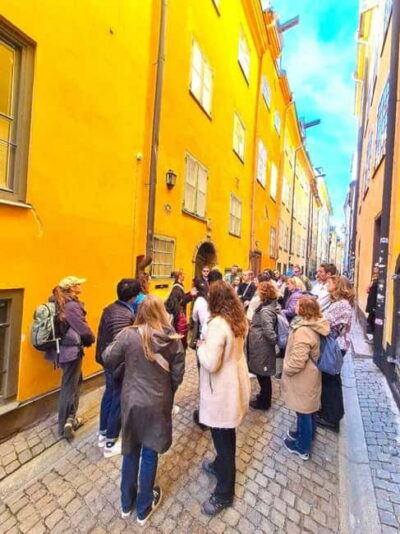
Stockholm Gamla Stan: Old Town Walking Tour with Local Guide
Read our review →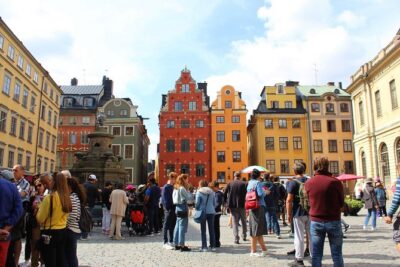
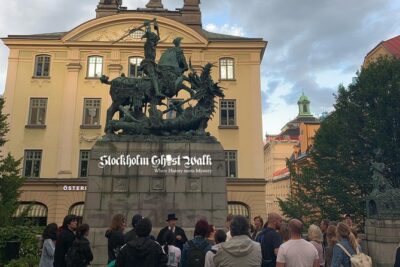
The Original Stockholm Ghost Walk and Historical Tour – Gamla Stan
Read our review →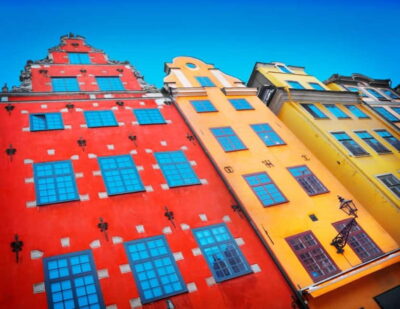
Guided Historic Old Town Walking Tour with Local
Read our review →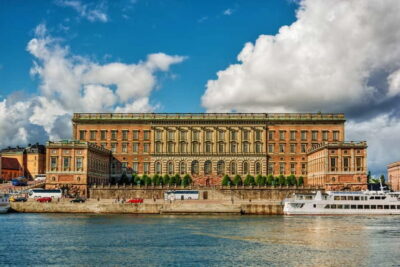
Walking Tour of Stockholm’s Old Town, Gamla Stan
Read our review →
Browse the lists this tour appears in