
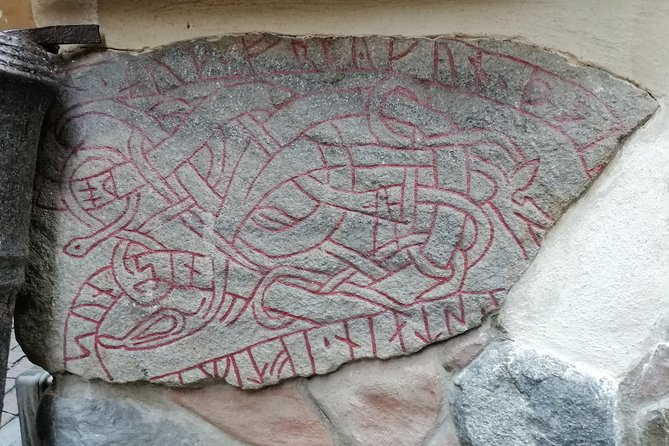
Reviewed · GUIDED WALKS IN STOCKHOLM
Stockholm Old Town and the Viking Museum, a Small Group Walking Tour
Vikings meet royal palaces in three hours. I like how this small-group tour stitches together big story points across Stockholm, then makes the Viking Museum easy with entry included and no ticket line waiting. You get a guided walk that keeps history moving, not stuck in one spot.
I also like the personal feel, since the group maxes at 10. You may even be guided by someone like Bengt Nykvist, who has been praised for friendly hosting and clear English, with plenty of context as you pass landmarks like Riddarholmen, Riddarhuset, and the Royal Palace. One consideration: the tour notes a moderate physical fitness level, so come ready for a steady 3-hour walk.
In This Review
- Key things to look for on this Stockholm Old Town plus Viking Museum tour
- Why this Old Town walk plus Viking Museum combo works
- Getting your bearings at Gamla Stan Metro and the early Stockholm storyline
- Riddarholmen to Riddarhuset: Birger Jarl, Stockholm’s first written mention, and the symbols of power
- Vasabron and the road from warrior kings to political institutions
- Lejonbacken at the Royal Palace: Karl XII’s eastward point and Sweden’s pivot after setbacks
- Jarnpojken and Stortorget: quick statue joy, Nobel connections, and how the Old Town tells modern stories
- Stockholm Old Town’s peace era and the bridge to Djurgården
- Inside the Viking Museum: included entry, a guided focus, and time to keep exploring
- Price, included extras, and value for your time
- Who this tour fits best, and who should skip it
- Practical tips to make the most of your 3-hour plan
- Should you book this Stockholm Old Town and Viking Museum tour?
Key things to look for on this Stockholm Old Town plus Viking Museum tour
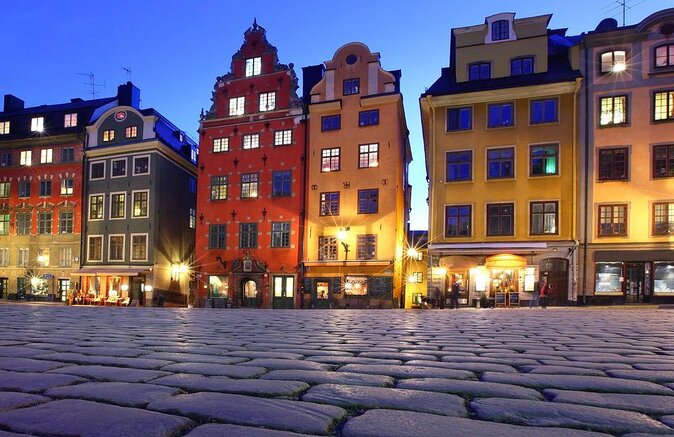
Gamla Stan starts you underground, so you get oriented fast at the Gamla Stan Metro station.
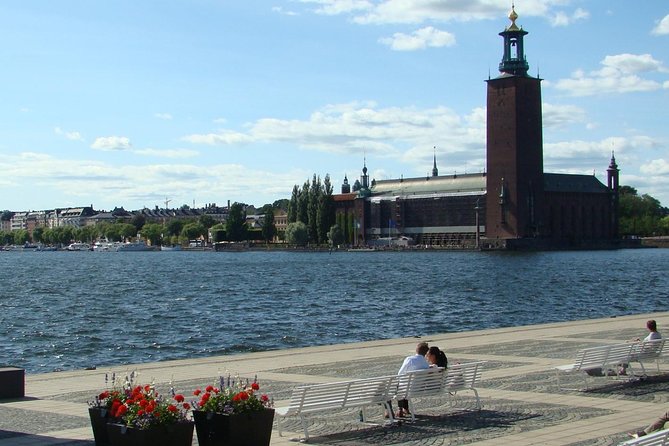
Riddarholmen gives you a classic view over Lake Mälaren toward Stockholm City Hall.
You’ll stop at power symbols tied to Gustav Vasa, Birger Jarl, and Sweden’s political evolution.
Lejonbacken at the Royal Palace area points you toward the east with Karl XII’s statue and the Poltava 1709 defeat context.
Jarnpojken is treated as a quick, fun statue break, not a dead-end photo stop.
You finish with included Viking Museum entry and time to keep exploring after the guided portion.
Why this Old Town walk plus Viking Museum combo works
Stockholm Old Town can be pretty, but it can also feel like you are just collecting photos. This tour helps you connect the dots. As you walk, your guide links the city’s physical landmarks to the moments that shaped Sweden, from early settlement clues to the political and cultural shifts that still show up in the streets.
The format is also practical. You are not spending the first part figuring out where to go or how to read what you see. Instead, you get a guided route that passes major sites in a logical sequence, with frequent short stops so you stay alert and engaged.
Then you get a clean payoff. The tour includes Viking Museum entry, and it comes with a guided introduction of what to focus on inside. That matters, because many visitors walk into museum spaces and wonder, where do I look first? Here, you get that nudge, and you also have time to continue on your own at the end.
Small group size is not a luxury detail here. With a max of 10 people, your questions get real answers. The overall tone from the praised guides like Bengt Nykvist is friendly, conversational, and anchored in clear English, so you are not fighting for understanding while trying to keep up outdoors.
More Guided Walks in Stockholm
Getting your bearings at Gamla Stan Metro and the early Stockholm storyline
You start near Munkbrogatan 8, by Gamla Stan Metro station, in front of the Pressbyrån kiosk. It is a good setup for a morning tour because it is close to transit, and it helps you get your bearings quickly before you move through the streets.
From that starting point, the tour begins with a time-lapse of sorts. You hear the early history of Stockholm and Sweden, starting from the ice age and moving toward the first settlements on the islands. It is a simple move on the timeline, but it works. It turns Old Town from a name on a map into a place with an origin story.
Then the route moves toward Riddarholmen, and you get a view over Lake Mälaren with Stockholm City Hall in the distance. That kind of orientation view is more than scenery. It helps you understand why these areas were valuable, because Stockholm’s geography is the backbone of its history.
This first part also sets the pace. It is not a long lecture. You get compact explanations tied to where you are standing, which is perfect if you want structure without feeling trapped in a classroom.
Riddarholmen to Riddarhuset: Birger Jarl, Stockholm’s first written mention, and the symbols of power
Riddarholmen is one of those places where the setting does half the work. You get the church area, the island feel, and that look back toward the water. Outside Riddarholmen Church, the tour connects the area to the presumed founder of Stockholm, Birger Jarl, or at least the statue associated with him.
Then comes a standout historical “marker.” The tour points out that 1252 is the year Stockholm was first mentioned in a preserved written text. That detail matters because it gives you a way to date what you are seeing. Instead of saying Old Town is old, you learn exactly how far back the written record goes.
From there, you shift to Riddarhuset, the House of Nobility. Even if you only pass by the building area, it makes sense because the stop is tied to the personalities who shaped Sweden. You look at the statue of Gustav Vasa, presented here as the father of Sweden.
The guide connects his rise to major turning points: Gustav Vasa marched into Stockholm in 1523, and the story is framed as Sweden becoming sovereign and not controlled by foreign powers. You also hear about the bloodbath of Stockholm, including that between 80 and 100 noblemen were killed, and that this was followed by an uprising against the southern neighbor who had taken control.
Another piece you learn here is religious change. The tour explains how Gustav Vasa helped shift Sweden from Catholicism to Lutheran Protestantism. That is a big deal, because it is not just politics in the abstract. It affects everything from public life to institutions that later show up in how the country governs.
Vasabron and the road from warrior kings to political institutions
At Vasabron, the tour moves from founders and revolts into the era of “who rules and how far their power reaches.” The guide talks about Gustav Vasa’s heirs, and it zooms in on his grandson, Gustav II Adolf, described as a greatest among Sweden’s warrior kings.
One reason this stop feels more concrete is that it ties military success to geography. During his reign, the Baltic Sea is described as becoming almost an inland sea, surrounded by Swedish possessions. That is a helpful mental picture, because Sweden’s history is so tied to control of waterways and access.
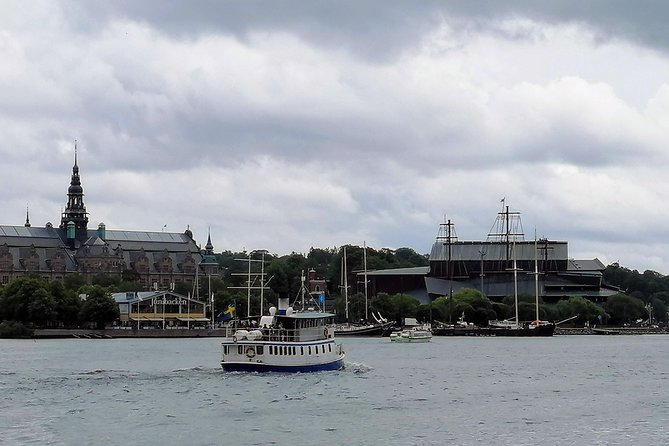
And you get a neat bridge to material culture. It’s also during Gustav II Adolf’s time that the Vasa ship was built. Even if you do not go inside the Vasa Museum on this tour, hearing about the ship here plants the seed so that, later, you will understand what you are looking for.
After that, the route arrives at the Parliament Building area, Riksdagshuset. This is where the tour does something smart for visitors: it explains that the idea of representation took a long time to mature.
You hear about the earlier “Riksdag of the Estates,” where nobility, clergy, burghers, and peasants met separately, then gathered with the king in the palace. Then you learn that the institution was dissolved in 1866, and that a two-chamber parliament was introduced, still without equal voting rights for all citizens.
The final step in this political ladder is 1921, when the first elections with general suffrage are highlighted. The story frames it as the outcome of a long political struggle led by liberals and socialists.
If you tend to think of politics as something that suddenly happens, this kind of explanation is a wake-up call. You realize you are walking past symbols of systems that evolved over centuries.
Lejonbacken at the Royal Palace: Karl XII’s eastward point and Sweden’s pivot after setbacks
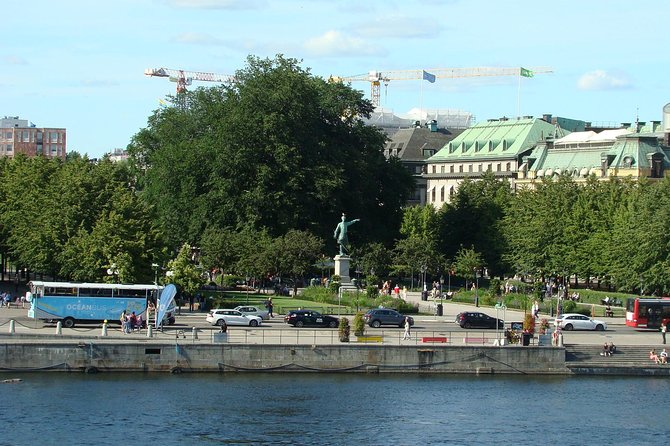
Next you reach the Royal Palace area, specifically Lejonbacken on the north side. This is one of those stops where the guide’s framing makes the statue detail feel important instead of random.
The tour begins with the idea that Russia, personified here by Peter the Great, ends Swedish dreams of being a major northern power. Then you hear about Karl XII, described as the last warrior king, and a detail that you can actually notice: his statue points to the east, toward where victories began with his Caroleans.
Then the story turns. The guide connects it to the eventual defeat by Peter the Great in Poltava in 1709. That defeat is not treated like a tragic footnote. It is used as a turning point that helps explain the direction Sweden moved afterward.
The tour also brings in cultural change through Gustav III. The guide describes an Age of enlightenment influence, and you learn that Gustav III, called an enlightened despot, had a deep interest in theatre and made contributions in the arts.
So at the Royal Palace stop you are not just learning about war. You also get a sense that Sweden’s identity shifted as Europe’s intellectual and cultural currents changed.
More of Gamla Stan on foot:
- The Original Stockholm Ghost Walk and Historical Tour – Gamla Stan
★ 4.5 · 1,165 reviews - Stockholm: Old Town Private Walking Tour
★ 4.7 · 675 reviews - Stockholm: Guided Historic Old Town Walking Tour with Local
★ 4.8 · 618 reviews
Jarnpojken and Stortorget: quick statue joy, Nobel connections, and how the Old Town tells modern stories
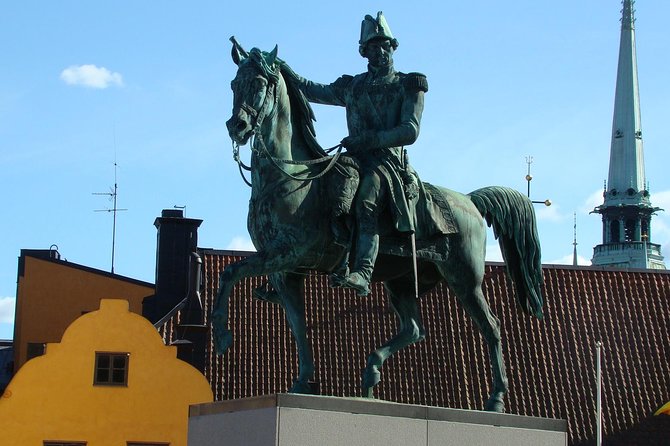
From the Royal Palace area, the tour includes a short, fun pause at Jarnpojken, described as the smallest and nicest statue in Sweden. It is brief, but that is the point. Not every stop has to be heavy. A small, clear “break” like this helps you keep energy for the next big segments.
Then you move to Stortorget, a square with a modern connection. Here, the tour brings up the Nobel Price Museum, situated at Stortorget, and explains how the Swedish Royal Academies designate winners in important fields of science and art. It is a helpful reminder that Sweden’s influence is not only medieval and royal. It also reaches into institutions that shaped the modern world.
This is also where the tour becomes less about battles and more about systems, recognition, and national identity. After all, Nobel history is built on institutions and decisions. It fits naturally after the earlier Parliament discussion.
Stockholm Old Town’s peace era and the bridge to Djurgården
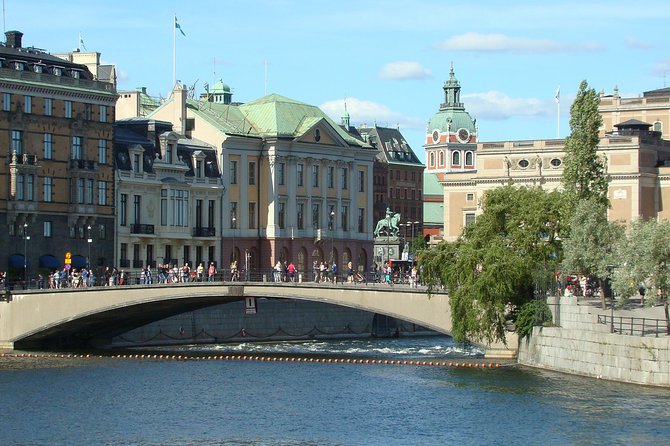
By the time you reach the core Old Town area near the statue of Carl XIV Johan, the tour shifts toward the 19th century and beyond. The guide frames Carl XIV Johan, first of the Bernadottes, as being imported from France in the early 1800s, with the aim of regaining what was lost to the Russians.
But instead of going full conqueror mode, the emphasis here is diplomacy, plus infrastructure and education. That is a different kind of power, and it sets up the next key detail: in 2014, Sweden celebrated 200 years of peace.
From there, you get a “how did a country build stability” thread. The guide connects peace to the industrial revolution, natural resources, Swedish inventions, and a foundation for a welfare state. The story continues into the 20th and 21st centuries with entrepreneurs driving development.
Then you head toward Skeppsbron. The tour uses Skeppsbron as the starting point for a ferry hop to Djurgården, the island where several major museums sit.
The ferry included here is the Djurgårdsfärjan. It is one of those simple transport inclusions that actually changes the mood of the day. You go from street-level history to a water-level view of Stockholm, and you arrive at the next museum area feeling like you transitioned, not like you just walked more blocks.
Inside the Viking Museum: included entry, a guided focus, and time to keep exploring
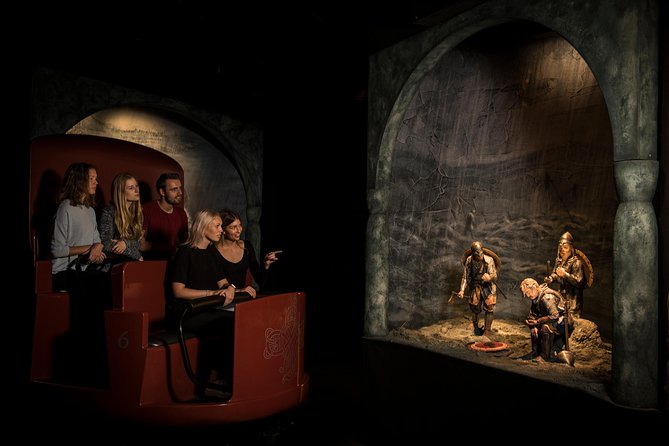
Your tour ends at the Viking Museum at Djurgårdsstrand 15, and the key practical win is that entry is included. The guide gives you a museum introduction, with an explanation of some of the attractions so you know what to look for during your visit.
The museum is described as a small-scale experience, not a typical huge museum warehouse. The tour highlights that it combines thrilling experiences with historical facts, created through a collaboration between professionals in performing arts and Sweden’s most respected historical scientists.
That mix is exactly why this museum works well after an Old Town walk. Outside, you talked about names, dates, power shifts, and institutions. Inside, you get a more experiential approach, tied back to the Viking era that still powers Stockholm’s identity.
The guided portion in the Viking Museum lasts about 30 minutes. After that, the tour is finished, but you are welcome to stay and keep exploring. That open-ended time is valuable because people move at different speeds. You can spend more time in the areas that grab you most.
Price, included extras, and value for your time
At $118.96 per person, this tour is not a budget impulse buy. You should think of it as paying for three things: a guided route through Stockholm Old Town, included Viking Museum entry, and the Djurgårdsfärjan ferry connection to Djurgården.
It is also booked far in advance on average, which usually signals a steady demand for this exact combo, not just for the museum alone. The longer the demand pattern holds, the more likely it is that the route and timing work for most visitors.
The small group size also affects value. A guided walk with up to 10 people means you get more attention and less waiting, and the lack of ticket line time for the museum is a real time saver in a city where you might otherwise spend energy figuring out the logistics.
If you are visiting Stockholm for the first time and you want one organized way to see the political and cultural spine of the city, this feels like solid value. If you already know Swedish history well and you just want museum time, you might question whether the street portion is worth it. For many first-timers, the guided context is the whole point.
Who this tour fits best, and who should skip it
This tour fits you best if:
- you like history that connects to real places, not just dates on a page
- you want a guided route that keeps moving through Stockholm’s major landmarks
- you prefer smaller groups and clear English explanations
- you want the Viking Museum without extra ticket hassle
You might consider skipping or adjusting your plan if:
- you know you do not do well with steady walking, since the tour notes moderate physical fitness
- you already planned to spend a lot of time inside museums in Djurgården and you want total control, not guided structure
The tour also works well as a “set up the day” experience. It starts at 10:00 am and gets you to Djurgården in time to keep going afterward.
Practical tips to make the most of your 3-hour plan
Start early, because this is a morning tour starting at 10:00 am. The sooner you get into Gamla Stan’s rhythm, the easier it is to follow the storyline without fatigue.
Wear shoes you can trust. The tour is described as having a moderate physical fitness level, and while it is not described as intense, you will still be on your feet through multiple stops.
At the Viking Museum, use the guide’s opening to pick your focus. The guide introduces attractions, so you know what to look for once the guided portion ends.
Afterward, you can keep exploring Djurgården on your own. The tour itself is done, but you can continue to other popular spots on the island, including the ABBA Museum, the Vasa Museum, Gröna Lund, and Skansen. They are not part of this tour, but the location makes it easy to stack them in the afternoon.
If you like planning around transit, you are also in a good spot. Djurgården connects back to the city by ferry or tram, so you are not stuck.
Should you book this Stockholm Old Town and Viking Museum tour?
Book it if you want one efficient day structure that teaches you how Stockholm became Stockholm. The included Viking Museum entry saves time, and the small group size keeps the experience personal. I especially like that the route does not just pass landmarks, it explains why they matter, from Birger Jarl and Stockholm’s first written mention through Gustav Vasa and into the later political system changes.
Pass or modify your plan if you hate walking, or if you would rather spend your time reading at your own pace without guided context. Also, if you already know the history and you only want the museum, you might feel this is more than you need.
Overall, this is a strong first-visit choice for Stockholm, especially if you want Old Town plus Vikings in a single, well-paced 3-hour block.
Museums Worth an Hour in Stockholm
- Stockholm: ABBA The Museum Entrance Ticket
★ 4.7 · 11,280 reviews - Stockholm: Skansen Open-Air Museum Admission Ticket
★ 4.5 · 3,427 reviews - Stockholm: Paradox Museum Entry Ticket
★ 4.2 · 3,031 reviews - Stockholm Pass: Save up to 50% – Includes Vasa Museum Ticket
★ 4.1 · 2,392 reviews
Viking-Age Sites near Stockholm
- Stockholm: The Viking Museum Exhibition and Viking Ride
★ 4.5 · 667 reviews - Entrance ticket to The Viking Museum
★ 4.0 · 301 reviews - Viking History, Runes & Countryside 9h Tour to Sigtuna & Uppsala
★ 4.5 · 283 reviews - Viking History and Swedish Countryside Tour to Sigtuna & Uppsala
★ 4.5 · 162 reviews
New on the Stockholm pages
- Discover Stockholm’s Christmas Market Magic with a Local★ 5.0 · 1 review
- Stockholm Tour + Drottningholm Palace by VIP car PRIVATE Guide★ 5.0 · 1 review
- Deluxe Stockholm Tour with Vasa Museum from Cruise Port★ 4.0 · 1 review
- First Class Airport Limousine Transfer: Arlanda Airport to Stockholm City★ 5.0 · 1 review
- Stockholm Shore Excursion from Cruise Port★ 5.0 · 1 review
- Stockholm Old Town Walking Tour + Archipelago Cruise★ 5.0 · 1 review
- Stockholm History Walking Tour★ 5.0 · 1 review
Guided Walks in Stockholm, compared.
Stockholm Gamla Stan: Old Town Walking Tour with Local Guide
Read our review →
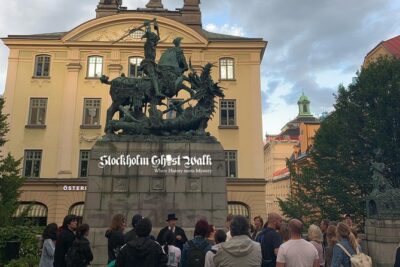
The Original Stockholm Ghost Walk and Historical Tour – Gamla Stan
Read our review →
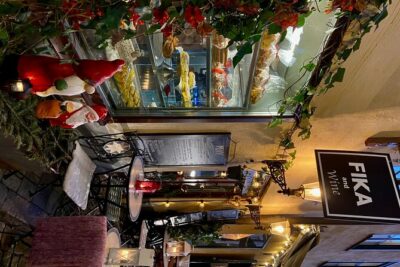
Best of Stockholm Walking Tour-3 Hours, Small Group max 10 people
Read our review →
Browse the lists this tour appears in