
Reviewed · GUIDED WALKS IN STOCKHOLM
Stockholm: Modern City and Old Town, a Small Group Walking Tour
Modern Stockholm meets medieval streets in two hours. This small-group walk strings together postwar city planning and the medieval lanes of Old Town, so you see how the city grew up without losing its roots. You begin at Hötorget and finish in the Nobel Prize Museum area at Stortorget.
I like that the route mixes big-city landmarks with stories you can actually picture, especially around Sergels torg and Kulturhuset. I also like the value angle, since many stops are free to view and the pacing stays light on logistics with a mobile ticket and an English guide.
One thing to consider: it is still a walking tour. Expect about two hours on city streets and cobblestones in Old Town, and Konserthuset has an intro where admission is not included, so it is mostly an outside-and-explain kind of stop.
In This Review
- Key things to know before you go
- Where the tour really starts, Hötorget to Konserthuset
- Kungstornen, early skyscrapers and why Stockholm felt modern
- Sergels torg and Kulturhuset: the postwar rebuild you can still see
- Brunkebergstorg and Urban Escape: when work became an experience
- Gustav II Adolf and the power map behind the statues
- Riksdagshuset and the long road to voting rights
- The Royal Palace area, Lejonbacken stops and the east-pointing story
- Old Town cobblestones to Stortorget, ending in Nobel territory
- Price, pace, and value for money at about $78.60
- Who should book, and who might want a different plan
- Should you book Stockholm: Modern City and Old Town?
- FAQ
- How long is the Stockholm Modern City and Old Town walking tour?
- What is the meeting point and where does the tour end?
- What time does the tour begin?
- Is the tour offered in English, and do I get a mobile ticket?
- Is admission included for the stops?
- How many people are in the group?
- What fitness level do I need?
- Can I cancel and get a refund?
Key things to know before you go
- Konserthuset start point: you get a short Sweden and Stockholm intro, with admission not included
- Kungstornen details: twin towers built between 1919 and 1925, often described as Europe’s early modern skyscrapers
- Sergels torg and the 1945 redevelopment plan: a city renewal that led to demolishing over 750 buildings
- Kulturhuset as a modernism marker: a cultural center tied to Stockholm’s modern growth
- Urban Escape at Brunkebergstorg: based on AMF interviews with 500 young people, and Spotify has an office there
- Old Town finish at Stortorget: you end in the square where the Nobel Prize Museum sits
Where the tour really starts, Hötorget to Konserthuset
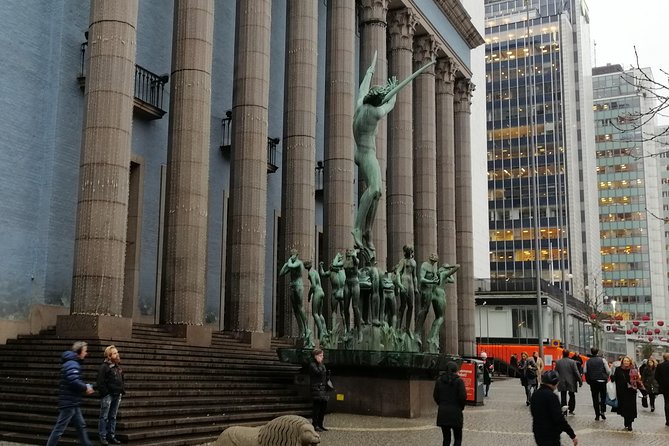
The meeting point is Hötorget 14, and the tour runs starting at 10:00 am. From there, you head toward Konserthuset Stockholm, the concert hall, and you kick things off with a short introduction to Sweden and Stockholm.
This opening works because it frames everything you will see next. Instead of treating the city like a pile of monuments, you get the idea that Stockholm is a living mix of old and new, and the modern parts have a backstory. Also, Konserthuset is only about 10 minutes, and the admission ticket is not included. So you should treat this as an orientation stop, not a museum visit.
If you like your sightseeing with context, this is a good start. If you were hoping for a long indoor stop at every landmark, adjust your expectations, because the tour is built around short, focused moments.
More City Sightseeing in Stockholm


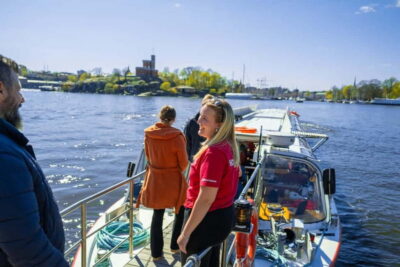
Kungstornen, early skyscrapers and why Stockholm felt modern
Next comes Kungstornen, the King’s Towers. These are twin tower skyscrapers built between 1919 and 1925. The guide theme here is how early Stockholm joined the modern skyline game, and they are often described as the first modern skyscrapers in Europe.
Even if you have never studied architecture, you can still “read” the city here. You see how the skyline began to change, and you get a sense of how Stockholm was thinking in big, modern terms long before late 20th century redevelopment shaped the core.
Kungstornen is a quick stop, about 5 minutes, and admission is free. The practical takeaway: bring your camera readiness, because photo angles are mostly from the outside and you will move on fast.
Sergels torg and Kulturhuset: the postwar rebuild you can still see
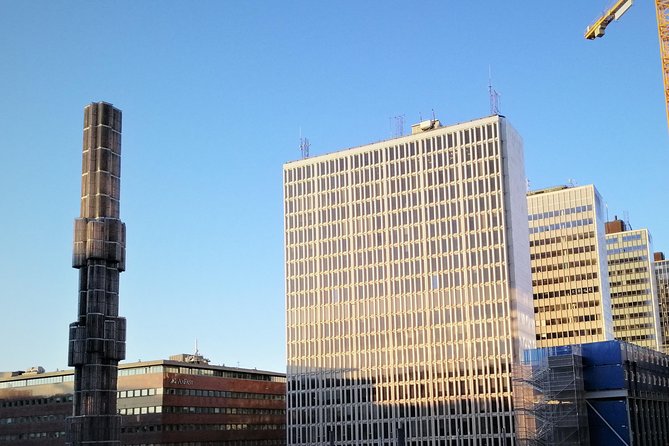
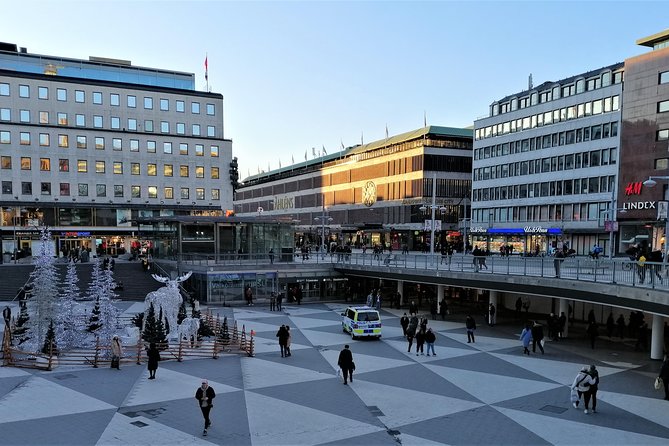
After the towers, you reach Sergels torg. This is where the tour turns from landmark hopping into city-structure storytelling.
A major renewal plan was decided by the Stockholm town council in 1945, and it rolled out over the 1950s, 1960s, and 1970s. Over 750 buildings were demolished to make way for new infrastructure and redevelopment. That is a huge number, and it is why this part of the city still sparks debate in Sweden and abroad, both criticized and admired.
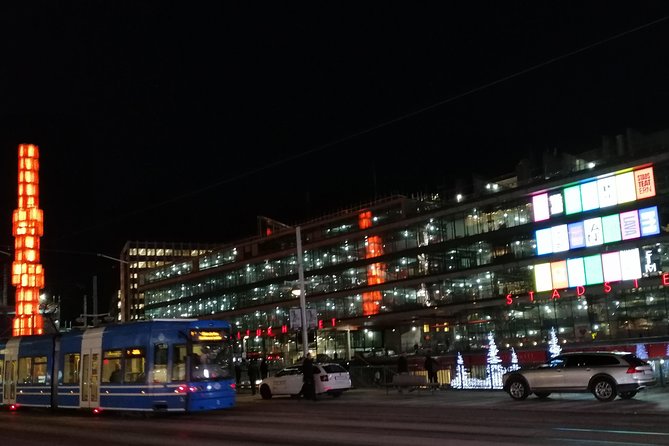
Then you add Kulturhuset Stadsteatern, the House of Culture just south of Sergels torg. Kulturhuset is described as a symbol for Stockholm and for the growth of modernism in Sweden. This is one of those stops where you should look at the building, but also listen for why it matters. It is not just a location, it is an example of how modern design became part of public life.
Both stops are about 10 minutes each and free to view. The drawback is simple: because the city renewal story is big, you only get a concentrated version in a short time. If you want to go deeper, you can always circle back later on your own, but this walk gives you the key storyline first.
Brunkebergstorg and Urban Escape: when work became an experience
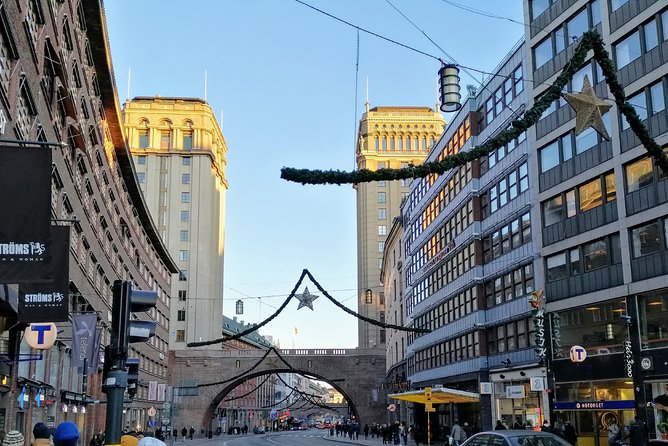
Brunkebergstorg is in the Norrmalm district, central Stockholm. The square was shaped during the 1960s redevelopment, when almost all of the older buildings around it were demolished. Today, the area is dominated by financial institutions like the Riksbank, and it has also developed with hotels and restaurants in the late 2010s.
What makes this stop memorable is the Urban Escape project. The idea came from an initiative by the real estate company AMF. They interviewed 500 young people, including students and people already working, about what workplace they would want in the future. The short version of the answer: an experience. It was less about houses and more about feelings and experiences.
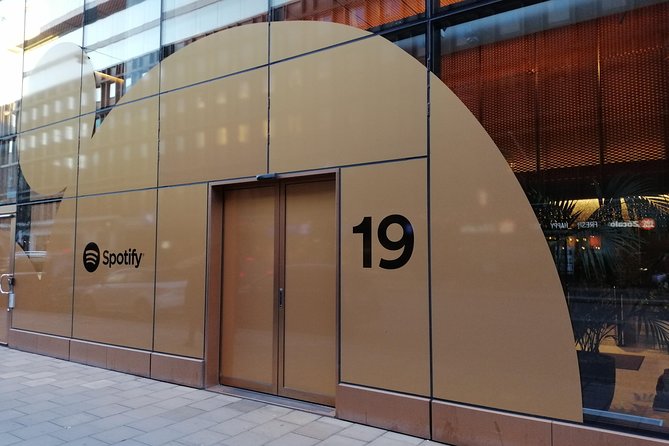
Now, Urban Escape is where you can see an example of that thinking, since Spotify has an office there.
This is a great stop if you like modern city life and want more than a postcard view. It is also a reminder that redevelopment is not only about buildings, it is about how people live day to day.
Gustav II Adolf and the power map behind the statues
After the modern city blocks, the tour shifts into the statue-and-alignment world around Gustav II Adolfs Statue. The guide’s framing here is the long arc of Swedish power.
Gustav II Adolf is described as the grandson of Gustav Vasa and one of the “warrior kings.” During his time, the Baltic Sea became almost like an inland sea surrounded by Swedish possessions. And it is during his reign that the Vasa ship was built.
This stop is about 10 minutes and free. The value is that the guide connects these monuments to geography and ambition, so you understand why these figures are still part of the city’s visual language.
Even if statues do not usually pull you in, this one helps you connect names you may see later, including in museums or books. It turns background reading into something you can point at on the street.
More Guided Walks in Stockholm
- Stockholm: Ghost Walk and Historical Tour
★ 4.7 · 2,685 reviews - Stockholm Gamla Stan: Old Town Walking Tour with Local Guide
★ 4.7 · 1,714 reviews - Walking Tour of Stockholm Old Town
★ 5.0 · 1,175 reviews
Riksdagshuset and the long road to voting rights
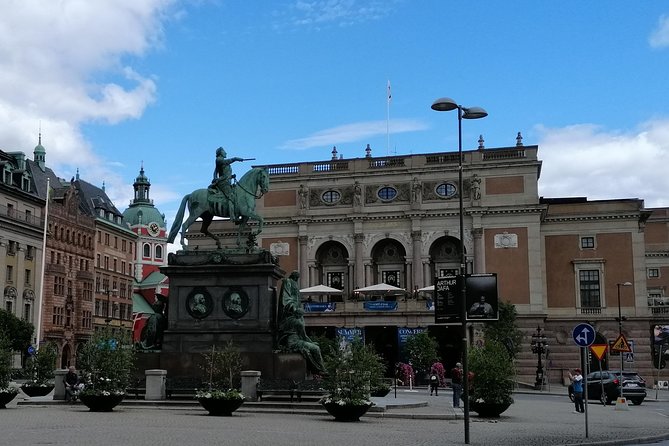
Now you move to the Parliament Building, the Riksdagshuset. This portion is another “listen for the thread” segment.
You get the story of the earlier Ståndsriksdagen, the Riksdag of the Estates, where nobility, clergy, burghers, and peasants met separately and did not vote in the same way. That system lasted until it was dissolved in 1866. After that, Sweden introduced a parliament with two chambers, but still without equal voting rights for all citizens.
The big turning point described here is general suffrage in 1921, after a long political struggle led by liberals and socialists.
The practical benefit for you: it makes the building more than a backdrop. You can look at the exterior and understand what changed over time, and why modern democracy in Sweden had a struggle behind it.
It is a short stop of about 10 minutes and free. If you enjoy politics and want a quick timeline, this is one of the strongest parts of the route.
The Royal Palace area, Lejonbacken stops and the east-pointing story
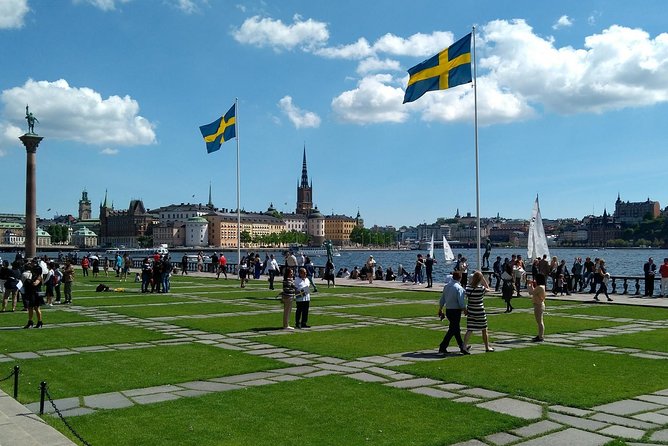
The tour then goes to the Royal Palace area, stopping at Lejonbacken on the north side of the palace.
This is another place where the details matter. The guide points out how Peter the Great of Russia ended Swedish dreams of being a Northern European power. Karl XII, described as the last of the warrior kings, is still pointing east. That direction matters because it connects to the early victories of the Caroleans, followed by the defeat by Peter the Great in Poltava in 1709.
Next, you also get a connection to the Age of Enlightenment. Gustav III is described as an enlightened despot with strong interest in arts and science, including contributions to theatre.
Finally, outside the Royal Palace, there is a statue of Carl XIV Johan, who ruled from 1818 to 1844. He is described as the first of the Bernadottes, imported to Sweden from France to help win back what Sweden lost to Russians. His emphasis is diplomacy, infrastructure, and education. The tour also notes that 2014 marked 200 years of peace celebrated in Sweden, linking that long stability to industrial development, natural resources, Swedish inventions, and the building of the welfare state in later decades.
This stop is about 10 minutes and free. The only consideration is attention. If you tune out for a minute, you can miss the logic behind why these statues are positioned the way they are.
Old Town cobblestones to Stortorget, ending in Nobel territory
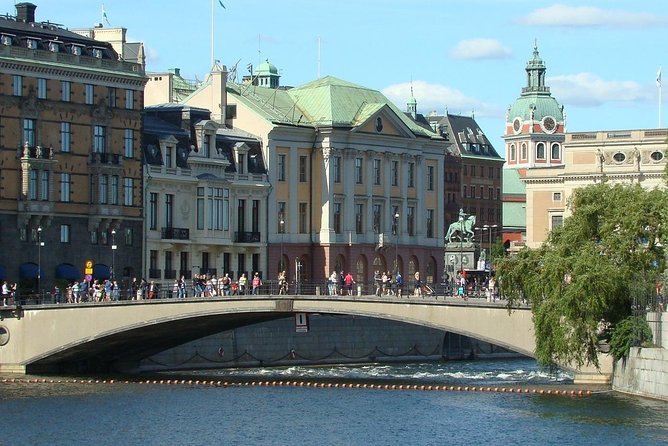
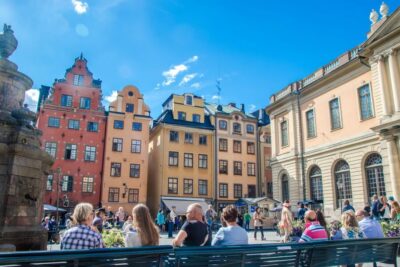
After the palace area, you walk into Stockholm Old Town. The tour frames Old Town as one of Europe’s best-preserved medieval city centers. You pass narrow, cobblestoned alleyways and listen to the story of Sweden’s birth.
This is about 20 minutes and free. Practical tip: Old Town cobblestones can be rough underfoot, even when the route feels short. Wear shoes you trust. If you have moderate walking comfort, plan for a little uneven pavement.
Then you finish at Stortorget, the central square in Old Town. Here you find restaurants and cafés and, importantly for sightseeing, the Nobel Prize Museum is located at Stortorget. The Royal Academies designate Nobel Prize winners in science and art, which gives you an easy “what to do next” option right after the tour ends.
Finishing here is smart because it is a natural decompression zone. You can keep wandering Old Town, or head toward the Nobel area while everything is fresh in your head.
Price, pace, and value for money at about $78.60
At $78.60 per person for about two hours, the key value question is what you get for the money. Here is the clear picture based on what is included in the structure:
- You cover a modern city arc, from Konserthuset and Kungstornen into Sergels torg and Kulturhuset, and then you transition to Old Town. That mix is not just scenic, it is explanatory.
- Several stops are free to view, including Kungstornen, Sergels torg, Kulturhuset, Brunkebergstorg, the statue stops, and the end at Stortorget.
- Only the Konserthuset intro explicitly notes that admission is not included. In practice, this makes the paid component feel lighter because most of what you see is outside.
- The group size cap is small, up to 10 people, which usually means more room for questions and a less rushed feel.
- You get a mobile ticket, and the tour is offered in English.
In other words, you are paying mainly for guidance and the “story chain” tying modern redevelopment to today’s city layout. If you like history that explains the present, this price can feel fair. If you want lots of paid entries and long indoor time at museums, you might feel the ratio is different.
Pace is also a factor. It is moderate fitness, and it is built for walking, not gym-style exertion. The old streets are part of the deal.
Who should book, and who might want a different plan
I think this tour fits best if you want Stockholm with logic. You like architecture, city planning, political timelines, and a route that helps you understand why Stockholm looks the way it does now.
It is also a good choice if you are short on time. Two hours is enough to get a strong sense of both the modern core and Old Town.
If you are the type who wants deep museum time, or you dislike walking over cobblestones, you may prefer a longer, more stop-and-enter style day. This one is more “see and explain” than “ticket and linger.”
One more practical note: because the group is small (max 10), you can get a more conversational experience. On quiet departures, it can feel close to a private chat, which is great if you like asking follow-up questions.
Should you book Stockholm: Modern City and Old Town?
Yes, if your goal is to get oriented fast and understand the big ideas behind Stockholm. The modern redevelopment story around Sergels torg, the modernism nod at Kulturhuset, and the way the walk ends in Nobel territory at Stortorget makes it a smart, efficient overview.
Book it especially if you like city planning and politics. The route gives you Sweden’s democratic timeline and the statue geometry around the Royal Palace area in a way that feels connected, not random.
Skip it if you want lots of museum admissions or you need very easy ground underfoot. Otherwise, this is a strong small-group way to turn two hours into a real sense of Stockholm.
FAQ
How long is the Stockholm Modern City and Old Town walking tour?
The tour lasts about 2 hours.
What is the meeting point and where does the tour end?
It starts at Hötorget 14, 111 57 Stockholm, Sweden, and ends at Stortorget, 111 29 Stockholm, Sweden.
What time does the tour begin?
The start time listed is 10:00 am.
Is the tour offered in English, and do I get a mobile ticket?
Yes, the tour is offered in English, and you receive a mobile ticket.
Is admission included for the stops?
At Konserthuset Stockholm, admission is not included, while the other listed stops are free to view.
How many people are in the group?
This experience has a maximum of 10 travelers.
What fitness level do I need?
A moderate physical fitness level is recommended since it is a walking tour.
Can I cancel and get a refund?
Yes. You can cancel for free up to 24 hours in advance for a full refund.
Gamla Stan on Foot
- The Original Stockholm Ghost Walk and Historical Tour – Gamla Stan
★ 4.5 · 1,165 reviews - Stockholm: Old Town Private Walking Tour
★ 4.7 · 675 reviews - Stockholm: Guided Historic Old Town Walking Tour with Local
★ 4.8 · 618 reviews - Stockholm: Old Town Walking Tour
★ 4.3 · 596 reviews
New on the Stockholm pages
- Stockholm Tour + Drottningholm Palace by VIP car PRIVATE Guide★ 5.0 · 1 review
- Discover Stockholm’s Christmas Market Magic with a Local★ 5.0 · 1 review
- First Class Airport Limousine Transfer: Arlanda Airport to Stockholm City★ 5.0 · 1 review
- Deluxe Stockholm Tour with Vasa Museum from Cruise Port★ 4.0 · 1 review
- Stockholm Shore Excursion from Cruise Port★ 5.0 · 1 review
- Stockholm Old Town Walking Tour + Archipelago Cruise★ 5.0 · 1 review
- Stockholm History Walking Tour★ 5.0 · 1 review
Guided Walks in Stockholm, compared.
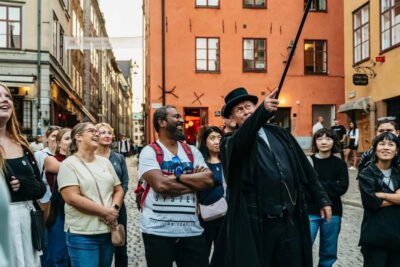
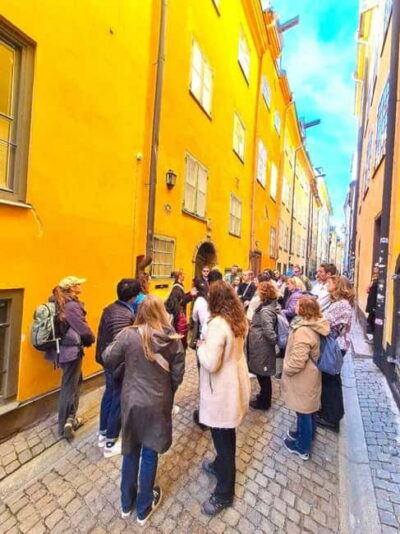
Stockholm Gamla Stan: Old Town Walking Tour with Local Guide
Read our review →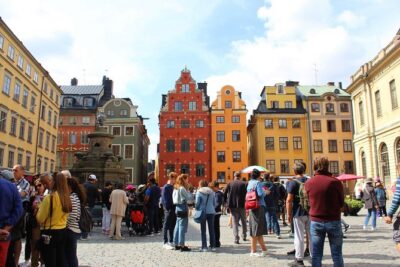
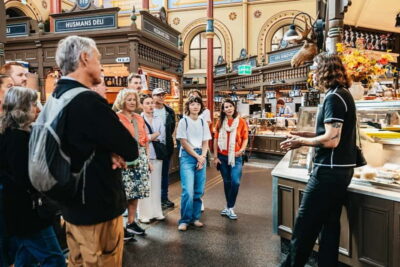
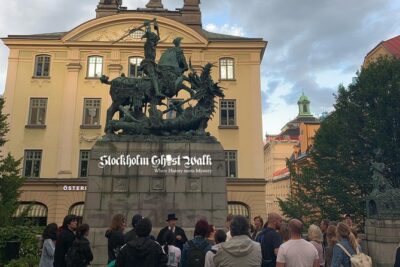
The Original Stockholm Ghost Walk and Historical Tour – Gamla Stan
Read our review →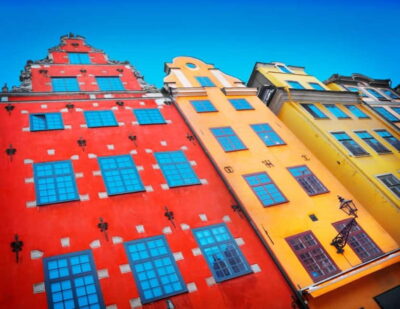
Best of Stockholm Walking Tour-3 Hours, Small Group max 10 people
Read our review →
Browse the lists this tour appears in