
Reviewed · CITY SIGHTSEEING IN STOCKHOLM
Stockholm City Center: Seaside Skeppsholmen Guided Tour
A winter walk with serious sea power. I like the small group size (max 6) because it makes room for questions, and I like that the guide connects local waterfronts to Sweden’s global reach. You’ll start at Gustav III:s statue, then move through naval sites most people never touch, ending with a warm fika option.
The trade-off is simple: it’s a winter walking tour of about 3.5 km in 75 minutes, so good shoes and warm layers matter. Also, the colonial and slavery themes are part of the story, so if that’s hard for you, consider whether you want those topics on a city walk.
In This Review
- Why Skeppsholmen and Kastellholmen beat the usual Old Town loop
- The best parts of this 75-minute guided route
- Getting started at Gustav III:s statue on Skeppsbron
- Royal Palace to Parliament, tracing early overseas ambition
- Admiralty House on Skeppsholmen, where command becomes concrete
- Kastellholmen’s citadel and the quiet side of Stockholm
- Sweden’s Caribbean links, plus trade and slavery, explained on the move
- Winter walking reality: shoes, pace, and what 3.5 km feels like
- How the guide style makes the history easier to follow
- The Nationalmuseum café fika stop, warm time to reset
- Worth $31? What you’re really paying for
- Who should book this Skeppsholmen guided tour
- Should you book it, or pick something else?
- FAQ
- How long is the Stockholm City Center: Seaside Skeppsholmen Guided Tour?
- How many people are in the group?
- What is the meeting point?
- Is the tour wheelchair accessible?
- Does the tour include food or drinks?
- What sights will we cover?
- Is transportation to the starting point included?
- What topics are discussed during the tour?
Why Skeppsholmen and Kastellholmen beat the usual Old Town loop
Stockholm has a script most visitors follow. You get the pretty streets, the big sights, and then you move on. This tour changes the angle. You walk the harbor islands that once ran Sweden’s naval command, and you do it with a guide who links what you see in front of you to what Sweden tried to do far beyond the Baltic.
Skeppsholmen and Kastellholmen are not just scenic detours. They were working places, decision points, and stages for conflict. When you hear the shipbuilding and command stories while standing on the water, the city stops feeling like a postcard and starts feeling like a lived-in system.
The best parts of this 75-minute guided route

- Max 6 guests means more time for real questions, not just passing photos
- Stories that reach from New Sweden (Delaware) to St Barthélemy
- A winter walk on Skeppsholmen and Kastellholmen, not only the Stockholm classics
- Naval drama built around real landmarks like the Admiralty House and the Battle of Svensksund monument
- Ending with warm shelter at the Nationalmuseum café for fika at your own cost
More City Sightseeing in Stockholm
Getting started at Gustav III:s statue on Skeppsbron
Your tour meets at Gustav III:s statue. You’ll find the guide wearing a black jacket with a black umbrella, which is a small detail but genuinely helpful in winter crowds.
This start matters because Gustav III is a big character in Sweden’s modern story. He’s often described as a ruler with cultural ambition, but also one with an authoritarian streak. On this tour, that contrast is not just personality trivia. The guide uses it to explain how royal decisions helped shape the country’s naval focus and even its short-lived colonial reach.
You also begin in the right “mindset zone.” Instead of rushing straight to the obvious buildings, you start with the ruler and the harbor, then you follow the thread through the city.
Royal Palace to Parliament, tracing early overseas ambition
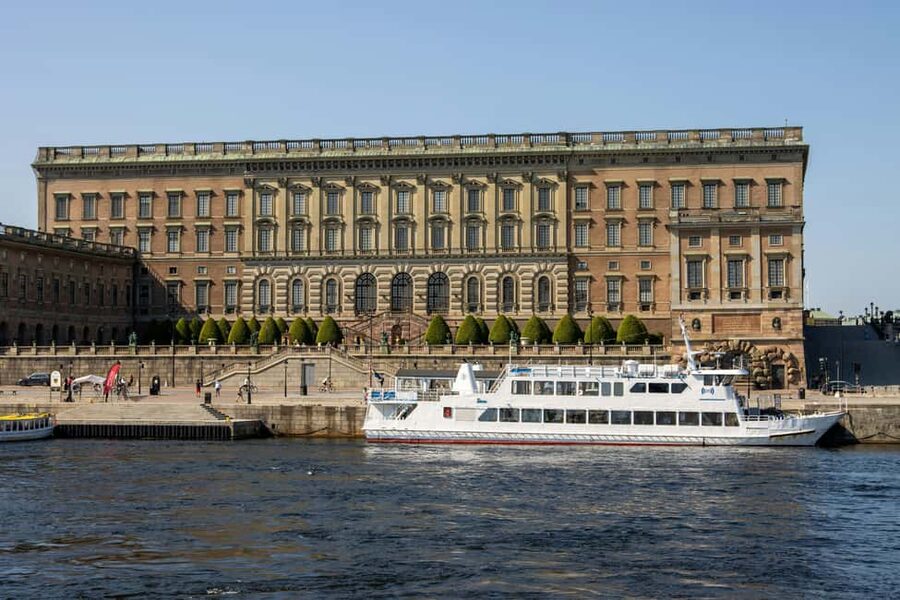
From the Royal Palace area, you trace Sweden’s early overseas ventures. This isn’t the usual “Sweden traded, therefore history happened” story. You hear how Swedish ambitions played out across oceans, and how Stockholm’s harbor world connected to distant possessions.
The tour also passes the Swedish Parliament House. It gives you a quick sense of continuity, from older power structures to the modern state standing nearby today. You’re not just taking in architecture. You’re watching the same city evolve through the lens of governance and control.
If you like context, this part sets you up well. By the time you reach the naval island sites, you’re ready to connect policy, money, and power to ships and strategy.
Admiralty House on Skeppsholmen, where command becomes concrete
Crossing to Skeppsholmen is where the tour snaps into focus. Skeppsholmen served for centuries as the center of Swedish naval command, and the walk brings you right to the Admiralty House area.
Standing near the Admiralty House, you hear about the people who powered the system. That includes officers, shipwrights, and sailors, the roles that turn plans into movement. The goal is not name-dropping. It’s to help you understand how a naval “machine” actually ran.
Then comes the Battle of Svensksund monument. It’s a key moment because the scale of the battle is easy to miss if you only associate Northern Europe with quieter conflicts. The guide frames it so you understand why it mattered for Sweden’s maritime standing.
One practical tip: winter wind can hit hard on these waterfront sections. If you feel it in your ears or cheeks, that’s normal. The story stays best when you pace yourself, keep warm, and listen without fighting the elements.
Kastellholmen’s citadel and the quiet side of Stockholm
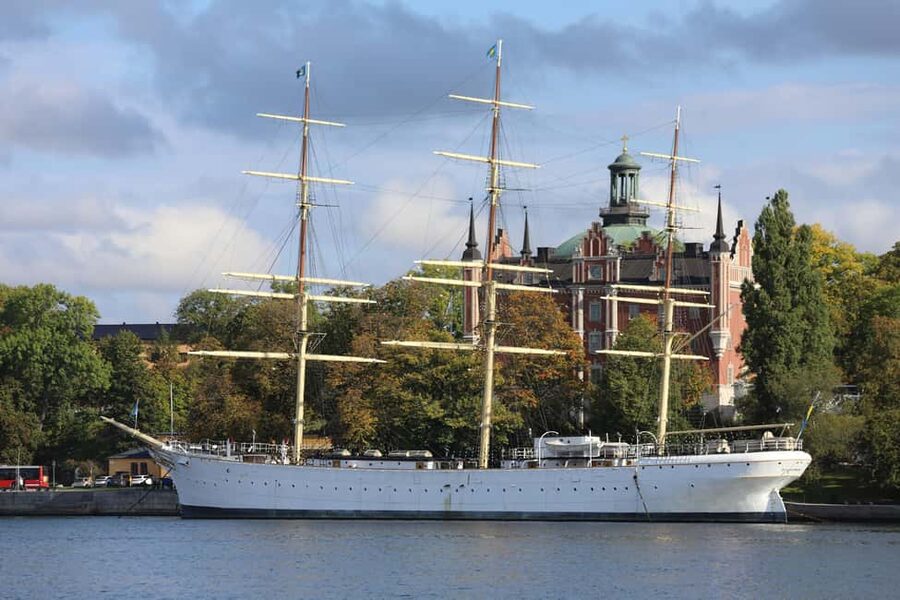
Kastellholmen is smaller, more intimate, and far less crowded than the routes people plan around Gamla Stan. The island is crowned with a historic citadel, and the tour uses it to shift from big-picture naval command to the more human rhythm of island life.
Along the way, you’ll notice the difference between a site that is actively visited for views and a site that feels like it once had jobs to do. You hear about shipyards, defenses, and training grounds. Today you get quiet paths, sweeping waterfront views, and corners the standard tourist loops often skip.
Winter helps here. The light can look sharper. The water looks colder. And the stonework reads more clearly when everything is washed in gray and pale sky. The result is a more atmospheric feel for the same hard themes: conflict, exploration, and daily work.
Same daylight, a different plan:
- Stockholm: ABBA The Museum Entrance Ticket
★ 4.7 · 11,280 reviews - Stockholm: Skansen Open-Air Museum Admission Ticket
★ 4.5 · 3,427 reviews - Stockholm: Hop-On Hop-Off Bus or Boat Option
★ 4.0 · 3,260 reviews
Sweden’s Caribbean links, plus trade and slavery, explained on the move
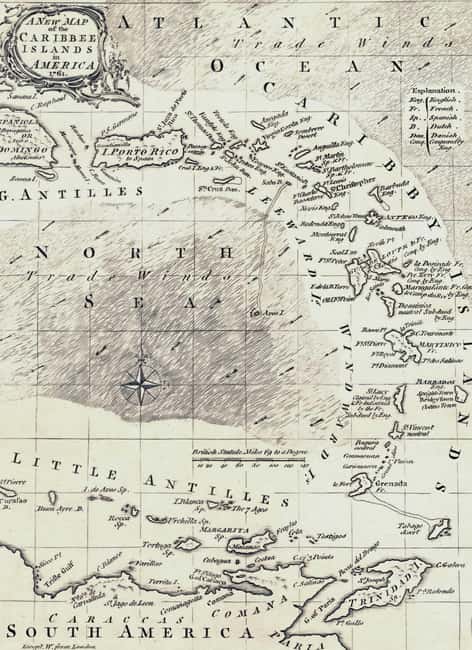
One of the most memorable parts of this tour is how it connects Stockholm’s harbor story to the Caribbean world. You hear about Sweden’s acquisition of St Barthélemy, but also the earlier episode of New Sweden along the Delaware River.
These places are almost always missing from typical city walks. The guide ties them back to Sweden’s “short-lived empire” period and shows how ambition traveled with merchants and sailors, not just with royal decrees.
The tour also includes discussion of Swedish trade, slavery, and eventual abolition. That can be heavy material for a winter afternoon, but it’s also part of the real story behind colonial expansion. If you’re the type who wants the whole picture, you’ll probably appreciate that the guide doesn’t sanitize it.
For balance, you can think of this as more than a history lecture. It’s interpretive travel. The goal is to help you see why Stockholm’s waterfront matters to global history, even when the buildings stay still.
Winter walking reality: shoes, pace, and what 3.5 km feels like
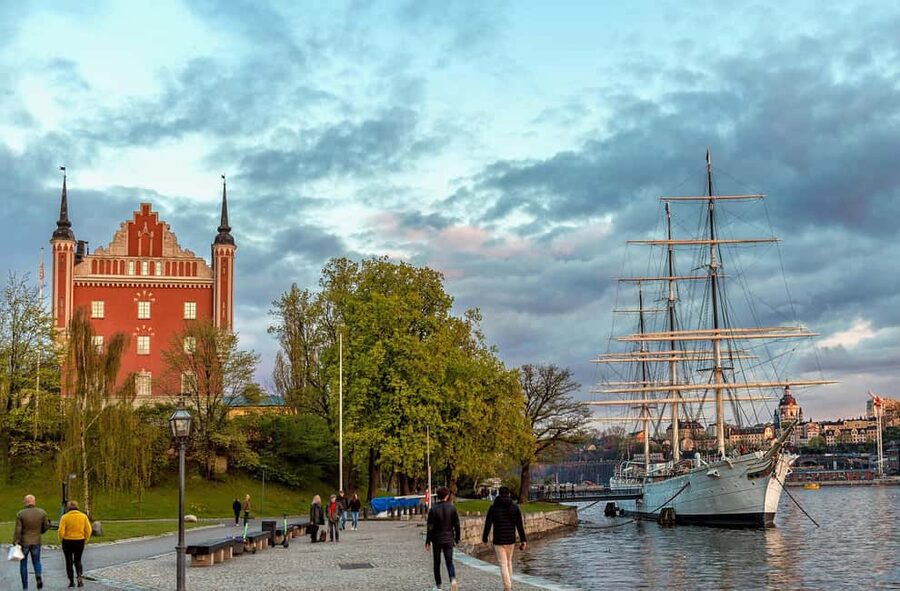
The route covers about 3.5 km in roughly 75 minutes. That’s not a long hike, but it is enough distance that you’ll feel the winter air by the halfway mark if you’re dressed lightly.
Comfort is your best friend here. Wear shoes that grip well on icy or slick surfaces. If you’re wearing boots with hard soles, bring socks that keep your feet warm because sitting still is not part of the tour until the end.
Also plan your clothing for layers. You’ll be moving most of the time, and you might start cold and end a bit warm. Gloves matter more than you think when you’re listening outdoors and trying not to fumble with your phone.
How the guide style makes the history easier to follow
This tour has a clear “teaching” rhythm. You get landmark by landmark storytelling, then a chance to ask questions. The small group format helps a lot, because you can raise the tricky ones like dates, motivations, and how colonial power actually worked.
The guide, Giancarlo, comes up again and again in positive feedback for being engaged and for handling questions smoothly. One nice detail: people describe him as able to remember dates and explain them clearly, which means the tour doesn’t feel like it’s running on vague impressions.
Language is listed as English. In at least one case, the guide handled Spanish and French as well, so you might find flexibility depending on the group. Still, assume the tour will be primarily in English.
If you love history but hate tours that feel like a school lecture, this one tends to work better. The pacing is built around walking, seeing, and then reflecting for a moment before moving on.
The Nationalmuseum café fika stop, warm time to reset
The tour finishes inside the café of the Nationalmuseum. You can enjoy pastries, coffee, or tea, but it’s at your own expense.
I like this finish because it turns the walk into a pause. You get warmth right when your body starts plotting escape from the cold. More than that, it gives you a chance to ask follow-up questions while everything is fresh.
If you’re traveling with people who get impatient with history stops, this fika moment can make the whole experience feel more shared. And if you’re the history person, it’s a chance to process what you just learned and maybe grab a small snack to keep your energy up for the rest of your day.
Worth $31? What you’re really paying for
At about $31 per person for a 75-minute small-group walk, you’re not paying for a bus ride or a big “attraction checklist.” You’re paying for guide time, private island access on foot, and interpretation of places most tourists walk past, or never reach at all.
Here’s the value breakdown that makes this price make sense:
- Small group max 6 reduces the “everyone listen at once” problem
- You get multiple major talking points in one route: Gustav III, naval command, and colonial reach
- The tour ends with a warm indoor buffer at the Nationalmuseum café, which is handy in winter
If you already love self-guided museum days, this tour still adds value because it focuses on exterior landmarks and their stories. If you prefer guided experiences because you hate sorting facts on your own, this is a practical way to get the context without turning your day into a schedule of ticket lines.
Who should book this Skeppsholmen guided tour
This is a great fit if you:
- Want Stockholm beyond the classic Old Town loop
- Enjoy naval history, maritime power, and the way cities run their empires
- Like tours that let you ask questions and don’t rush you through photos
- Are comfortable with winter walking and about 3.5 km on foot
It’s also a nice option if you’re local or an expat. One of the strengths is that it covers angles residents can still miss, especially the harbor-island connection to global episodes like New Sweden and St Barthélemy.
If you’re traveling with kids, this will depend on the child’s interest level. The themes include slavery and colonialism, so it’s likely better for older teens or adults.
Should you book it, or pick something else?
Book this tour if you want a smarter way to see Stockholm in winter. You’ll get a route that feels specific and intentional, plus a guide who connects nearby landmarks to far-reaching stories you won’t easily find by wandering alone.
Skip it if you hate uncomfortable topics or if winter outdoor walking is a struggle for you. The route is short, but it’s still outdoors, and the historical themes include slavery and colonial trade.
If you’re on the fence, my practical advice is this: if you can handle a short winter walk and you like history that connects local places to global consequences, this one is a strong choice.
FAQ
How long is the Stockholm City Center: Seaside Skeppsholmen Guided Tour?
It lasts 75 minutes.
How many people are in the group?
The tour is limited to a maximum of six participants.
What is the meeting point?
You meet by the statue of Gustav III, and the guide will be wearing a black jacket with a black umbrella.
Is the tour wheelchair accessible?
Yes, the tour is wheelchair accessible.
Does the tour include food or drinks?
Food and drinks are not included. The tour ends at a café where pastries, coffee, or tea are available at your own expense.
What sights will we cover?
You’ll see the statue of King Gustav III, the Royal Palace area, Swedish Parliament House, the Admiralty House, Skeppsholmen, and the citadel area on Kastellholmen, and you finish near Strömkajen and inside the Nationalmuseum café.
Is transportation to the starting point included?
No, transportation to the starting point is not included.
What topics are discussed during the tour?
You’ll discuss Sweden’s Caribbean legacy, Swedish trade and slavery with eventual abolition, and Swedish royal ambition and naval power.
New on the Stockholm pages
- Stockholm Tour + Drottningholm Palace by VIP car PRIVATE Guide★ 5.0 · 1 review
- Discover Stockholm’s Christmas Market Magic with a Local★ 5.0 · 1 review
- First Class Airport Limousine Transfer: Arlanda Airport to Stockholm City★ 5.0 · 1 review
- Deluxe Stockholm Tour with Vasa Museum from Cruise Port★ 4.0 · 1 review
- Stockholm Shore Excursion from Cruise Port★ 5.0 · 1 review
- Stockholm Old Town Walking Tour + Archipelago Cruise★ 5.0 · 1 review
- Stockholm History Walking Tour★ 5.0 · 1 review
City Sightseeing in Stockholm, compared.

City Archipelago Sightseeing Cruise with Guide
Read our review →
Guided City Sightseeing Open Electric Boat Tour
Read our review →

Guided Kayak City Tour & Optional Midsummer Meal
Read our review →
Browse the lists this tour appears in