
Reviewed · HISTORY TOURS IN STOCKHOLM
Private Half Day Tour: Viking History Trip from Stockholm Including Sigtuna
Vikings in Sweden, close to Stockholm. I love how this private half day knits together runestones, grave fields, and local legends near the city, and I love the hotel pickup that keeps the day easy. One caution: a past traveler reported trouble understanding a guide with a strong accent, so if you have hearing needs, plan to ask for slower repetition.
The tour runs about 5 hours and typically starts at 9:30 am, with an English-speaking guide and a private vehicle doing the driving. Group size stays small, and the experience is set up so you can ask questions as you go, not race to the next photo.
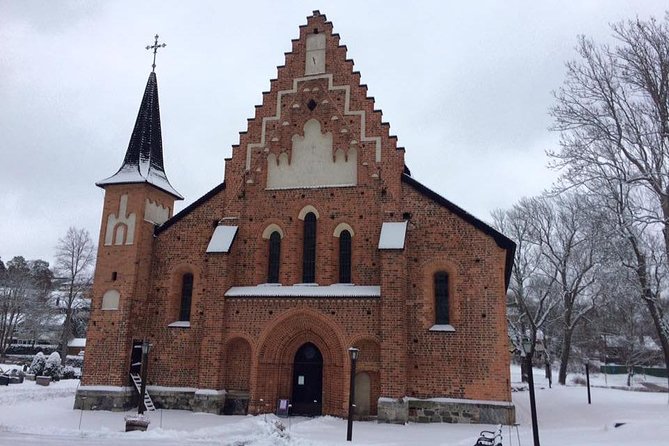
The payoff is Sigtuna, treated like a real place, not a quick stop. You get time for church ruins and Mariakyrkan if it is open, plus St Olof’s Church Ruins, tied to a holy well and dated to around 1080 to 1120. Lunch is on your own, so build a plan for food in advance.
In This Review
- Key highlights worth your attention
- Why this Viking half day route makes sense from Stockholm
- Pickup timing and how the day actually flows
- Broby Bro: runestones, Estrid, and a grave field you can picture
- Jarlabanke Runestones in Täby: power, roads, and the stories behind rule
- Arkils tingstad Thing site: laws, meetings, and what Vikings actually did together
- Sigtuna: the wooden town walk that makes the past feel close
- St Olof’s Church Ruins and the holy well around 1080 to 1120
- Lunch on your own in Sigtuna, and how to plan it without stress
- Guide impact: why private changes what you see
- Price and value: is $532.19 per person fair?
- Who this tour suits best, and who should skip it
- Should you book this Viking History Trip from Stockholm including Sigtuna?
- FAQ
- How long is the tour and what time does it start?
- Is lunch included?
- Do you pick up from hotels in central Stockholm?
- What sites do I visit during the Viking part of the day?
- Is this really a private tour?
- Are admission tickets included for the stops?
- Can I cancel for a refund?
Key highlights worth your attention
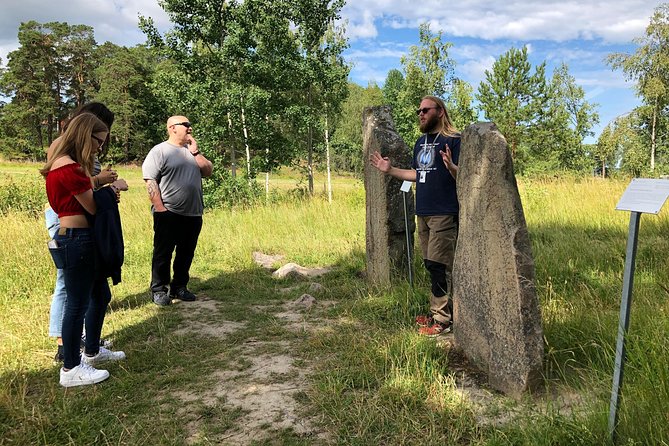
- Broby Bro runestones, including one mentioning Jerusalem plus a Viking grave field and the famous regional Viking woman Estrid
- Jarlabanke Runestones on a reconstructed Viking causeway with stories about power, trading networks, and Viking roads
- Arkils tingstad Thing site, one of the best-preserved assembly places in Europe, with lessons about laws and customs
- Sigtuna’s wooden-town feel, including a main street where an older Viking street curve still shows
- St Olof’s Church Ruins, described as the largest and best-preserved of the three church ruins around Sigtuna
- Private, small-group format, with hotel or port pickup and an early return to Stockholm
Why this Viking half day route makes sense from Stockholm
If you only have a few hours, you want concentration, not scatter. This tour is built around Viking sites near Stockholm plus one historic town you can actually walk and feel, Sigtuna. That mix matters, because runestones alone can feel like random rocks unless you connect them to burial customs, assembly meetings, and everyday power.
The local geography helps too. You start with Viking remains outside the city, then gradually move toward the medieval echo of earlier times in Sigtuna. By the time you reach town, the stories land better because you have already seen the symbols, the people, and the sites.
It is also a practical choice. With pickup and drop-off from your hotel area near Stockholm central station, you do not waste half your day figuring out bus schedules or parking. The driver handles the road, which is a bigger deal than you think on a morning departure.
More History Tours in Stockholm
Pickup timing and how the day actually flows
Most tours like this promise a “half day,” but half day can mean two very different things. Here, the schedule is tight enough to fit multiple sites, while still leaving time to get out of the car, walk around, and ask questions.
You start at 9:30 am with morning pickup. Your guide meets you, you get oriented, then you head out for the first stop in the countryside. Expect each Viking location to last around an hour or less, with a longer moment in Sigtuna where you can slow down and explore.
This rhythm is good if you want context, because you are not stuck in a single location for too long. It can be tough if you prefer long museum-style pacing, but the upside is that you see several major sites in one sitting and start comparing them in your head.
Broby Bro: runestones, Estrid, and a grave field you can picture
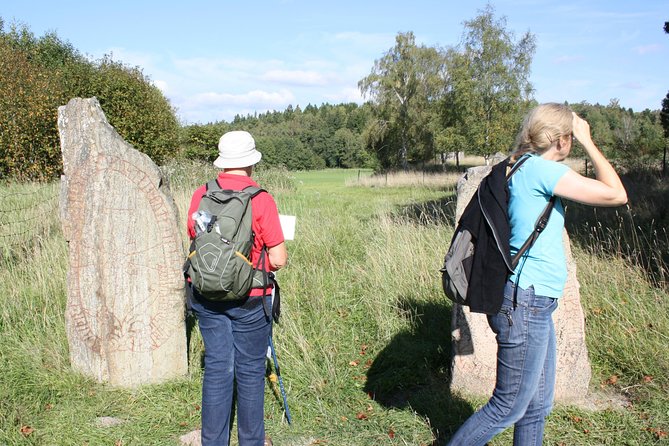
The first stop, Broby Bro, is where the Viking stories get personal. You visit a set of runestones and a Viking grave field, and your guide’s job is to translate what you see into why it mattered.
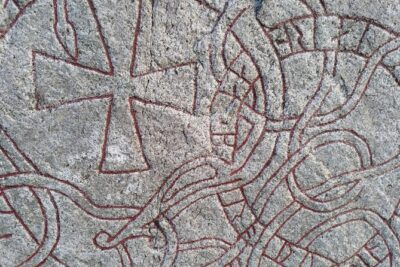
There are three runestones here, and one includes a reference to Jerusalem. That detail is the kind of thing that makes the Viking Age feel bigger than Scandinavia. It points to wide contacts, long-distance awareness, and the way people recorded meaning they thought would last.
You also hear about Estrid, described as the most famous Viking woman in the region. In practice, this is not just name-dropping. A good guide links Estrid to how status, family ties, and commemorations worked, so you start seeing the stones as public memory, not private handwriting.
Then you move into the grave field. That is an important shift, because burial grounds add weight to everything written on the stones. You are not just reading the past, you are standing close to where people were laid to rest and where communities marked identity across generations.
One more practical note: admission is listed as free at this stop, so your time goes to the experience, not ticket lines.
Jarlabanke Runestones in Täby: power, roads, and the stories behind rule
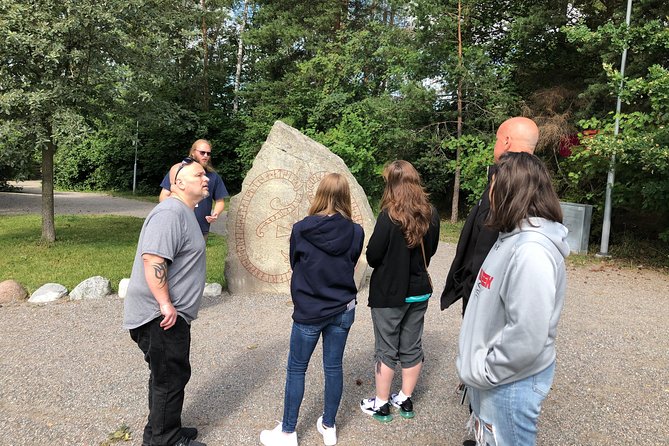
After Broby Bro, the day continues to Täby for the Jarlabanke Runestones. This stop feels different because the runestones sit within a reconstructed setting, including a Viking-style causeway you can walk over.
That reconstruction matters. When you step onto a shaped route made to resemble older ways of moving, you naturally think about movement as power. A lord like Jarlabanke is not just an abstract ruler, the stories connect him to governing, organization, and the infrastructure behind daily life.
Your guide also explains Viking roads and trading networks. This is where the runestones start doing more than commemorating people. They become evidence of routes, communication, and connections between communities. You begin to understand why certain markers ended up where they did, and how geography supported influence.
The visit is shorter, about 20 minutes, so come prepared to focus. If you are the type who reads every line slowly, use the time to ask your guide to point out the key details and clarify what the wording likely meant at the time.
Arkils tingstad Thing site: laws, meetings, and what Vikings actually did together
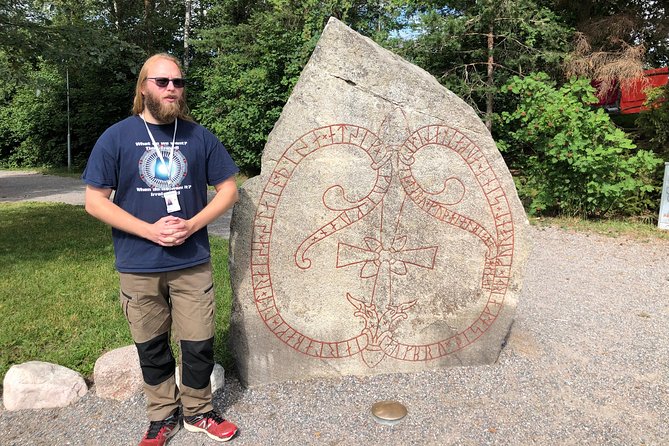
The highlight for many people who love how societies worked is Arkils tingstad, a Viking Age assembly place often called a Thing site. This one is described as among the best-preserved of its kind in Europe, and you can feel why.
The space is built for the idea of gathering. Instead of a scattered set of monuments, you are in a location meant for discussion and decision-making. That is a huge mental upgrade from thinking of Vikings only as fighters.
Your guide brings in the family behind the area, the Skålhamra family, and connects it to the kind of power that came with creating an assembly place. You hear about laws and culture customs, including reference to kingrop society as part of how people organized and lived.
This is also where questions pay off. A private format means you can ask, how would a meeting work, who had authority, and what did rules sound like in real life. A few guides on this route are especially good at making the legal and social side of the Viking Age feel understandable, not like dry textbook facts.
Plan for about 55 minutes at this stop. Since it is a place you walk and orient yourself around, you’ll get more out of it if you let yourself slow down and look at the runestones and the setting together.
More Viking-age sites near Stockholm:
- Stockholm: The Viking Museum Exhibition and Viking Ride
★ 4.5 · 667 reviews - Entrance ticket to The Viking Museum
★ 4.0 · 301 reviews - Viking History, Runes & Countryside 9h Tour to Sigtuna & Uppsala
★ 4.5 · 283 reviews
Sigtuna: the wooden town walk that makes the past feel close
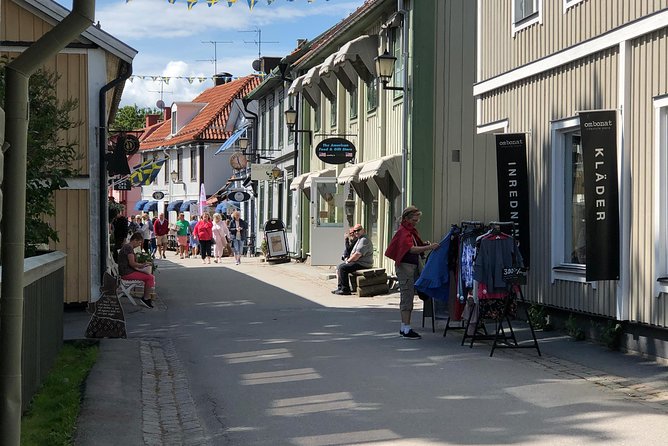
Then it is time for Sigtuna, Sweden’s first capital, or at least the early center the area is known for. The mood shifts from runestones in open countryside to a compact town you can actually stroll.
You usually stop for a lunch break first, with lunch on your own. After that, you start walking and discovering historic remnants around town. You get time to explore church ruins and other highlights, and there is even a mention of Mariakyrkan, if it is open.
One detail I really like here is the way the town’s street layout still shows Viking-era influence. The main street has a curved path noted as a Viking street that still remains left today. Walking it helps you understand that history is not only in objects, it is in how communities continued to build over time.
Sigtuna is also a place where religion changes are visible in stone remnants. Your guide points out the ruins and frames them as evidence of the shift from earlier beliefs and power structures toward Christianity in the region.
Time is limited, so decide early what you care about most. If you love architecture and church history, focus your attention on what is open and readable. If you are mainly there for Viking context, use the ruins as anchors for the larger story you already heard at Broby Bro and Arkils tingstad.
St Olof’s Church Ruins and the holy well around 1080 to 1120
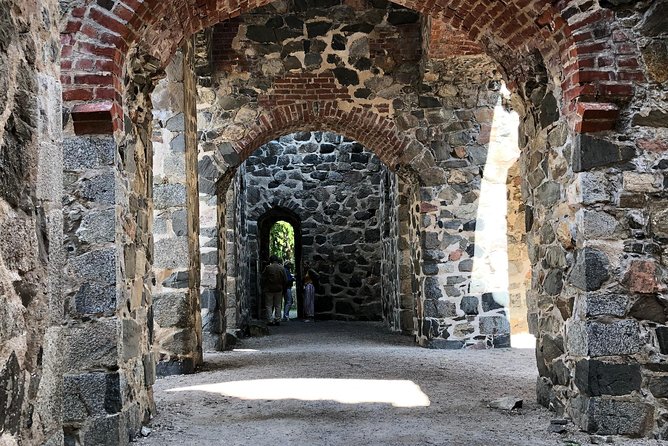
The final Sigtuna stop is S:t Olofs Church Ruins, described as the largest and best-preserved of the three church ruins around town. This matters because a bigger, clearer ruin gives you more to interpret, even if you are not a trained archaeologist.
The timing is part of the fascination. It is described as one of the oldest built church structures in the area, around 1080 to 1120, tied to a holy well. That connection between place and belief helps explain why people kept returning to certain spots as the religious landscape changed.
This part of the tour is short, about 10 minutes, so treat it like a capstone. You already have runestones, grave fields, and assembly places in your head. Now you connect the earlier Viking world to the church-centered world that followed.
If you like small, focused stops, this one is satisfying. If you want longer stops, plan to spend extra time in Sigtuna on your own after the tour if your schedule allows.
Lunch on your own in Sigtuna, and how to plan it without stress
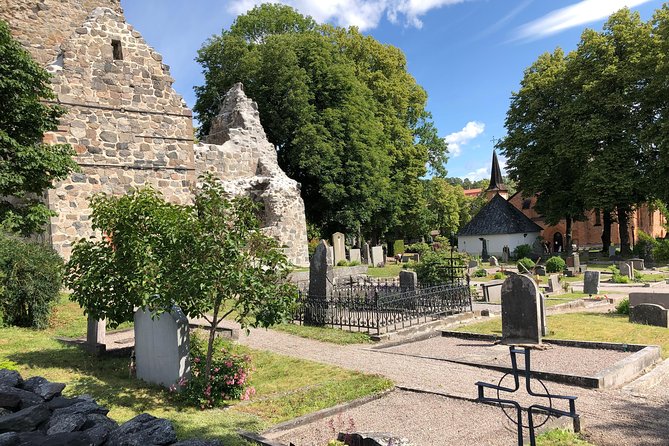
Lunch is the one missing piece in the tour package. It is listed as an own-expense stop, and you only have about 40 minutes connected to the Sigtuna time window.
My practical advice: decide what style of lunch you want before you arrive, then keep it simple. If you are also shopping for small gifts, leave enough time so you do not rush your meal or cut your walking short.
You will likely find the lunch stop built into the schedule for convenience, not a long sit-down break. So bring energy for walking, and consider packing water.
Also note that the best lunch plan depends on the day and what is open, so your guide’s immediate suggestions can help. Use the private format to ask where to go nearby and how much time you realistically need.
Guide impact: why private changes what you see
On a tour like this, the sites do not move. What changes is how you understand them. That is where the private format earns its keep.
Guides on this route are often praised for turning runestones and ruins into stories you can grasp. Names that appear in this tour’s experience include Olof, Jakob, Gustav, Calle, Gabriel, and Jonathan. A driver like Christian is also mentioned for being excellent, which matters because the whole day runs on smooth logistics and timing.
What stands out across guide feedback is adaptability. Some guides are happy to follow your interests, and if you ask questions, they do not treat it like a chore. You can also hear folklore and regional storytelling woven into the explanations, which helps Viking history feel less like a lecture and more like a human story.
One more real-world point: if you prefer very clear pronunciation, the accent issue is worth considering. A past traveler said the Swedish accent made English harder to follow for them, even though the guide repeated information quickly. If understanding detail is important for you, ask questions early in the day and see how it feels.
Price and value: is $532.19 per person fair?
Let’s talk money honestly. At about $532.19 per person, this is not cheap. The value only makes sense if you want a private, hotel-based day that includes expert storytelling and multiple Viking sites.
Here is where the pricing earns its logic:
- You get pickup and drop-off in the Stockholm central hotel zone, so you skip transit stress.
- You see several major locations, not just one runestone field.
- The tour is private to your group, with a maximum of 16, so you are not squeezed into a massive crowd.
- Admission is listed as free at the Viking and ruin stops, meaning you are not paying entry fees for each outdoor site.
What does not reduce the cost is what you still pay yourself:
- Lunch is not included.
- You have a limited amount of time per stop, so if you want a slow pace, you might feel slightly rushed.
For couples and small groups, the per-person cost can feel more reasonable than you expect, because you are not sharing the guide among dozens of strangers. For solo travelers, it is pricier, but the private attention can still be worth it if you know what you like: runestones, assembly sites, and Sigtuna’s medieval remnants.
This is also a tour people book ahead, with typical bookings around 60 days in advance. If you have firm travel dates, plan early.
Who this tour suits best, and who should skip it
This tour is ideal if you want:
- A Viking-focused day that stays grounded in real places outside Stockholm
- Runestones and burial sites plus the assembly-meeting side of Viking life
- A guided connection between Viking Age symbols and Sigtuna’s church ruins
- Simple logistics, pickup included, and an early return
You might want a different approach if:
- You hate structured schedules and want lots of free time
- You expect museum-quality indoor exhibits at every stop
- You need lots of lunch time or long restroom breaks between locations
If you like learning how societies worked, not only how Vikings fought, this one clicks.
Should you book this Viking History Trip from Stockholm including Sigtuna?
I would book it if your ideal day includes runestones, graves, and real community gathering sites, and if you want Sigtuna to feel meaningful rather than rushed. The best reason is the way the day builds from commemoration and burial into governance and meetings, then lands in Sigtuna’s surviving church ruins and town layout.
I would pause if price feels like a stretch, or if your schedule has no flexibility for a morning start and a short lunch window. In that case, you could piece together public transit and see a couple of sites, but you will lose the guide storytelling that connects the stones to the larger Viking world.
If you do book, go in with the mindset of asking questions. The tour works best when you treat each stop like a clue in one continuous story.
FAQ
How long is the tour and what time does it start?
The tour is about 5 hours and it starts at 9:30 am, with morning pickup from your accommodation area.
Is lunch included?
No. There is a lunch stop in Sigtuna, and lunch is at your own expense.
Do you pick up from hotels in central Stockholm?
Yes, pickup is offered for hotels, ports, and accommodations within the central Stockholm area. The details specify pickups for locations within 3 km of Stockholm central station, and there is no pickup at Nynäshamn.
What sites do I visit during the Viking part of the day?
You’ll visit Broby Bro for runestones and a Viking grave field, the Jarlabanke Runestones in Täby, and Arkils tingstad, a preserved Thing-site assembly location.
Is this really a private tour?
It is a private tour/activity. Your group only participates, with a maximum of 16 people.
Are admission tickets included for the stops?
Admission tickets are listed as free for the Viking and ruin stops on the route. The tour includes all taxes and surcharges.
Can I cancel for a refund?
Yes. You can cancel for a full refund if you cancel at least 24 hours in advance of the experience start time. Cancellation within 24 hours of the start time is not refunded.
New on the Stockholm pages
- Stockholm Tour + Drottningholm Palace by VIP car PRIVATE Guide★ 5.0 · 1 review
- Discover Stockholm’s Christmas Market Magic with a Local★ 5.0 · 1 review
- Deluxe Stockholm Tour with Vasa Museum from Cruise Port★ 4.0 · 1 review
- First Class Airport Limousine Transfer: Arlanda Airport to Stockholm City★ 5.0 · 1 review
- Stockholm Shore Excursion from Cruise Port★ 5.0 · 1 review
- Stockholm Old Town Walking Tour + Archipelago Cruise★ 5.0 · 1 review
- Stockholm History Walking Tour★ 5.0 · 1 review
History Tours in Stockholm, compared.
The Original Stockholm Ghost Walk and Historical Tour – Gamla Stan
Read our review →
Guided Historic Old Town Walking Tour with Local
Read our review →
Viking History, Runes & Countryside 9h Tour to Sigtuna & Uppsala
Read our review →
Stockholm Archipelago Guided Tour on Historic Ship with Fika
Read our review →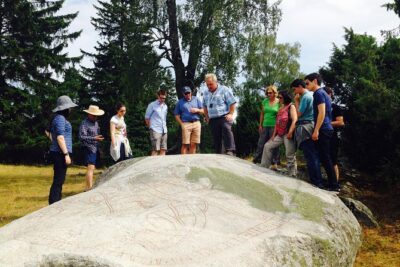
Viking History and Swedish Countryside Tour to Sigtuna & Uppsala
Read our review →
Viking History Small Group Tour from Stockholm: Half Day Including Sigtuna
Read our review →Browse the lists this tour appears in