
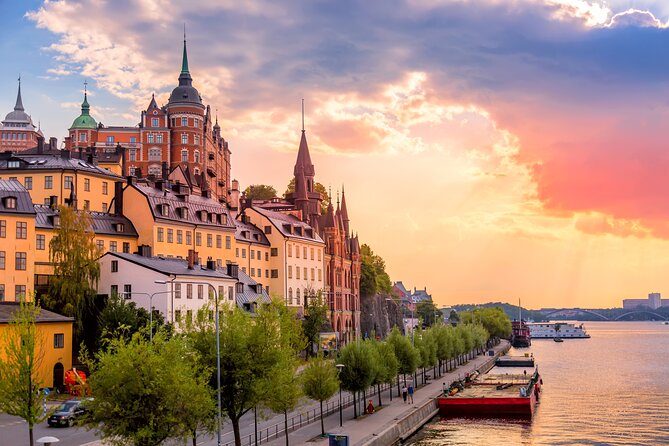
Reviewed · GUIDED WALKS IN STOCKHOLM
Classic Stockholm Small Group Walking Tour | 3 Hours
Stockholm clicks into place in three hours. This small-group classic walk connects Södermalm to Gamla Stan, then swings into Nobel Prize lore and Swedish political landmarks, with an English guide who keeps the stories moving. I love the steady pace and the way you get context you can actually use, but wear good shoes because cobbles and a steep stair climb at Mårten Trotzigs Gränd are part of the deal.
You start at the east entrance of the Stockholm City Museum area (Södermalmstorg, near Götgatan 1), and you get a detailed email plus a phone number to reach the team if you miss the meeting point. It runs about 3 hours, uses a mobile ticket, and ends at Stockholm City Hall in a different spot than where you begin.
In This Review
- Key highlights and why they matter
- A 3-hour route that hits Old Town, Nobel fame, and democracy
- Meeting at Södermalmstorg, then finishing at Stockholm City Hall
- Södermalmstorg to Slussen: locks, development, and why this city turns corners
- Järntorget and the “Iron Square” story
- Mårten Trotzigs Gränd: the alley with 36 steps
- Stopping at German and Finnish church history
- Runsten: a Viking bridge you can see today
- Nobel Prize Museum area and Stortorget’s famous moments
- Stockholm Cathedral stop: Saint George and the dragon
- Järnpojken: the small sculpture everyone interacts with
- Finnish and German church stops connect to Viking and medieval layers
- Royal Palace area: Tre Kronor, key museums, and royal movement
- Riddarholmen and Riddarhuset: courts and nobility on the islands
- Bondeska Palace and the Parliament Building: Sweden’s justice and law in one arc
- Rosenbad and Stockholm City Hall: finishing with the seats of government
- Price and value: what you get for about $66.52
- Who should book, and who should skip it
- Should you book this Classic Stockholm Small-Group Walking Tour?
- FAQ
- Where is the meeting point?
- What time does the tour last?
- What language is the tour offered in?
- Are museum or attraction entry fees included?
- Does the tour involve stairs?
- What should I know about walking and fitness?
- How large is the group?
- Can I get a refund if my plans change?
Key highlights and why they matter

- A guide-led route through Old Town and the government core, not just a list of postcard stops
- Stories that link centuries together, from Viking artifacts to medieval sculptures to modern politics
- Church history without museum ticket lines, since attractions are not entered
- A proper introduction to Stockholm symbols, including the Iron Boy and Stortorget’s famous moments
- Local food and café guidance included, so your walking day ends with a plan
A 3-hour route that hits Old Town, Nobel fame, and democracy
This tour works best when you want a fast orientation day. In about three hours, you cover a lot of Stockholm’s “why it looks like this” moments, starting in Södermalm and moving into Gamla Stan, then finishing at Stockholm City Hall.
What I like most is the mix. You get medieval art and legends (like Saint George and the dragon), but you also get the city’s modern identity, including the seats of Swedish power around Riksdagshuset and Rosenbad. That combination helps you understand Stockholm as more than a pretty backdrop.
Also, because the tour does not enter sites, you are spending time walking and listening rather than queueing.
More Guided Walks in Stockholm
Meeting at Södermalmstorg, then finishing at Stockholm City Hall
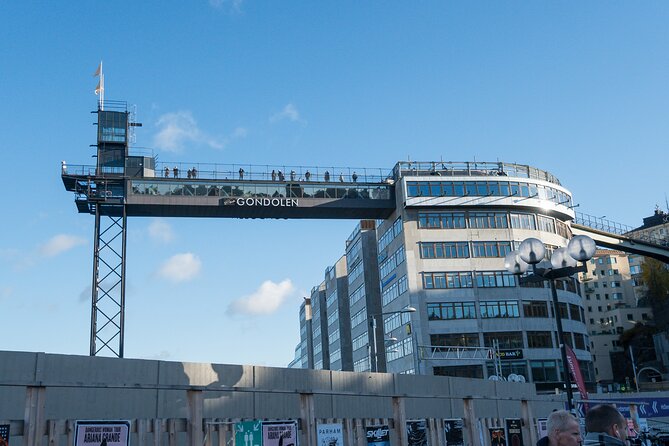
You meet at the east entrance of the Stockholm City Museum area at Södermalmstorg. Before you go, the team sends an email with clear directions and a phone number for help, which is a small detail that can save your morning if your arrival timing is off.
The finish is at Stockholm City Hall, and it ends in a different location than where you start. City Hall matters because it is not just architecture. It is also where major public events happen, including the Nobel Banquet, and your guide points out the building’s standout features like the Blue Hall and Golden Hall.
Practical note: this is a walking tour. You will do a fair amount of street-to-street movement, so plan to keep your phone charged and your water handy.
Södermalmstorg to Slussen: locks, development, and why this city turns corners
The tour starts at Södermalmstorg, right by the Stockholm City Museum meeting area. It is a smart opening point because it sets you up for the city’s geography, including the way Stockholm’s waterways and bridges shape daily life.
From there you head to Slussen, described as a lock, and your guide gives you both historical and current development context. You also get the “state of play” view tied to project Slussen (2016 to 2025). Even if you are not here for construction-era history, it helps you see why Stockholm looks how it looks today.
A small but useful drawback: Slussen is busy and changeable. If you hate walking near crowds or temporary work zones, you may feel it more here than at quieter alley stops.
Järntorget and the “Iron Square” story
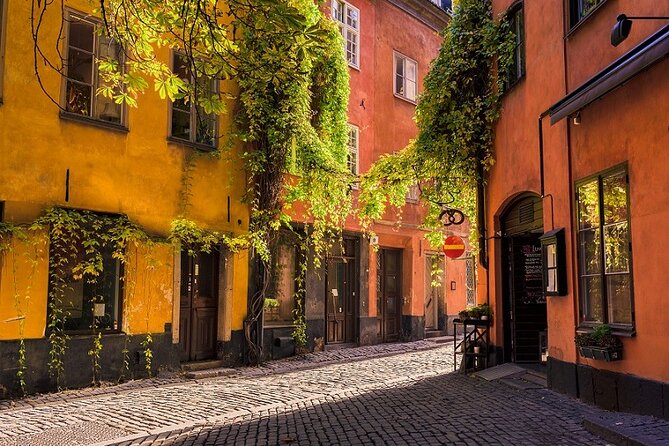
Next comes Järntorget, literally the Iron Square. This stop is a good reminder that place names in Stockholm carry old work patterns, not just modern vibes. Your guide connects the square’s past iron processing links with the later cultural and banking layer that grew over time.
The tour also introduces you to an important poet tied to this part of the city’s identity. If you enjoy history that includes people, not just buildings, this is one of the stops that clicks because it adds a human thread.
You are here only briefly, so treat it like a history highlight rather than a linger-and-read moment.
Mårten Trotzigs Gränd: the alley with 36 steps
Then you get one of the most memorable physical moments on the route: Mårten Trotzigs Gränd. The alley is narrow, historic, and it climbs, with 36 steps as part of the experience.
That is not just a fun detail. It teaches you how Stockholm’s old street design still affects your feet today. In other words, you cannot understand the city’s charm without feeling the slopes and steps.
The only real consideration here is stamina. If you have mobility limits, this is the part that needs attention. Even with moderate fitness, the stone steps will slow you down, so wear shoes with real grip.
Same daylight, a different plan:
- Stockholm: ABBA The Museum Entrance Ticket
★ 4.7 · 11,280 reviews - Stockholm: City Archipelago Sightseeing Cruise with Guide
★ 4.3 · 10,798 reviews - Stockholm: Skansen Open-Air Museum Admission Ticket
★ 4.5 · 3,427 reviews
Stopping at German and Finnish church history
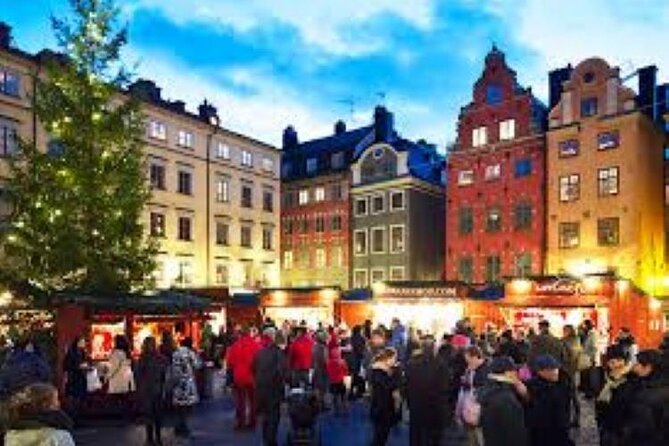
Stockholm’s mix of communities shows up clearly in the church stops.
At S:ta Gertrud, Tyska kyrkan, your guide explains the origins of a German-speaking parish outside Germany. Key timeline points you hear include 1571, when King Johan III granted Germans the right to form their own congregation, and 1607, when they gained exclusive rights tied to a church cottage. This is the kind of history that makes the city feel lived in, because it shows how religious life adapted and formed real roots.
Later, you reach the Finnish Church (Finska kyrkan). The story here is about adaptation and reuse, including the fact that it once served as a royal tennis court before becoming a place of worship. Your guide also frames how its scale compares to the German Church, without making it feel lesser. It is still a strong example of how communities claimed space in Stockholm.
If you love hearing “how a place changed jobs” through time, these stops are worth paying attention to, even though you are not going inside.
Runsten: a Viking bridge you can see today
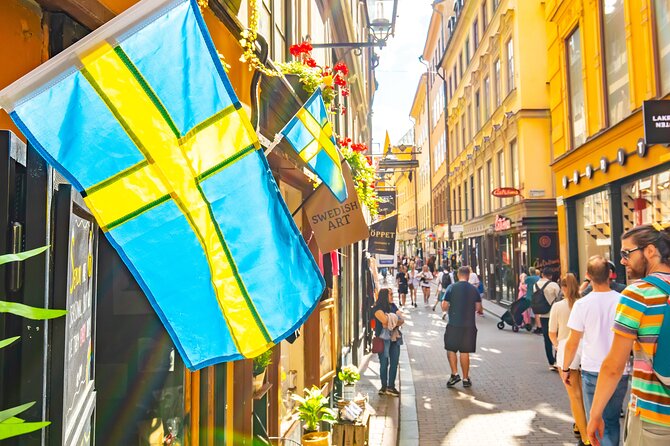
Rune Stone U 53 is an early Stockholm anchor. Your guide treats it as more than an artifact, like a bridge from modern-day Stockholm back to Viking roots, with emphasis on preservation.
This is a nice change of pace from churches and palaces because it is a direct material link to the distant past. It also helps you understand why Stockholm values keeping even small remnants carefully intact.
The stop is short, so take a moment to look closely. Rune stones can feel like “just a rock” until someone gives you the context to read them.
Nobel Prize Museum area and Stortorget’s famous moments
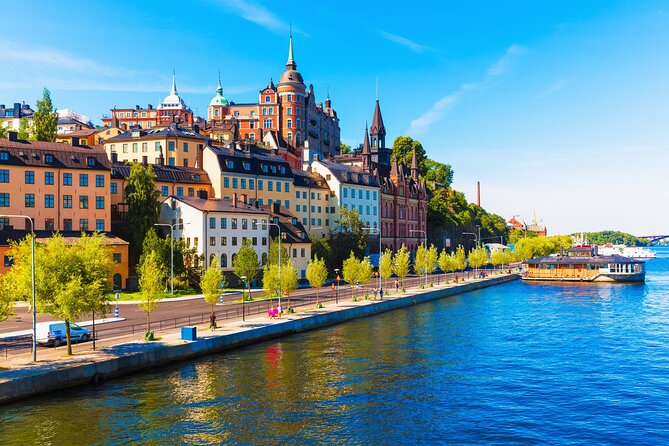
You then reach the Nobel Prize Museum area in the historic Stock Exchange Building. The building details matter here: the museum opened in 2001, timed to the Nobel Prize’s 100th anniversary. Even if you do not go in, the exterior setting plus the explanation gives you a meaningful sense of why this location carries international weight.
From there, you spend time at Stortorget, Stockholm’s oldest square. This is where the city’s darkest and most dramatic events are part of the script. Your guide brings up the Stockholm Bloodbath from November 7 to 9, 1520.
You also get architectural landmarks your route passes near, including a list of notable buildings around the square. Your guide ties them back to how Stockholm grew outward from this core.
And then there are two fun, concrete details that help you remember the place:
- Stortorgs Källaren is mentioned with a cannonball story tied to the area’s history.
- Stortorgsbrunnen is where a famous ABBA photograph was taken in 1976.
Those details are exactly why a walking tour beats reading a guidebook page at a café. You are seeing how the city layers pop culture and old power in one block.
Stockholm Cathedral stop: Saint George and the dragon
At Saint George and the dragon, you get a medieval sculpture tied to Stockholm Cathedral (Storkyrkan). The guide explains the legend and also gives you the history behind the artwork.
The original wooden sculpture was placed in the cathedral in 1489. Art historians widely associate a commission with Sten Sture the Elder, linked to his victory over Union King Christian I at the Battle of Brunkeberg in 1471. That link turns the statue from a cool sight into a symbol with a political message.
Your route also notes the existence of impressive bronze and granite replicas. Even without entering, it is a strong art-and-power stop that you will likely remember days later.
Järnpojken: the small sculpture everyone interacts with
Next is Jarnpojken, the Iron Boy. This one is small, but it has big social energy.
Your guide explains why people interact with it: leaving coins, patting its head, and knitting winter garments. Those actions are playful, but they also show how Stockholm turns history into everyday ritual, not just museum display.
This is also a good photo stop. Try to capture it from angles that show the scale contrast, because the point is that the city cares about tiny symbols.
Finnish and German church stops connect to Viking and medieval layers
By this point, the tour has moved through multiple “layers” of Stockholm in sequence. You have Viking-era connections at Runsten, medieval storytelling through cathedral art, and community history through the German and Finnish churches.
That ordering helps you make sense of a city that did not grow in a straight line. It developed through distinct phases, and the guide keeps showing how one phase explains another.
If you are the type who gets bored by dates, this segment is still workable because the guide turns the dates into reasons people built and preserved what they did.
Royal Palace area: Tre Kronor, key museums, and royal movement
At the Royal Palace, you get the overview: history stretches back to the latter half of the 13th century, with the palace originally part of the medieval castle complex known as Tre Kronor (Three Crowns). Your guide also points out major interior highlights, including the Hall of State and the Royal Chapel.
Even though you are not entering, the guide’s storytelling can make the outside view feel more connected. You also hear about statues associated with figures like Karl XIV Johan, Gustav III, Olaus Petri (Master Olof), and Kristina Gyllenstjerna (Nilsdotter).
A useful modern timeline point: in 1981, the current Royal Family moved to Drottningholm Palace, which became their private residence. It gives you a sense of how royal presence in Stockholm shifted over time.
Riddarholmen and Riddarhuset: courts and nobility on the islands
Then you move to Riddarholmen, an island shaped by long-term change. Your guide explains that the Grey Friars Monastery was built in the 1200s, marking the start of the island’s major historical role.
After the Tre Kronor castle fire in 1697, state agencies and courts took over portions of the island. That is why the area feels like a living museum of administration and rule-making, not just royalty.
You also hear about landmarks there, including the Riddarholm Church and a statue of Evert Taube, a poet connected to Stockholm identity.
From there, the route reaches Riddarhuset, the House of Nobility’s Palace, built between 1641 and 1674. Your guide frames it as a symbol owned and managed by Sweden’s knighthood and nobility, which makes it more than an impressive façade.
Bondeska Palace and the Parliament Building: Sweden’s justice and law in one arc
Bondeska Palace is next, described as the home of the Supreme Court. It is a clear example of how Stockholm’s historic grandeur still hosts modern institutions.
Then you reach the Parliament Building (Riksdagshuset), seat of the Swedish Parliament. Your guide covers the construction period (1895 to 1904) and how the complex originally included a building for Sveriges Riksbank. Then the key governance shift hits: in 1971, the bicameral Parliament system was replaced by a unicameral system, and the old bank section was turned into a new Plenary setup. That kind of explanation makes the building feel like a mechanism, not just an object.
You also hear about the Prime Minister’s official residence since 1995 at Sergerska Palatset. And there is a memorable art reference tied to the site, The Homeless Fox statue, plus mention of Greta Thunberg being associated with the building.
Rosenbad and Stockholm City Hall: finishing with the seats of government
Rosenbad is described as the seat of the Swedish government, a key stop if you want to understand how democracy operates in daily space. Your guide connects the building to Swedish governance and rule of law, and the tone here is practical, not grandiose.
Finally, the tour ends at Stockholm City Hall. Your guide highlights how it mixes Italian Renaissance and Nordic Gothic influences with National Romantic style. Then you hear about the famous halls, including Blue Hall and Golden Hall, where events like the Nobel Banquet take place.
This is a satisfying ending because it ties the route back to Nobel Prize storytelling from earlier in the walk. You start near a Nobel-related landmark area and you end at the building that hosts the Nobel celebration setting.
Price and value: what you get for about $66.52
At about $66.52 per person for a 3-hour walking tour, the value depends on what you want from your day.
This price buys you:
- An in-person guide in English
- A route design that covers major Stockholm themes in one session
- Local advice for good cafés and restaurants
- Explanations at each stop without entry-ticket time
What it does not include is the cost of entry fees, since the tour does not enter attractions. If you were hoping to fully tour the Nobel Prize Museum, Royal Palace interiors, or other ticketed sites, you will need separate plans.
Where the money often feels well spent is when you want context. Guides like Kenneth Aspogard and Rachel Aspogar (names you may hear associated with the best experiences) are praised for answering questions during the walk, not waiting until the end. That matters when you want to understand what you are seeing right now.
Also, the group size is capped at 100, and the tour is designed as a small-group format. That usually means more room for conversation, and a smoother pace than a large bus tour.
Who should book, and who should skip it
Book this tour if you:
- Want a strong first-day feel for Stockholm’s Old Town and key institutions
- Like history told through real places, not long lecture-style sessions
- Prefer walking and seeing over museum entry tickets
- Care about good food recommendations to follow up after your walk
Skip it, or at least adjust your expectations, if you:
- Want lots of inside-the-building time at major sites
- Have limited ability for stairs, since Mårten Trotzigs Gränd includes 36 steps
- Dislike cobblestones, since the route includes streets that can be uneven
Should you book this Classic Stockholm Small-Group Walking Tour?
If you want the practical answer, I would book it for orientation and context. It is a smart way to connect Stockholm’s layers, from Viking roots and medieval art to Nobel-related sites and the functioning of government around Riksdagshuset and Rosenbad, all capped by Stockholm City Hall.
If you are the type who plans to enter several museums on the same day, you can still book this, just treat it like your guided “map in your head” and then move on to ticketed highlights afterward.
FAQ
Where is the meeting point?
You meet at the east entrance of the Stockholm City Museum area in Södermalmstorg. The tour start location is given as Götgatan 1, 116 46 Stockholm, Sweden.
What time does the tour last?
The tour duration is approximately 3 hours.
What language is the tour offered in?
The tour is offered in English, with guides listed as in-person English and Swedish.
Are museum or attraction entry fees included?
No. The tour prices do not include entry fees, and the attractions are not being entered.
Does the tour involve stairs?
Yes. The route includes Mårten Trotzigs Gränd, which involves climbing 36 steps.
What should I know about walking and fitness?
You should have a moderate physical fitness level. The tour involves walking and uneven streets, including cobblestones.
How large is the group?
The activity has a maximum of 100 travelers.
Can I get a refund if my plans change?
Yes. Free cancellation is available if you cancel up to 24 hours in advance for a full refund.
New on the Stockholm pages
- Discover Stockholm’s Christmas Market Magic with a Local★ 5.0 · 1 review
- Stockholm Tour + Drottningholm Palace by VIP car PRIVATE Guide★ 5.0 · 1 review
- Deluxe Stockholm Tour with Vasa Museum from Cruise Port★ 4.0 · 1 review
- First Class Airport Limousine Transfer: Arlanda Airport to Stockholm City★ 5.0 · 1 review
- Stockholm Shore Excursion from Cruise Port★ 5.0 · 1 review
- Stockholm Old Town Walking Tour + Archipelago Cruise★ 5.0 · 1 review
- Stockholm History Walking Tour★ 5.0 · 1 review
Guided Walks in Stockholm, compared.
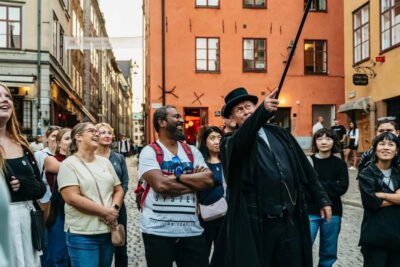
Stockholm Gamla Stan: Old Town Walking Tour with Local Guide
Read our review →
The Original Stockholm Ghost Walk and Historical Tour – Gamla Stan
Read our review →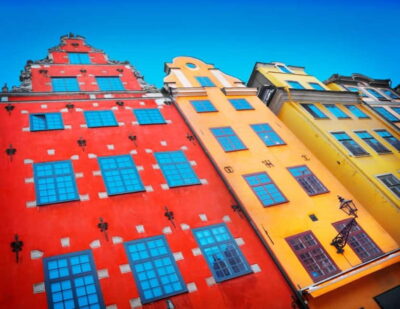
Best of Stockholm Walking Tour-3 Hours, Small Group max 10 people
Read our review →
Browse the lists this tour appears in