
Reviewed · SNOWSHOE & ICE SKATING DAYS
Beginner friendly Nordic Ice Skating On lakes in Stockholm
Skating on frozen Stockholm water feels unreal. I love that all the gear is included and the day is led by a local guide, with fika breaks along the shore. The one drawback to keep in mind is simple: there is no ice guarantee, and safety rules can change the plan if conditions are not safe.
You meet at Tideliusgatan 62, 118 69 Stockholm, then ride out by minibus to the best nearby ice, which is picked the day before. I also like that this is a small group setup, up to 8 people, so you get more attention and less waiting around.
In This Review
- Key highlights you will feel right away
- Nordic ice skating around Stockholm: the real reason this works
- Tideliusgatan meet-up and the minibus ride that sets expectations
- Gear fitting and safety brief: why the included kit is more than a convenience
- Skating on natural ice: what the hours on the lake actually feel like
- Fika breaks and a hot lunch that keep you outside longer
- Ice conditions and the plan B you should understand before you go
- Beginner friendly, but not zero-sport: how to set yourself up for success
- What you pay for: the $205.37 value that actually adds up
- Clothing, shoe sizes, and how to avoid the cold spiral
- Group size, booking timing, and why it may feel like a small secret
- Should you book Nordic ice skating on Stockholm lakes?
- FAQ
- How long is the Nordic ice skating experience?
- What is included in the price?
- What should I wear if I want to stay warm?
- What if the ice conditions are unsafe?
- Do I need to bring my own skates?
- Where do I meet, and where does the tour end?
Key highlights you will feel right away
- Small group of up to 8, so the guide can coach your balance, stride, and starts
- Nordic skating gear included, from skates to poles, picks, helmet, and protection pads
- Fika on the shore, with a hot drink and a snack during a natural-ice skate break
- Hot warm lunch, so you are not spending the day freezing and hungry
- Minibus transfer to the best ice, chosen the day before for the best chance of safe skating
Nordic ice skating around Stockholm: the real reason this works
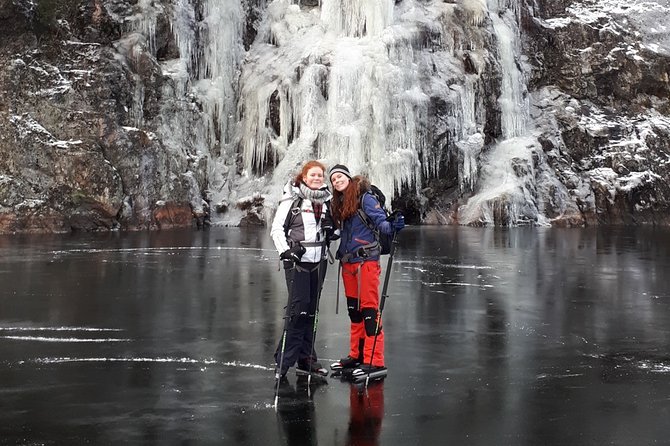
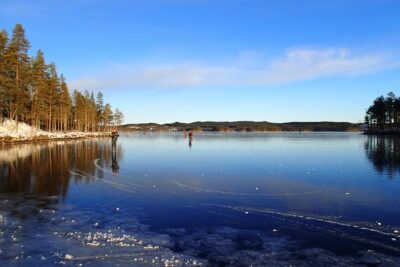
This is not the usual rink routine. You are skating on natural ice, either on a lake or out on the Baltic Sea, with a guide who focuses on how to move safely and efficiently on real conditions. That difference matters. On natural ice, the texture and edges can change, so having instruction makes your day easier instead of harder.
The other big win is the pace. You get a few hours of skating, then breaks that feel Swedish in the best way, hot fika by the water, and a warm lunch. It is a full half to three quarters of a day, which means it feels like you left the city, not just killed an afternoon between errands.
Just know what natural ice implies: if the ice is not safe, the plan shifts. That is not a sales trick. It is the whole foundation of doing this responsibly.
More snowshoe and ice-skating days:
Tideliusgatan meet-up and the minibus ride that sets expectations
Your day starts back at the meeting point, Tideliusgatan 62, 118 69 Stockholm. The activity ends there too, so you avoid the stress of figuring out the last bus after you are done skating.
Because you travel by minibus to the frozen lakes, you also get a practical benefit: you do not have to know where the safest ice is. The guide and team handle the logistics and choose the location the day before. That matters in Stockholm, where winter can be good one day and sketchy the next.
This is also offered in English, which makes it straightforward if you do not speak Swedish. And because it is near public transportation and uses a mobile ticket, the start is low friction. You can focus on layering up and learning the basics.
Gear fitting and safety brief: why the included kit is more than a convenience
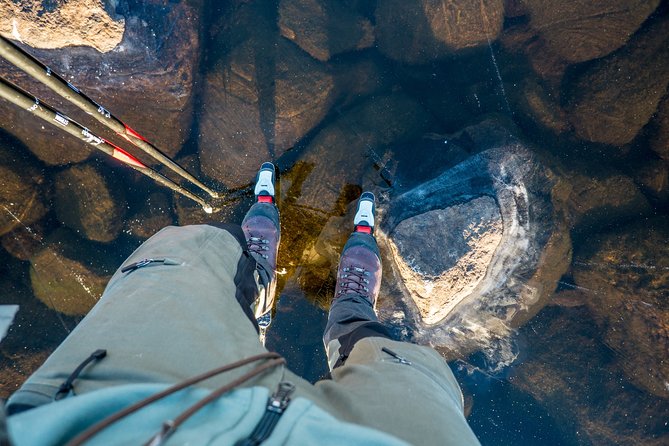
The equipment is a major part of the value here. You get Nordic skating gear from top brands, including skates and boots, poles and picks, plus a backpack, helmet, and protection pads. You are not just renting skates. You are being set up for a specific style of skating that is different from a standard ice rink.
After you gear up at base camp, you get an easy safety brief. It is not a lecture. It is the kind of briefing that helps you understand where to place your feet, how to balance with poles, and how to move on natural ice without overthinking it.
One of the underrated parts is the protection and helmet. Many people think winter skating is just about grip. In reality, the guide’s safety approach helps you stay confident, especially when the ice surface is natural and may have small changes you cannot see from far away.
Skating on natural ice: what the hours on the lake actually feel like
Once you are out on the ice, the day settles into a rhythm: skate in a group, stop for guidance, and keep moving for a few hours. You will skate on natural ice that can be a lake or the Baltic Sea depending on conditions.
This is where the small group size becomes real. Up to 8 participants means the guide can notice when your stance is off, when you are relying too much on one edge, or when you need a quick correction before you work harder than you should.
You should also expect the skating to feel more physical than a slow glide on a rink. Nordic skating uses poles and different footwork, and the picks and equipment change the balance compared to typical rental skates.
The good news is the day is built for a learn-and-go pace. You get fika breaks on the shore, which is a simple but smart recovery period. Hot drink breaks help your hands and your brain reset. And it keeps morale high when the wind picks up.
Fika breaks and a hot lunch that keep you outside longer
This is one of my favorite parts of the schedule. Nordic ice skating in winter is a mix of effort and cold exposure. The tour handles both. You get Swedish fika, meaning a hot drink and snack, plus a warm lunch.
Why that matters: on a winter activity, being hungry or under-recovered leads to sloppy movement. Sloppy movement leads to more stumbles, less confidence, and a shorter day than you wanted.
The breaks are also part of the scenery. Even when the skating is the main event, you still get time by the frozen water, which is where Stockholm’s winter mood really lands. It is a day away from the city hustle, and that feeling is easier to appreciate when you are not sprinting between cold stops.
A few more Stockholm outings to weigh up
- Stockholm: ABBA The Museum Entrance Ticket
★ 4.7 · 11,280 reviews - Stockholm: City Archipelago Sightseeing Cruise with Guide
★ 4.3 · 10,798 reviews - Stockholm: Skansen Open-Air Museum Admission Ticket
★ 4.5 · 3,427 reviews
Ice conditions and the plan B you should understand before you go
Natural ice is weather dependent, and this tour is honest about that. There is no ice guarantee. If conditions are not safe, a winter hike will most likely be carried out instead.
In one described situation, when the weather was not perfect, the group was taken to a natural ice rink about 15 minutes outside Stockholm. That is a useful detail for your expectations. This is still very much a guided winter activity. But it might not be the exact frozen lake scene you imagined.
The good side of this: the team notes that last winter season there were no excursions where participants were unable to skate. So while the risk exists, the track record suggests they work hard to keep skating on the menu when at all possible.
My practical advice is to treat this like a winter outing with a skating goal, not a guaranteed lake skating photoshoot.
Beginner friendly, but not zero-sport: how to set yourself up for success
The name says beginner friendly, and I agree you can do it as a first timer. But you should also respect the comments about physical effort and comfort.
One key point from lived experience: this is more of a sport activity than a casual stroll. You need a reasonable physical condition, and you will feel it after a while. Also, Nordic skating skates are different from typical rink skates. They can feel like they attach in a different way, and you use poles and picks instead of just balancing.
Another practical consideration is the backpack. It is part of the safety gear, and it can feel heavy. That means you should be ready to carry it for the duration, not just on and off the ice.
If you are truly new to ice skating, the best strategy is to arrive mentally ready to learn. Go slow at first. Let the guide correct your stance. Keep your movements smooth. The people who struggle tend to try to skate like a rink right away.
If you have a steady walking pace, can handle cold discomfort, and are willing to learn a technique, you will likely have a great day.
What you pay for: the $205.37 value that actually adds up
At $205.37 per person for about 7 hours, this can feel like a splurge, until you look at what is included.
You are getting:
- A professional guide
- A warm lunch
- Full Nordic skating gear (skates, boots, poles and picks, backpack, helmet, protection pads)
- Swedish fika (hot drink plus snack)
- Transport to and from the frozen lakes by minibus
Not included is your winter clothing. That is the only major gap. Everything else, including the most annoying parts like fitting equipment and traveling to the right conditions, is handled for you.
Here is the value logic I use when I decide on winter tours: if you have to spend time hunting rentals, figuring out transportation, and cobbling together safety gear, the total cost rises fast. This tour packages it into one price, and it also shifts the risk onto the team by selecting the ice location the day before.
So if your goal is a guided day on natural ice, with food and gear handled, the price starts making sense quickly.
Clothing, shoe sizes, and how to avoid the cold spiral
Do not show up in cotton. The guidance is clear: avoid anything made of cotton because it gets wet and stays cold. Instead, think layers.
You should bring:
- A hat or beanie
- Gloves
- One pair of warm socks
- Layered winter clothing, with the option to use thick running tights and wool long johns underneath
- Downhill skiing pants and jackets are okay too
The tour team also asks you to email your EU shoe size (37 to 46) so they can prepare equipment beforehand. That matters. The right size helps your feet stay stable and warm, and it helps you avoid blisters and awkward adjustments when you are already dressed for winter.
If you forget your warm socks or you wear thin ones, your day will feel longer. Cold hands and numb feet make learning harder. Plan to be comfortable, not just bundled.
Group size, booking timing, and why it may feel like a small secret
This tour has a maximum of 8 travelers, and it is described as likely to sell out. On average, it is booked 35 days in advance. That tells me two things.
First, the small group is part of the experience, not just a limit. When it sells out, you cannot assume you can just book last minute.
Second, Stockholm winter activities are popular when the cold hits. If you want this on your schedule, treat it like an activity you book early, especially if your trip is short.
Also remember the day depends on conditions chosen the day before. If you are flexible with your dates, you can improve your odds of getting the best ice.
Should you book Nordic ice skating on Stockholm lakes?
Book it if you want:
- A guided day on natural ice, with instruction built in
- The full setup, including Nordic skating gear, helmet, pads, and transport
- A winter outing with Swedish fika and a warm lunch, not a quick photo stop
Consider booking something else if:
- You are looking for a totally casual walk and glide. This is sportier than it sounds.
- You cannot handle the idea that the ice plan might change for safety, including the possibility of a winter hike or a nearby rink alternative.
My final take: this is a strong choice for people who like being outdoors and learning a real technique, not just renting skates and looping around. The best part is that the day is designed to keep you moving, fed, and safe, even when the weather makes winter unpredictable.
FAQ
How long is the Nordic ice skating experience?
It runs for about 7 hours.
What is included in the price?
You get a professional guide, a warm lunch, Swedish fika, Nordic skating gear (skates, boots, poles and picks, backpack, helmet, and protection pads), and round-trip transport by minibus between the meeting point and the frozen lakes.
What should I wear if I want to stay warm?
Dress for winter activity in layers. You should bring a hat or beanie, gloves, and one pair of warm socks. Avoid cotton. Downhill skiing pants and jackets are okay, and thick running tights with wool long johns underneath can work well.
What if the ice conditions are unsafe?
The weather and ice conditions are out of the control of the tour. If conditions are not safe, a winter hike will most likely be carried out instead, and the team may use an alternative skating option depending on conditions.
Do I need to bring my own skates?
No. The tour includes Nordic skating gear from top brands, including skates and boots, poles and picks, and safety equipment.
Where do I meet, and where does the tour end?
You start at Tideliusgatan 62, 118 69 Stockholm, Sweden, and the tour ends back at the same meeting point.
New on the Stockholm pages
- Stockholm Tour + Drottningholm Palace by VIP car PRIVATE Guide★ 5.0 · 1 review
- Discover Stockholm’s Christmas Market Magic with a Local★ 5.0 · 1 review
- Deluxe Stockholm Tour with Vasa Museum from Cruise Port★ 4.0 · 1 review
- First Class Airport Limousine Transfer: Arlanda Airport to Stockholm City★ 5.0 · 1 review
- Stockholm Shore Excursion from Cruise Port★ 5.0 · 1 review
- Stockholm Old Town Walking Tour + Archipelago Cruise★ 5.0 · 1 review
- Stockholm History Walking Tour★ 5.0 · 1 review
Snowshoe & Ice Skating Days, compared.
Nordic Ice Skating for Beginners on a Frozen Lake
Read our review →
Ice Skating in the Moonlight with Hot Chocolate
Read our review →
Introduction to Ice Skating on Natural Ice in Stockholm
Read our review →
Browse the lists this tour appears in