Reviewed · STOCKHOLM EXPERIENCES
4-Day Small-Group Intermediate Survival Course in Södermanland
In the forest, skills matter fast. This 4-day intermediate survival course in Södermanland is built around real wilderness problem-solving, with a small English-speaking group and training that stays outside the whole time.
I love the hands-on focus, especially when the lessons turn into doing, not watching. I also like that the instruction is practical and grounded in the outdoors, with William leading the way and sharing firsthand techniques, including how food gets handled and cooked in the wilderness.
One consideration: expect it to be physically and mentally demanding, and the season matters because this course can run from chilly early fall through winter.
In This Review
- Key highlights to look forward to
- A wilderness-only course that teaches what to do when things go wrong
- Who this intermediate survival course suits best
- The 4-day flow: how the curriculum usually builds from basics to field skills
- Fire-making and shelter-building, done for real
- Food and water, focused on collecting and using
- Plants in the woods: edible, toxic, and medicinal basics you can actually apply
- Orienteering and navigation: map reading that fits the forest
- Wildlife tracking, dangers, and how to think like you belong in the woods
- Encampment tricks, group leadership, and how to keep calm together
- Food on course: included meals and wilderness cooking expectations
- Price and value: what $1,011.22 buys you in the real world
- Small-group size and what it does for your learning
- Meeting point, timing, and how to plan your day in Stockholm
- Should you book this Sweden survival course or skip it?
- FAQ
- Where do you meet and what time does the course start?
- What language is the survival course taught in?
- How large is the group?
- What meals and gear are included in the price?
- What happens if there are not enough participants?
- What is the cancellation policy?
Key highlights to look forward to
- Wilderness-only training: The whole course takes place in the outdoors, so you practice skills where you would actually use them.
- William’s practical instruction: You get an experienced guide who teaches with real-world know-how and keeps the learning grounded.
- Fire, shelter, food, and water basics: You work on core survival needs, including collecting water, building shelter, and making fire.
- Plants you can sort by purpose: You learn the difference between edible, toxic, and medicinal plants.
- Navigation plus group leadership: You practice orienteering and map reading, then bring it together with survival-in-group leadership.
A wilderness-only course that teaches what to do when things go wrong
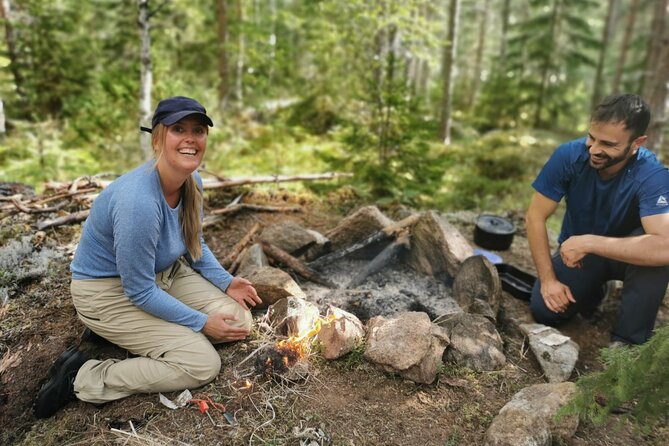
This is not a classroom survival talk. It is training built around the kinds of situations you do not plan for, like getting turned around in the woods or having an accident and needing to stabilize your options fast. The idea is simple: you practice calm decision-making, while your body learns the tasks that support you.
What makes this course interesting is the mix of fundamentals and real field skills. You cover survival basics like fire, shelter, water, and food, and then you add the fieldcraft side, like wildlife tracking, fishing, trapping, and orientation. You also learn the group piece, because in survival, leadership and roles can matter as much as the skills.
A few more Stockholm outings to weigh up

Who this intermediate survival course suits best
This course is aimed at people who want more than beginner-style tips. It is described as intermediate, and the way the curriculum is laid out tells you it is about practicing skills repeatedly, not just understanding them in theory.
If you like structured outdoor challenges and you want to learn in a small setting, this fits. With a maximum group size of 8 and a minimum that changes by season, you also get an environment where everyone has time to participate.
It is also a good match if you care about learning how to read nature instead of depending on technology. The training covers map reading, orienteering, tracking, and working with what is around you.
The 4-day flow: how the curriculum usually builds from basics to field skills
Even without a posted minute-by-minute schedule, the topic order gives you a clear sense of progression. You start by getting your core survival systems working, then you add layers: plants, wildlife, and navigation, plus the social side of surviving as a group.
Fire, shelter, food, and water come early because those are the first things you need if you are stuck. From there, the course expands into how to identify plants for different uses, how to find and use water sources, and how to locate food in ways that fit the environment. The navigation and orientation piece ties the practical work together, so you can make better decisions once you are on the move. Finally, trapping, fishing, wildlife tracking, and survival leadership round it out into a more complete survival toolbox.
Fire-making and shelter-building, done for real
You learn how to build fire and how to build shelter, including the kind of shelter you might need when conditions are not friendly. This is also where the course becomes physical. Reviews highlight that you build shelters yourself, not just watch someone demonstrate, and that you eventually get to sleep in your own shelter setup. That kind of practice matters, because it turns information into muscle memory.
Food and water, focused on collecting and using
You get training on what to eat, where to find it, and how to collect water. The big value here is mindset. Instead of treating food and water as a supply problem, you learn to treat them as an observation problem. You look, you assess, and you decide.
And because the course runs in the wilderness, those lessons connect directly to the daily rhythm. Meals are included, which helps you practice the ideas without the pressure of figuring everything out from scratch during the course.
Same daylight, a different plan:
- Stockholm: Archipelago Boat Tour
★ 4.4 · 3,110 reviews - Stockholm: Paradox Museum Entry Ticket
★ 4.2 · 3,031 reviews - Stockholm: Highlights Boat Tour
★ 4.2 · 2,845 reviews
Plants in the woods: edible, toxic, and medicinal basics you can actually apply
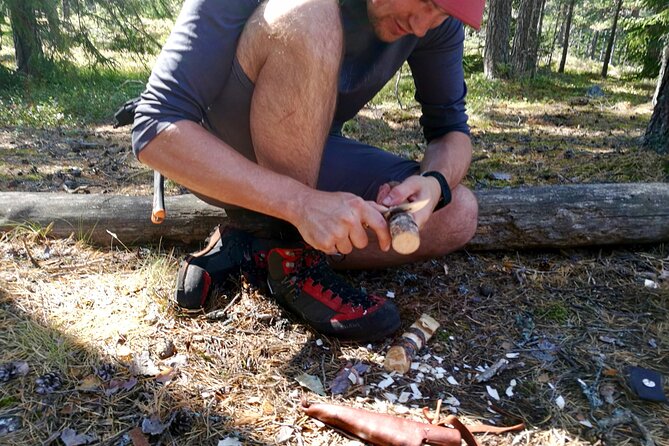
One of the most distinctive parts of this course is the plant education. You learn how to tell edible plants apart from toxic ones, and you also get an introduction to medicinal plants.
In real survival thinking, plant knowledge is not about grabbing random leaves. It is about learning what to look for and how to sort categories safely. The course framing is useful because it helps you avoid the most common problem: treating all green things as food.
This plant section also supports the wider skill goal of seeing nature differently. When you get better at noticing small clues, you get better at navigation too. Everything starts linking together, which is exactly what a survival course should do.
Orienteering and navigation: map reading that fits the forest
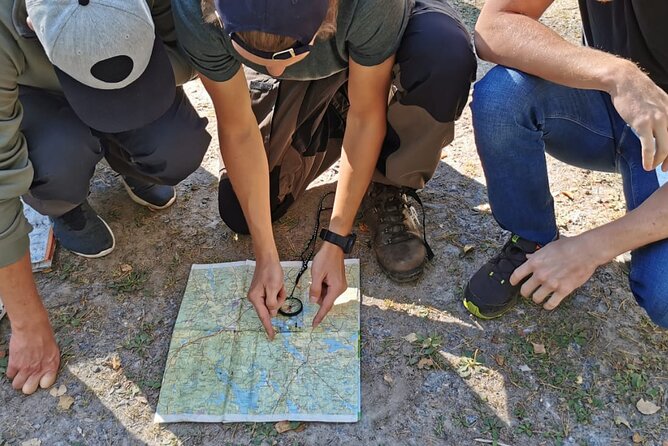
When you are lost, your brain can sprint in panic. Orientation training helps slow that down and gives you a method. You practice map reading and orienteering so you are not relying on luck or the straight-line hope that you will stumble out.
This matters because most people underestimate how quickly a forest can change your sense of direction. The course keeps navigation tied to the real terrain, so you learn how to translate what you see into movement choices. It is also a strong base for the other skills, like setting up camp and working as a team.
In survival training, navigation is not just about finding a way out. It is also about managing decisions, like whether to move or stop, and how to keep everyone oriented in a group situation.
Wildlife tracking, dangers, and how to think like you belong in the woods
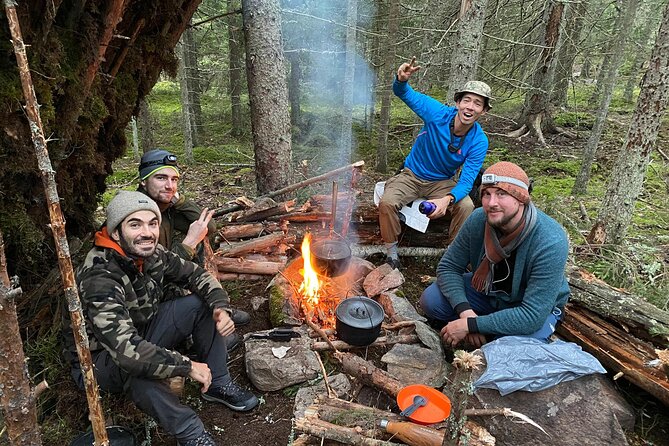
You get lessons on wildlife tracking and also on dangers connected to animals. That blend is important. Tracking can be exciting, but survival training has a different goal: awareness. You learn to notice signs and interpret them, while also learning where risk may be hiding.
The course also covers trapping and fishing. That does not mean you turn into a cartoon survivalist. It means you learn methods that fit the environment and the constraints you face when resources are not guaranteed.
In the feedback, William’s firsthand experience shows up a lot. People describe instruction that feels practical and repeatable, not just theoretical talk. If you enjoy learning a skill you could adapt later, this is the kind of course that tends to stick with you.
Encampment tricks, group leadership, and how to keep calm together
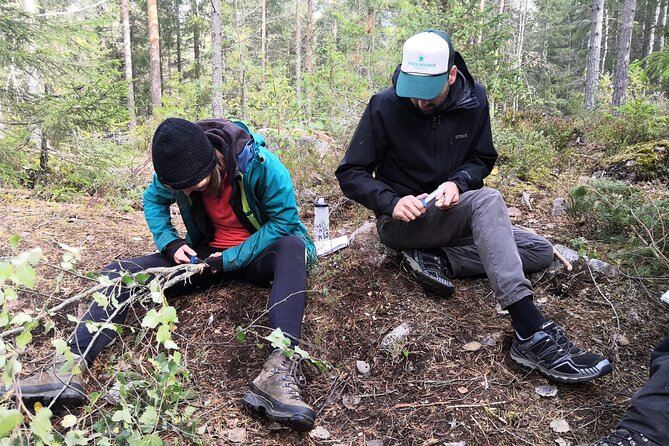
Survival is rarely a solo performance. This course includes a focus on survival in a group, including leadership. That piece gets overlooked in many outdoor programs, but it can matter a lot when pressure rises.
You also learn encampment tricks, including simple ways to make life easier in tough conditions. That can include decisions around shelter use, comfort, and how to organize tasks so the group functions instead of turning into chaos.
In the feedback, a supportive environment comes up again and again. That makes sense with a small-group setup. With only 3 to 5 participants depending on season, and never more than 8, the instructors can work with individuals and still keep everyone moving forward together.
Food on course: included meals and wilderness cooking expectations
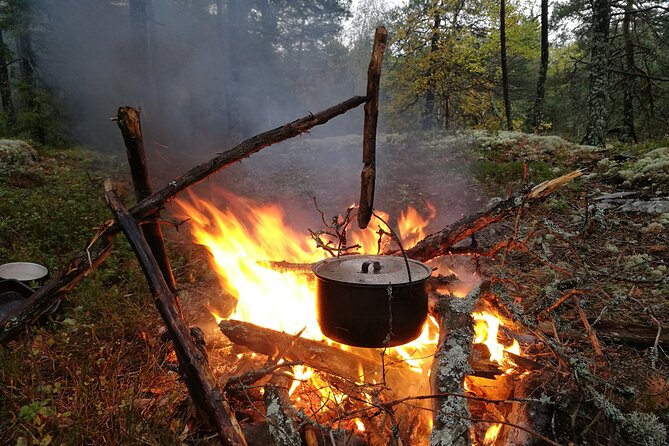
Meals are included: breakfast, lunch, and dinner. That is not just a convenience. It supports the learning goals, because it removes the distraction of constantly wondering where your next meal comes from while you practice fire, shelter, water, and foraging concepts.
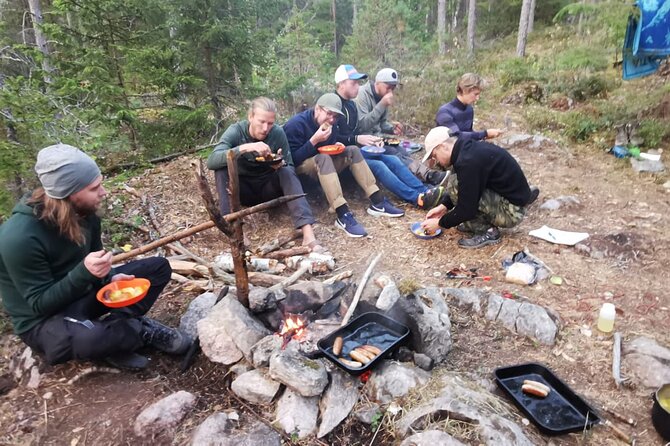
The standout detail from the feedback is how the food is prepared in the wilderness and tastes the way it should. People specifically call out that the instructor handled the meals in a way that fits the setting. You still learn what to eat and how to find things, but you are not going to be left hungry as you build core survival routines.
One practical implication: because food is included, you can focus on skill practice and on learning the plant and fieldcraft systems. If you have a sensitive stomach or specific dietary needs, you should still check with the provider before you go, since the training is outdoors and based on what can be used in the field.
Price and value: what $1,011.22 buys you in the real world
At $1,011.22 per person for about 4 days, this course is priced like a guided skills program, not like a budget nature tour. The value gets stronger when you look at what is included.
You get breakfast, lunch, dinner, private transportation, and all needed gear. That package reduces the usual hidden costs of a multi-day outdoors course, especially for people who do not already own every item needed for this kind of training.
There are still a couple of cost notes to understand. The information also lists camping gear rental at SEK 1,000 per person and backpack rental at SEK 200 per person. That can be confusing alongside the statement that all needed gear is included. The most practical move is to ask the provider what they consider included gear versus what is optional rental gear, so you do not get surprised at the start.
Also consider the time value. Four days in small-group survival training with a skilled instructor is hard to replicate on your own. You are paying for instruction, safety thinking, and guided practice in real conditions, not just entry to the woods.
Small-group size and what it does for your learning
The course requires a minimum number of participants and the minimum changes by season: at least 3 participants from early October to late April, and at least 5 participants from early May to late September. It also runs up to a maximum of 8 travelers, and that small cap matters.
With a group this size, you get feedback while you work. You can correct technique and you are more likely to get hands-on time for tasks like fire making, shelter building, navigation practice, and foraging and plant identification.
The other side of small-group learning is social. You will spend your days outdoors together and share the effort, which is often where survival courses feel memorable. In the feedback, people mention a positive instructor rapport and a supportive learning environment, which makes a challenging course easier to handle.
Meeting point, timing, and how to plan your day in Stockholm
You meet at True Nature Sweden AB at Tideliusgatan 62, 118 69 Stockholm, Sweden. Start time is 9:00 am, and the experience ends back at the same meeting point.
A mobile ticket is provided, which is handy if you want everything organized on your phone. Private transportation is included, so you are not left figuring out how to get from Stockholm into the training area.
One timing thing to plan for: starting at 9:00 am means you will want your Stockholm morning calm and unhurried. Treat this like a full-day commitment, even though it is only 4 days total, because you are in survival mode right away.
Should you book this Sweden survival course or skip it?
Book it if you want practical survival skill practice in a real wilderness setting, and you like structured learning that turns into hands-on work. The training hits the core systems people actually need, like fire, shelter, food, water, plants, navigation, and group leadership. If you want to learn from someone like William, with firsthand experience and a teaching style that keeps skills usable, this is the kind of course that tends to leave you with real confidence.
Skip or reconsider if you hate physical outdoor work or you want something gentle. This course can be tough both physically and mentally, and the season can bring tough weather. Also, if you are worried about unknowns around gear, ask for clarity on what counts as included gear versus what you may need to rent.
If you like learning in the woods, this is a strong choice for an intermediate adventure that feels genuinely useful.
FAQ
Where do you meet and what time does the course start?
You start at True Nature Sweden AB, Tideliusgatan 62, 118 69 Stockholm, Sweden. The start time is 9:00 am, and the activity ends back at the same meeting point.
What language is the survival course taught in?
The course is offered in English.
How large is the group?
The course is designed for 3–5 participants depending on season, and it has a maximum size of 8 travelers.
What meals and gear are included in the price?
Breakfast, lunch, and dinner are included. Private transportation is included too, along with all needed gear.
What happens if there are not enough participants?
From early October to late April, at least 3 participants are required. From early May to late September, at least 5 participants are required. If the minimum is not met, you will be offered a different date or a full refund.
What is the cancellation policy?
You can cancel for a full refund up to 24 hours in advance of the experience start time. If you cancel less than 24 hours before the start time, the amount you paid is not refunded.
New on the Stockholm pages
- Discover Stockholm’s Christmas Market Magic with a Local★ 5.0 · 1 review
- Stockholm Tour + Drottningholm Palace by VIP car PRIVATE Guide★ 5.0 · 1 review
- Deluxe Stockholm Tour with Vasa Museum from Cruise Port★ 4.0 · 1 review
- First Class Airport Limousine Transfer: Arlanda Airport to Stockholm City★ 5.0 · 1 review
- Stockholm Shore Excursion from Cruise Port★ 5.0 · 1 review
- Stockholm Old Town Walking Tour + Archipelago Cruise★ 5.0 · 1 review
- Stockholm History Walking Tour★ 5.0 · 1 review
Stockholm Experiences, compared.

City Archipelago Sightseeing Cruise with Guide
Read our review →